A New Era at Lucasfilm: What The Studio's Power Shift Means for STAR WARS
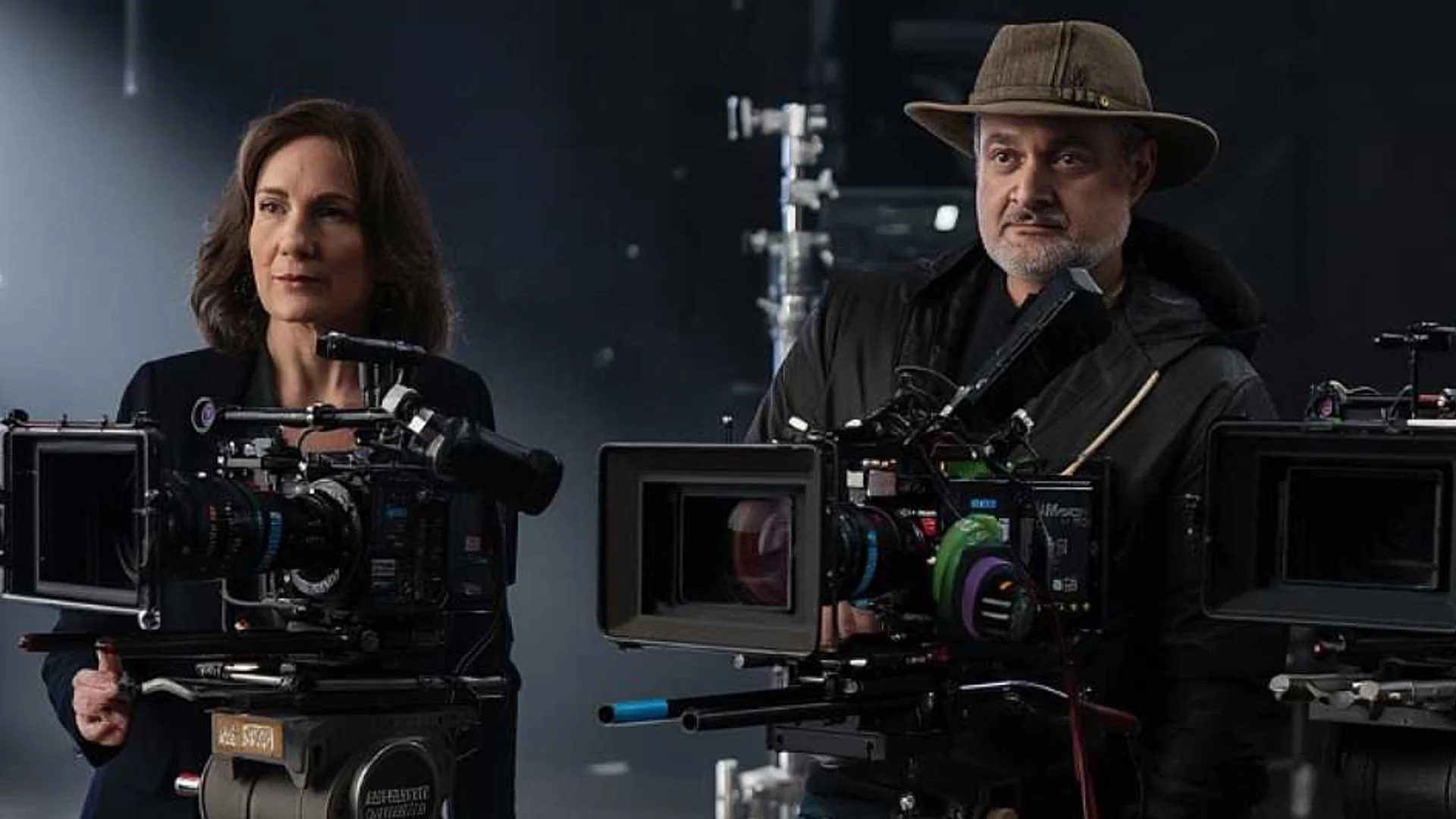
For years, Kathleen Kennedy has been one of the most debated figures in Star Wars. To some fans, she became the symbol of everything that frustrated them about the modern era, a perception that even spilled into pop culture with a South Park special bluntly declaring that “Everything is Kathleen Kennedy’s fault.”
Now, Kennedy’s tenure as president of Lucasfilm is officially coming to an end, and the studio is entering a new phase under a restructured leadership model. The big question is… Where does Star Wars go from here?
Kennedy’s exit marks the end of an era that began when George Lucas personally chose her to safeguard his company just as he was preparing to sell it to Disney.
In his memoir The Ride of a Lifetime, Bob Iger recalled the moment: “It didn’t upset us, but it did come as a surprise, just as it surprised Kathy to learn that the company she was agreeing to run was about to be sold!” For Disney, Lucas’ decision carried weight. He trusted Kennedy, and that trust helped smooth one of the biggest media acquisitions in history.
Lucas’ influence isn’t fading with this leadership change. If anything, it’s being formalized. Lucasfilm is shifting to a co-president structure, with Dave Filoni overseeing creative direction and Lynwen Brennan handling the business side. Filoni’s rise feels like a natural move.
He worked closely with Lucas on Star Wars: The Clone Wars and has long been viewed as his creative heir. Still, Filoni isn’t a carbon copy of Lucas. While his background often gives his opinions extra authority among fans, his interpretations of Star Wars sometimes differ from Lucas’ own ideas. Filoni has always acknowledged that he brings his own point of view to the franchise.
We’ve already seen hints of how Filoni operates through Lucasfilm’s television slate, where he’s acted as a creative compass for showrunners like Jon Favreau. He has a deep love for lore and continuity, which resonates strongly with longtime fans, especially those who grew up on the prequel era.
The challenge ahead is balance. Star Wars needs to stay welcoming to new audiences, particularly as Disney continues to chase Gen Z viewers, without losing the depth that keeps the core fanbase invested.
Filoni has also been clear that he doesn’t see himself as a singular creative voice dictating the future. Speaking on the Happy Sad Confused podcast, he explained his philosophy, saying:
“The creative of the particular story, driving it, is kind of the most important thing. At best you’re Obi-Wan, and everyone coming in is going to make their trench run, and you’re just trying to get them to let go and trust their instincts, and trust the process, and do what they’re doing.”
Sharing the presidency with Filoni is Brennan, a seasoned Industrial Light & Magic veteran whose resume is stacked with leadership experience. The role of Lucasfilm president has grown so large over the last decade that splitting it in two makes sense, and other studios have already moved in this direction.
Brennan brings operational stability, allowing Filoni to stay focused on creative stewardship. Given Filoni’s comfort with fans and public-facing events, he’ll likely remain the familiar voice of Lucasfilm, while Brennan keeps the machine running smoothly.
Brennan’s a recipient of a CBE from Queen Elizabeth II and a Lifetime Achievement Award from the Visual Effects Society. Her history with ILM stretches back to Jurassic Park, followed by an entry-level role on Star Wars: Episode I – The Phantom Menace.
From there, she steadily rose through the ranks. Since 2015, she’s served as Lucasfilm’s general manager, overseeing ILM and the daily operations of the entire company. Few people understand Lucasfilm’s transmedia sprawl better than she does.
In an exit interview with Deadline, Kennedy revealed that she had identified Filoni and Brennan as her successors two years ago. That timeline lines up neatly with the quiet reshuffling of Lucasfilm’s film plans.
Projects unveiled at Star Wars Celebration 2023 slowly faded into the background as new priorities emerged. The Mandalorian & Grogu was announced in January 2024. Jonathan Tropper came on board to write Star Wars: Starfighter that July. Four months later, Simon Kinberg was tapped to develop an entirely new trilogy. The transition hasn’t been theoretical. It’s already happening.
One of Kennedy’s biggest challenges when she took over was the lack of a reliable development pipeline, a problem that fed years of reports about creative turmoil. That’s something she’s clearly worked to fix before stepping aside.
Both The Mandalorian & Grogu and Starfighter wrapped filming without stories of budget blowouts or creative clashes, which is encouraging. Kinberg is expected to deliver scripts for his trilogy in March, positioning that project as the likely next major theatrical push.
Kennedy also used her final interview to shed light on several long-rumored projects. Taika Waititi and Donald Glover have both turned in scripts, and she says those films are “still somewhat alive.”
The Dawn of the Jedi movie from James Mangold and Beau Willimon has a completed script, though Kennedy described it as “definitely breaking the mold” and confirmed it’s currently on hold.
She also brought up the scrapped project The Hunt for Ben Solo, written by Steven Soderbergh, Adam Driver, and Scott Burns. “It was just great,” Kennedy said.
“Anything’s a possibility if somebody’s willing to take a risk.” Notably, she said nothing about Daisy Ridley’s return or Sharmeen Obaid-Chinoy’s announced New Jedi Order film.
TV was once the centerpiece of Disney’s Star Wars strategy, but it’s losing some of its shine. The original Disney+ plan hasn’t delivered the results the company hoped for, and studios are now being pushed back toward theatrical releases.
At the moment, only one live-action Lucasfilm series is known to be in production, Ahsoka Season 2. The era of nonstop Star Wars TV might be winding down, and that’s probably healthy. Fewer shows mean more time to get things right and less risk of stretching the brand thin. Announcements for 2027 releases are expected sooner rather than later.
While The Hollywood Reporter has suggested development could “go into hyperdrive” under the new leadership, reality will likely be more measured. Disney is cautious about brand dilution now. The Mandalorian & Grogu is effectively a test case for a new model.
It’s a lower-budget theatrical extension of the company’s most successful Disney+ series. It isn’t designed to shatter box office records, but its modest cost means profitability is almost guaranteed, especially once it hits streaming. If that approach works, Lucasfilm may lean into it again.
Ultimately, the goal is to make Star Wars feel like an event. Starfighter is the first real swing at that, timed to land during the franchise’s 50th anniversary and built around a cast meant to connect with younger audiences.
There will be missteps along the way, but Filoni and Brennan are inheriting a much sturdier foundation than Kennedy had when she stepped into the role. As they begin to outline their own vision, the next chapter of Star Wars is finally starting to come into focus.