BLADE RUNNER 2099 Introduces 'Sunshine Noir' and Reinvents the Franchise's Iconic Look
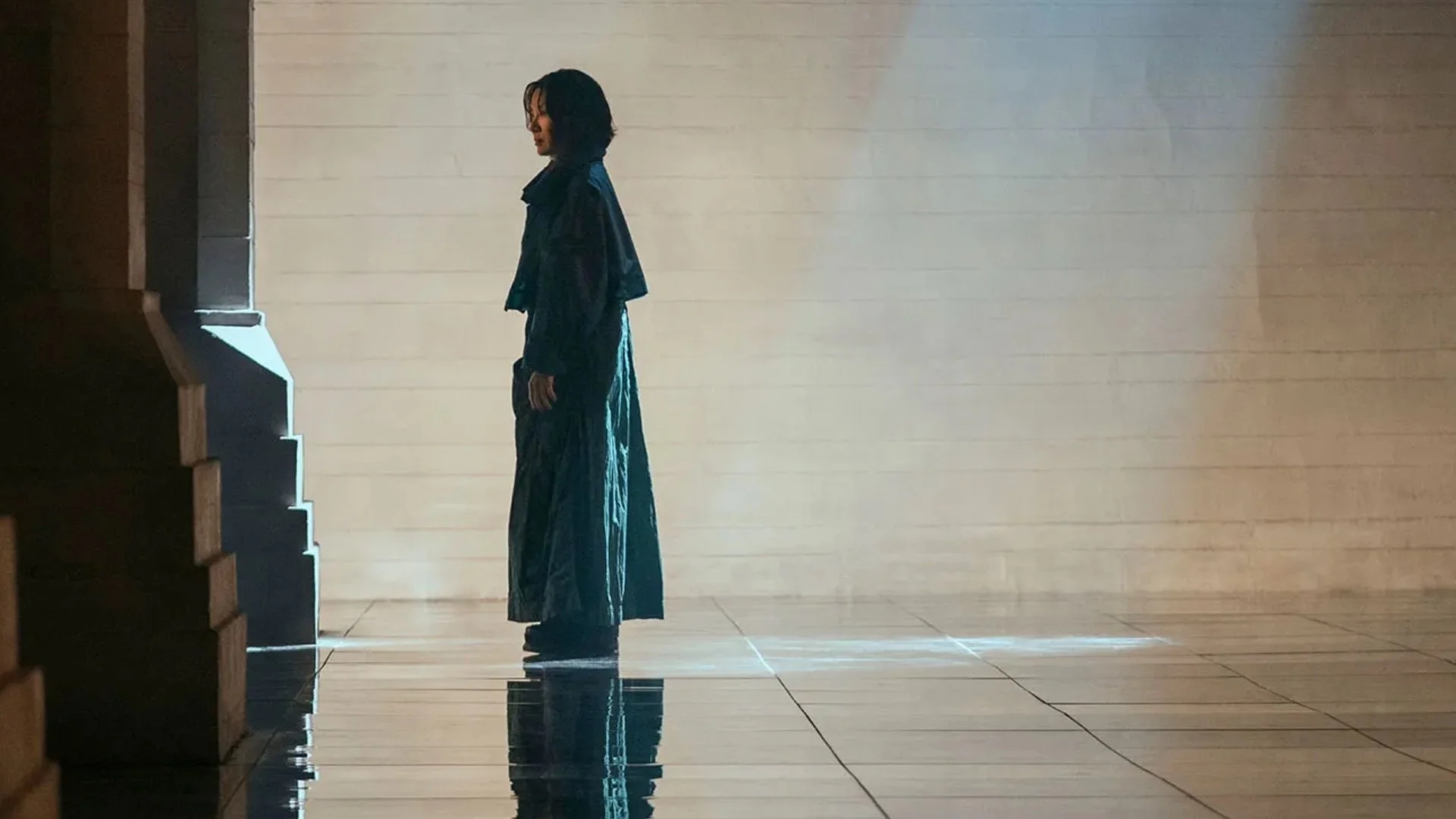
When people think about Blade Runner, they usually picture rain-soaked streets, towering neon signs, and a city that never seems to see daylight.
Those visuals helped define an entire generation of science fiction, and later, Blade Runner 2049 expanded that style with sweeping frozen landscapes and the unforgettable orange haze that became one of the sequel's signature images.
Now, Blade Runner 2099 is taking another step forward by giving the franchise a visual identity all its own. According to showrunner Silka Luisa, the goal wasn't to abandon what came before. It was to build on it while reflecting how much the world has changed in the fifty years since Blade Runner 2049.
That meant looking back to Ridley Scott's original masterpiece for inspiration. Luisa explained: “Ridley’s film, from a visual standpoint, was a key north star for us. We definitely leaned into the layered tactile look of Ridley’s film.
“There was the idea of everything on the inside is on the outside. All the components of inside of a building are now on the outside of the building. And we used that, which made sense in a post-war city.
“That’s a very practical way to have a city with these hodgepodge elements. So a car has a battery from an air conditioner, and you have to reuse parts.”
That approach helps sell the idea that Los Angeles has survived a devastating conflict. Instead of sleek futuristic buildings, the city has evolved through necessity, with repaired machinery, recycled technology, and patched-together infrastructure becoming part of everyday life.
At the same time, Blade Runner 2099 isn't recreating the visual language established by Scott or Denis Villeneuve. Luisa pointed out that every entry in the franchise has introduced its own style. “Every film has really moved the visual look forward. So Ridley’s was dark and rainy. Denis’ was cold and snowy.”
The television series follows that tradition by taking audiences somewhere they probably weren't expecting. “We leaned into sunshine noir. You’re still very much in the Blade Runner world, but the show is about a birth. It’s about a birth of a city. It’s about a birth of a replicant era.
“These characters are discovering who they really are. And so the climate is hot, it’s sticky, it’s sunny. We’re on the coast a lot. We’re in Santa Monica a lot. So it’s like you’re seeing Ridley’s texture, but you’re seeing it in the sunshine noir filter.”
That's an exciting creative choice. Swapping endless rain for bright coastal sunlight instantly changes the atmosphere without losing the DNA of the franchise. Santa Monica also offers a fresh backdrop that expands the world beyond the familiar cityscapes fans have come to expect.
Creating that environment also meant relying on practical filmmaking whenever possible instead of filling every frame with digital effects.
Luisa said: “We’re very in-camera for most of the show. I think it just gives the world a believability. It’s better for the actors. They can move through spaces. It helps make a world that is very foreign feel very true. They can touch everything.”
That commitment to practical sets and real locations should give Blade Runner 2099 a tangible quality that's become increasingly rare in large-scale science fiction productions. It also continues a tradition established by the previous films, where physical environments played a huge role in making the world feel authentic.
Everything about Blade Runner 2099 suggests the creative team understands that the franchise's visuals are just as important as its stories.
Rather than simply repeating the rainy streets fans already know, the series is introducing a fresh aesthetic while preserving the industrial texture and lived-in atmosphere that have defined Blade Runner for more than four decades.
Source: EW