Cancelled STAR TREK: LEGACY Series Would Have Thrown the Enterprise-G Into a Klingon Crisis
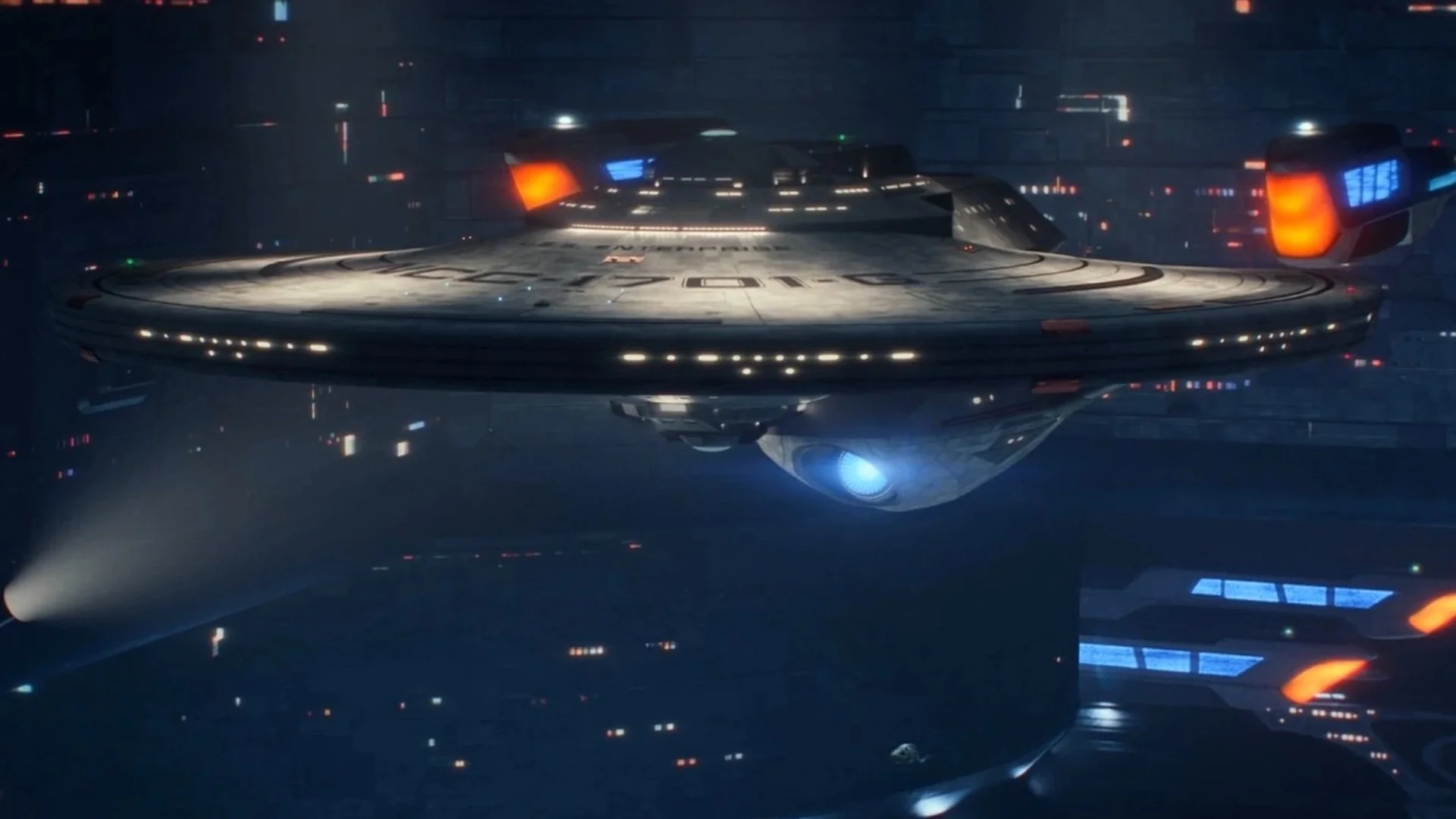
Three years after Star Trek: Picard wrapped up its third and final season, we finally know more about the spinoff that could have sent the Enterprise-G into one hell of a political mess.
Terry Matalas, who served as showrunner on Picard Season 3, has revealed new details about his proposed Star Trek: Legacy series, including what he had planned for its first season.
The story would have put the Klingons at the center of the action, brought Worf’s son Alexander back into the picture, and used one of Star Trek's most recognizable alien cultures to explore tensions inspired by the real world.
For fans who walked away from Picard Season 3 hoping Captain Seven of Nine and her crew would immediately get their own show, hearing what Matalas had planned makes Paramount's decision to pass on Legacy hurt a little more.
The finale of Picard certainly looked like a launchpad for another adventure. Commander LaForge formally retired the Enterprise-D, while Jean-Luc Picard discovered that his son, Jack Crusher, hadn't been assigned to the Titan as expected.
Instead, the Titan had been rechristened the USS Enterprise-G, with Seven of Nine sitting in the captain's chair. Jack was part of her crew, and the setup practically screamed for another series following this new generation into unexplored territory.
Matalas began pitching Star Trek: Legacy, but Paramount ultimately decided not to move forward with the spinoff.
Now, while appearing at STLV: Trek to Vegas, the world's largest annual Star Trek convention, Matalas opened up about what Season 1 would have looked like.
According to the showrunner, the Klingons would have played a major role in the story. Matalas pointed to the long history of Star Trek using the Klingons as a reflection of Russia and intended to draw from modern real-world tensions involving the country.
That would have given Legacy a political angle rooted in one of the franchise's oldest traditions. Star Trek has spent decades filtering contemporary issues through its futuristic setting, and the Klingons have frequently served as a vehicle for examining international rivalries, military power, ideology, and the uneasy relationships between former enemies.
Matalas also planned to make things considerably more personal by connecting the Klingon storyline to Worf. His son Alexander would have returned and apparently become one of the unpredictable forces creating trouble within Klingon space.
That's where the idea gets especially interesting. Alexander has a complicated history with Worf, and bringing him back as a destabilizing presence could have created some great material for the character and his father.
Throw Jack Crusher into the mix as the son of Picard, and suddenly the Legacy name starts working on several levels. This wouldn't simply have been a show about inheriting the Enterprise. It could have explored what happens when the children of legendary Star Trek characters are forced to live with everything their parents left behind.
It also would have taken the Klingons in a very different direction from the one eventually explored in Star Trek: Starfleet Academy.
That series revealed that the Klingon civilization was devastated by the Burn, the catastrophic cosmic event that destroyed dilithium throughout the galaxy. The resulting explosions left Qo'noS, the Klingon homeworld, nearly uninhabitable and pushed the species toward extinction.
Rather than compromise the ethical codes and traditions that had defined their civilization, the Klingons continued fighting for survival on their own terms. Starfleet eventually came up with an unusual solution, locating a potential new homeworld and staging a battle over the planet as a way of helping them while respecting Klingon values.
It's an interesting piece of Klingon world-building, but it's also a dramatically different approach from what Matalas envisioned.
Where Starfleet Academy moved away from the historical Russian parallels associated with the Klingons, Legacy apparently would have leaned directly into them and updated that metaphor for the modern political landscape.
Had the series been made, the concept also would have remained painfully relevant. Russia's continuing war against Ukraine means the political inspiration behind Matalas' idea hasn't exactly faded in the three years since Picard ended.
Of course, a television pitch can change dramatically between its initial concept and whatever eventually makes it onto the screen. We'll never know exactly what Matalas and his writers would have done with those ideas or where Alexander's involvement would ultimately have taken the story.
Unfortunately for fans, Paramount passed on Star Trek: Legacy, and comments from some of the franchise's stars have suggested the spinoff may never have had much of a chance in the first place. One concern raised was that too many of the returning actors would have been over 70 years old.
There's also the complicated legacy of Picard itself. The series remains one of the more divisive Star Trek shows, which probably shouldn't come as much of a surprise when you're dealing with characters fans have loved for decades.
Everyone has their own idea of where Jean-Luc Picard, Worf, Data, Seven of Nine, and the rest of these characters should end up.
A series literally called Legacy would have stepped straight into that argument. Some fans undoubtedly would have loved seeing the Enterprise-G carry the franchise forward while remaining connected to characters from The Next Generation and Picard. Others would have wanted Star Trek to move further away from familiar bloodlines and nostalgia.
Either way, Matalas had the ingredients for something worth watching. Seven commanding the Enterprise-G, Jack Crusher beginning his Starfleet career, Alexander causing trouble in Klingon space, Worf potentially confronting his complicated relationship with his son, and a Klingon conflict drawing inspiration from current geopolitics could have made for a very different Star Trek series.
Paramount may have cancelled that journey before the Enterprise-G ever got a chance to properly begin it, but three years later, we're finally getting a clearer picture of where Matalas wanted the ship to go.