Carl Laemelle: The Making of the Movie Business - Part 2: The Trust War: Battling Edison’s Monopoly
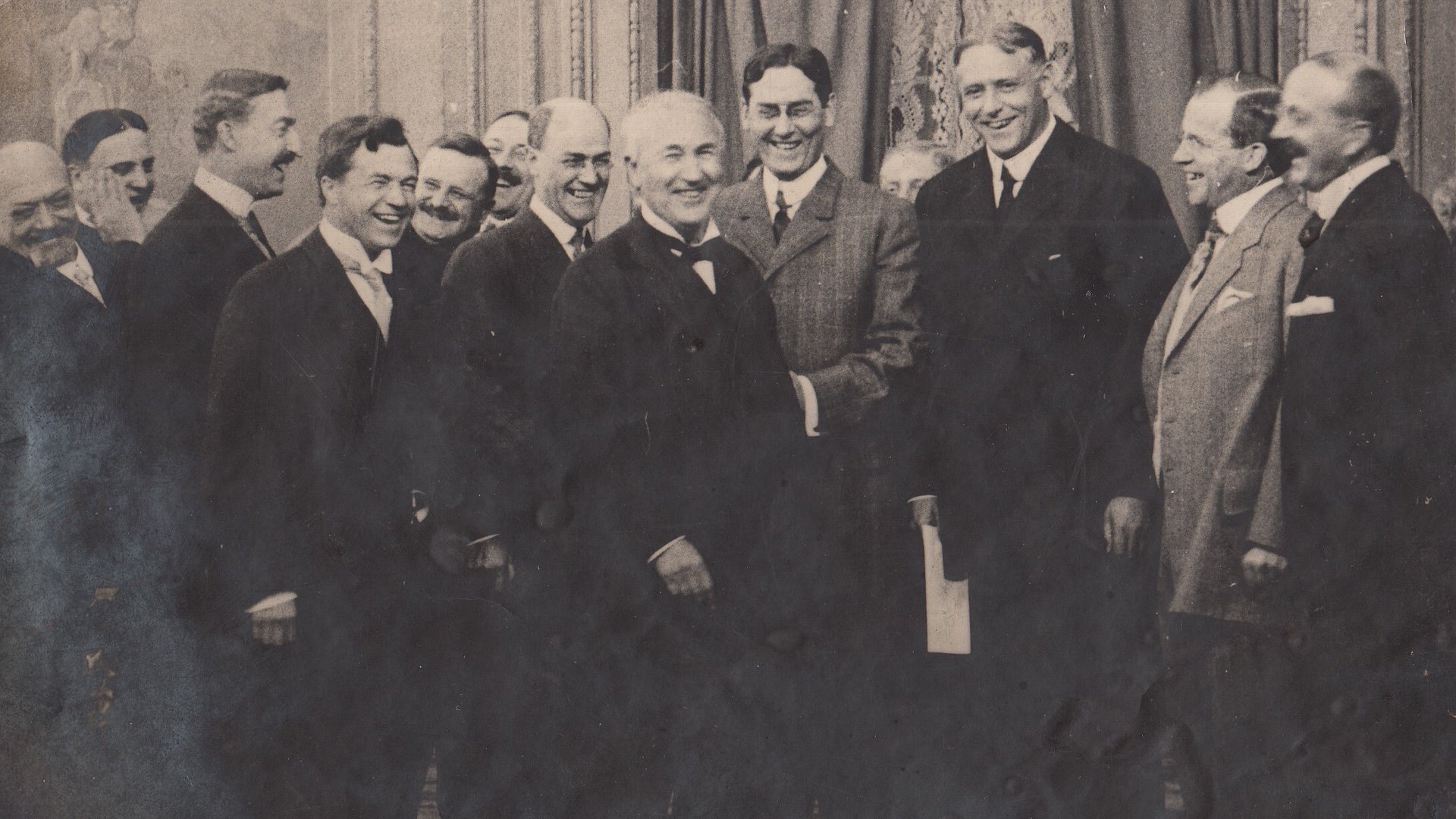
In the early years of the 20th century, motion pictures were still a novelty, but the business behind them was already turning into a battlefield. On one side stood the Motion Picture Patents Company aka “The Trust” backed by Thomas Edison and armed with patents, lawyers, and an iron grip on the industry.
On the other side was a ragtag alliance of independent exhibitors and producers, among them a former Oshkosh shopkeeper named Carl Laemmle, who was about to prove that grit could outmatch monopoly.
It’s tempting to imagine this as David versus Goliath. But in 1908, “David” didn’t even have a slingshot, just a string of small nickelodeons, an instinct for showmanship, and a stubborn refusal to be told what he could or couldn’t show his audience.
The Trust’s Grip
By the time Laemmle had expanded from his White Front Theatre in Oshkosh to a small chain of nickelodeons in Wisconsin and Chicago, Edison’s Trust had tightened its hold on the American film industry. The Motion Picture Patents Company, formed in 1908, was a coalition of the biggest producers and equipment makers: Edison, Biograph, Vitagraph, Essanay, and others.
They controlled the essential patents for cameras, projectors, and film stock. They controlled distribution through the General Film Company. They controlled who could make movies, who could rent them, and even how long those movies could be. And they even enforced their monopoly with both legal and physical muscle.
For exhibitors like Laemmle, this meant paying hefty fees for a license to show films, and being restricted to the titles and schedules dictated by The Trust. Show an unlicensed “independent” film and you risked lawsuits, equipment seizures, or worse.
There were stories, not all of them exaggerated, of Trust agents smashing projectors with axes or sending hired toughs to “inspect” a theater that had been showing the wrong reels.
Laemmle, who had built his nickelodeon business on variety and quick turnover, chafed under these rules. The Trust wasn’t just limiting his choices, it was treating exhibitors like tenants rather than partners. For a man who valued independence above all, it was a provocation.
The First Shot
Laemmle’s first act of rebellion was simple as he began to buy and show films from independent producers who refused to join The Trust. These films came from companies like Thanhouser and Lubin, and they were often fresher, livelier, and more daring than the formulaic shorts churned out by the Trust’s members.
But it wasn’t just about the quality. Showing independent films was an act of defiance, and Laemmle had a taste for the fight. He understood that audiences didn’t care who made a film, they cared if it was entertaining. If he could give them better shows, they’d keep coming.
Of course, The Trust didn’t take kindly to this. Warnings turned into legal threats. Legal threats turned into raids. In Chicago, Laemmle had projectors confiscated and films seized. The message was clear… play by our rules or we’ll put you out of business.
Turning the Tables
Laemmle was not the kind of man to be bullied into submission. He had spent his life navigating obstacles, from leaving Germany as a teenager to scraping together a living in Chicago, and he had learned that sometimes you win by standing your ground, and sometimes by finding a clever way around the rules.
One of his cleverest moves was joining forces with other independents to create their own distribution network. They pooled resources to rent and sell films outside The Trust’s channels, often using newly imported European productions that Edison’s group had no control over.
Laemmle also became a master of the counter-lawsuit. If The Trust sued him, he found a way to sue back, challenging their patent claims and dragging the fight into the kind of legal quagmire that slowed their momentum. He wasn’t just trying to win in court, he was trying to buy time, to keep his theaters running while the battle played out.
The Showman’s Advantage
But what really made Laemmle dangerous to The Trust was his flair for publicity. He knew how to turn a legal battle into a marketing campaign. In interviews and trade papers, he cast himself as the champion of the small exhibitor, the man fighting for the public’s right to see better films at fair prices.
Audiences might not have understood the fine points of patent law, but they understood the idea of a lone fighter standing up to a bully. Laemmle played that part perfectly, not as a bitter complainer, but as a cheerful, confident businessman who happened to be on the right side of history.
He also sweetened the fight with stunts. One of his most famous came a little later, when he lured Florence Lawrence, “The Biograph Girl”, away from The Trust and made her name public for the first time, creating the first movie star in the process. But even before that, he was using the press to position himself and his independents as the future of film.
Escalation
By 1909 and 1910, the conflict had escalated into an all-out war for the industry’s future. The Trust increased its raids, hiring private detectives and even “film cops” to enforce its rules. The independents, in turn, began to form new production companies at a rapid pace, each one adding to The Trust’s headaches.
Laemmle wasn’t just an exhibitor anymore, he was becoming a producer. He realized that to truly escape The Trust’s control, he couldn’t just show independent films, he had to make them. That meant hiring directors, actors, and crews, and setting up his own shooting schedules.
In 1909, he founded the Independent Moving Pictures Company (IMP), a name that left no doubt about where he stood in the fight. IMP would become both his weapon and his shield, giving him the means to supply his theaters with a steady stream of content that the Trust couldn’t touch.
The Turning Point
The Trust, of course, tried to crush IMP just as it had tried to crush every other independent. But Laemmle’s mix of legal resistance, alternative distribution, and relentless publicity began to shift the balance. He was winning not just in court, but in the court of public opinion.
By 1912, The Trust’s stranglehold was weakening. Federal anti-trust laws, which had already been used against monopolies in oil and steel, were starting to loom over Edison’s operation. In 1915, after years of legal battles, the courts ruled against the Motion Picture Patents Company, declaring it an illegal restraint of trade. The monopoly was broken.
For Laemmle, the victory was more than personal. It opened the industry to competition, innovation, and the kind of rapid growth that would define Hollywood’s golden age. Without the Trust’s chokehold, independent producers could flourish, and exhibitors could choose films based on quality rather than obligation.
The Man Who Wouldn’t Be Owned
It’s easy to see why Laemmle emerged as one of the most important figures in this battle. He wasn’t the only one fighting The Trust, but he fought with a unique combination of stubbornness, creativity, and charm. He didn’t just resist, he turned resistance into a selling point.
He also understood that the fight wasn’t only about patents or business models. It was about control, about who got to decide what films were made, shown, and seen. By refusing to be owned by Edison’s system, Laemmle helped create a world where audiences had more choice, where new voices could break in, and where the industry could evolve beyond its earliest limitations.
For Carl Laemmle, the Trust War was the first real test of his mettle as more than a theater owner. It forced him to think bigger, act bolder, and step fully into the role of a motion picture producer. In beating the Trust, he secured his own future, he cleared a path for an entire generation of filmmakers and entrepreneurs.
As the dust settled, one thing was clear, Carl Laemmle was no longer just a man from Oshkosh who’d taken a chance on moving pictures. He was now a player in a national industry, and he was only getting started.
Read: Carl Laemelle: The Making of the Movie Business - Part 1: Oshkosh to the Silver Screen