David Ellison is Making Paramount-Warner Bros.’ 30-Movie Theatrical Commitment Contractually Binding
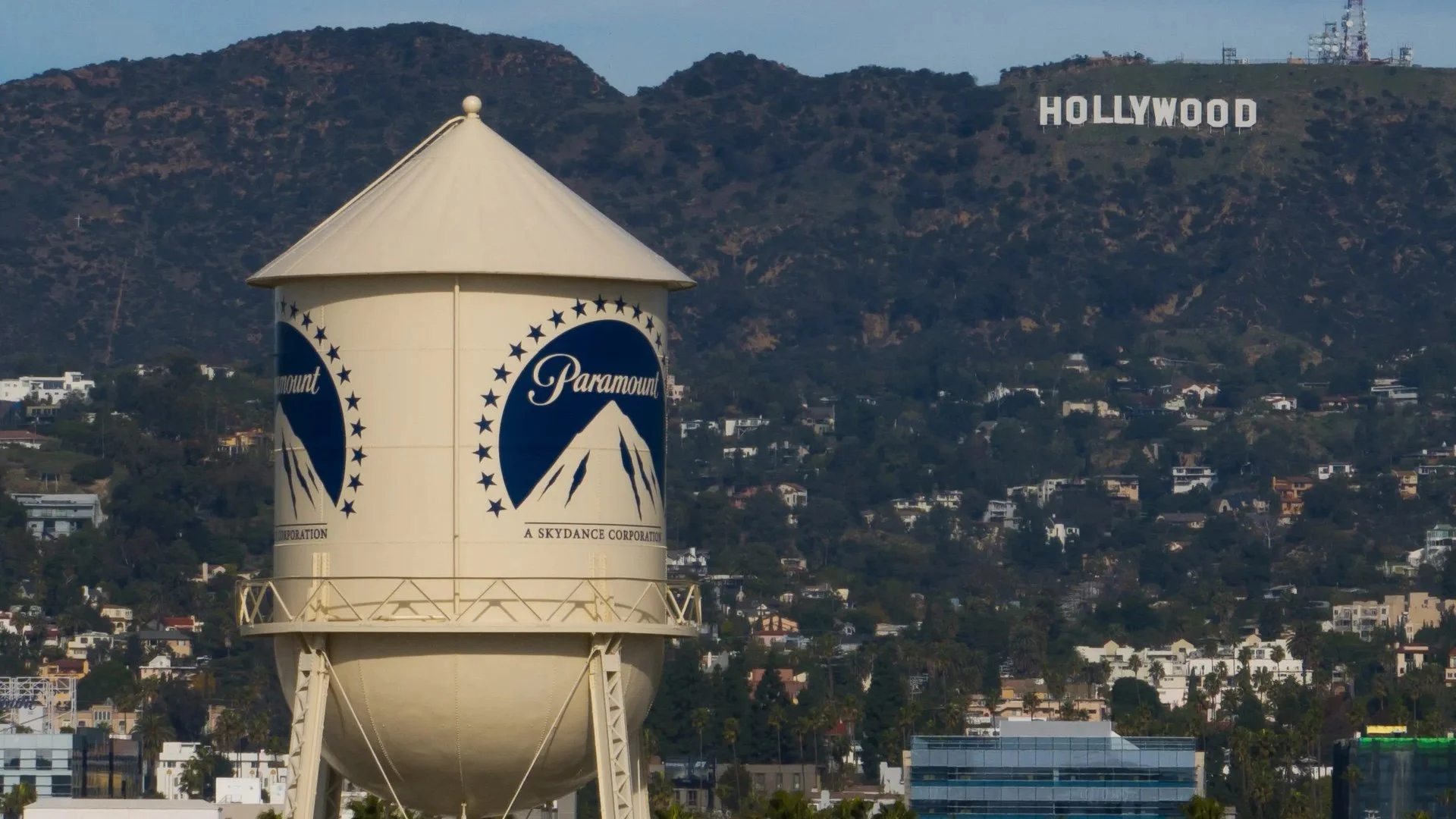
Want to get movie theaters healthy again? Here’s a pretty straightforward idea and that’s to give people more movies to watch in movie theaters.
David Ellison, CEO of Paramount Skydance, has been pushing that philosophy as he makes the case for the massive Paramount-Warner Bros. merger.
Ellison has promised that the combined studio would release at least 30 movies theatrically every year, and now Paramount is reportedly prepared to turn that promise into something much more substantial than a corporate talking point.
According to Bloomberg, Ellison is offering three-year, contractually enforceable commitments to AMC Entertainment and Regal Cinemas, the two largest theater chains in the United States.
The proposed agreement would guarantee at least 30 theatrical releases annually, exclusive theatrical windows of 45 days, and a minimum 90-day wait before those movies could arrive on streaming services.
There could even be financial penalties if Paramount doesn’t live up to its end of the agreement. I’m a fan of this.
No other major studio is currently promising to put 30 movies into theaters every year. At a time when Hollywood has spent years conditioning audiences to wonder whether they should bother leaving the house when a movie might hit streaming shortly afterward,
Paramount is proposing something that actually gives theaters more movies and those movies more time to play. AMC and Regal certainly like what they’re hearing. The CEOs of both theater chains have publicly supported the Paramount-Warner Bros. merger.
The contractual offer also serves another purpose for Paramount. The merger is facing an antitrust lawsuit from 12 state attorneys general who argue that combining Paramount and Warner Bros. would give the company too much control over the theatrical movie business.
Putting the 30-film commitment and theatrical windows into legally enforceable agreements could help Paramount argue that it isn’t planning to swallow Warner Bros. and funnel movies toward Paramount+ and HBO Max. Instead, the company would be legally committing itself to feeding theaters a steady supply of films.
Whether that concession will satisfy the states remains another question. The antitrust trial is currently scheduled to begin in March 2027, and Ellison is under pressure to reach a settlement before everyone ends up in court.
The proposed theatrical guarantees also don’t address another major part of the lawsuit, which argues that the combined company would hold too much power in the U.S. basic cable television market.
Still, when it comes specifically to movie theaters, it’s hard for me to look at a studio promising 30 theatrical releases every year and think, “Yeah, fewer movies would definitely be better.”
Of course, critics have a legitimate question: What happens if a lot of those 30 movies bomb? Ellison himself acknowledges that nobody can guarantee a hit. In a recent New York Times op-ed, he pointed to three movies from his own career that had very different financial outcomes:
“In my career, ‘G.I. Joe: Retaliation’ met financial expectations, ‘Top Gun: Maverick’ exceeded them, and ‘Terminator: Dark Fate’ fell short. I am proud of all these films, but nobody can dictate what audiences will love,” he wrote. “What I can promise is the work, and more of it.”
That’s the movie business. Nobody actually knows what audiences are going to embrace until they embrace it. Hollywood can spend hundreds of millions of dollars manufacturing what looks like a guaranteed blockbuster and watch it crater. Then some comparatively inexpensive movie can suddenly catch fire and become the thing everyone wants to see.
We’ve watched that happen this year. Expensive movies such as Supergirl and Moana have struggled at the box office, while smaller films like Obsession and Backrooms have found huge success. A giant production budget isn’t some magical insurance policy against failure.
That’s why the criticism that Paramount could simply release a bunch of movies costing less than $10 million and accomplish nothing for theaters doesn’t completely work for me.
Give talented filmmakers $8 million and a great idea, and they might make something audiences can’t stop talking about. Give someone $200 million without a compelling story and audiences could still just stay home and wait for streaming.
What matters is making good movies people actually want to see. More releases also mean more opportunities for unexpected hits.
They give filmmakers more chances to connect with audiences, theaters more programming to put on screens, and moviegoers more reasons to keep checking what’s playing instead of waiting for the handful of giant franchise releases scattered throughout the calendar.
That doesn’t mean 30 movies automatically equals 30 successes, and Paramount’s own numbers demonstrate the problem.
Paramount nearly doubled its slate from eight movies in 2025 to 15 releases in 2026, yet the studio has told Wall Street that it expects “significantly lower theatrical revenue year-over-year due to lower average box office revenue per film across more releases.”
Part of that comparison comes from Mission: Impossible – The Final Reckoning, which earned nearly $600 million worldwide in 2025.
Paramount Pictures’ theatrical revenue dropped 45% during the second quarter of 2026 to $138 million, with the year-over-year comparison again affected heavily by Mission: Impossible – The Final Reckoning.
Paramount’s biggest theatrical release during the quarter was Scary Movie, which has earned $108 million domestically and $231 million worldwide since opening June 5.
So yes, simply putting more movies into theaters doesn’t guarantee more money. But neither does putting fewer movies into theaters.
Paramount also currently lacks one of the enormous billion-dollar theatrical monsters other studios have enjoyed in 2026. Disney-Pixar has Toy Story 5, Universal has Christopher Nolan’s The Odyssey, Sony has Spider-Man: Brand New Day, and Lionsgate has Michael.
Warner Bros. could potentially join that club when Dune 3 arrives in December 2026, but unless the Paramount-Warner Bros. merger closes unexpectedly early, that film won’t technically belong to a combined Paramount-Warner slate.
This is where I think some of the conversation surrounding the merger becomes too obsessed with predicting individual box office winners. The entire point of making movies is that nobody knows for certain what will connect.
If Paramount-Warner Bros. eventually has filmmakers making comedies, horror movies, action films, dramas, animation, science fiction, thrillers, family movies and weird little original projects alongside the giant franchises, some will fail spectacularly.
Others could become unexpected hits. Hopefully a few become movies nobody saw coming that suddenly turn into cultural events.
That sounds a whole lot more interesting than a studio releasing a tiny number of enormously expensive movies every year and praying each one becomes a global phenomenon.
There are plenty of critics raising legitimate concerns about the Paramount-Warner Bros. merger, particularly regarding consolidation and the amount of market power one company could possess. Those issues deserve scrutiny. Supporting Paramount’s theatrical strategy doesn’t require pretending those concerns don’t exist.
But I also think Ellison deserves credit for proposing something the theatrical business desperately needs: more movies actually made for theaters, backed by meaningful theatrical windows.
Hollywood used to release movies constantly. Big movies, small movies, strange movies, cheap movies, expensive movies, prestige dramas, comedies, thrillers and stuff that occasionally made you wonder how anyone convinced a studio executive to pay for it.
That variety was part of what made going to the movies fun. If Ellison follows through and Paramount-Warner Bros. puts 30 films into theaters every year with 45-day exclusive windows, I’m rooting for it.
I love the theatrical moviegoing experience, and I’d much rather see a studio take more swings than retreat further into a model where everything revolves around a handful of massive franchise bets.
Will all 30 movies succeed? Of course not. They don’t need to. They need good filmmakers, good stories, opportunities to find an audience, and enough time in theaters for audiences to discover them.
And for anyone wondering whether moviegoers will actually show up if Hollywood starts giving theaters more movies again, I keep coming back to Field of Dreams:
“If you build it, They will come.”