DISCLOSURE DAY Contains an Unexpected Disney-Themed Connection to CLOSE ENCOUNTERS OF THE THIRD KIND
Fans have wondered if Steven Spielberg would ever circle back to one of the most beloved sci-fi stories of his career, Close Encounters of the Third Kind.
The filmmaker has revisited familiar worlds before, but he’s rarely interested in making straightforward follow-ups. That’s why all the mystery surrounding Disclosure Day sparked so much speculation. As details about the film slowly emerged, many started asking if it could this secretly be a sequel to Close Encounters.
Now that audiences have seen the film, the answer appears to be no. At least, not in the traditional sense. There are no direct narrative ties linking the two movies together.
Spielberg doesn’t connect their stories, and he avoids the kind of obvious references that would instantly signal a shared universe. Still, there is a fascinating connection between the films that has been spotted, and it comes from a place many viewers probably weren’t paying attention to.
The clue is hidden in John Williams’ score. Considering the subject matter of Disclosure Day, Spielberg could have easily slipped in a direct callback to Close Encounters.
The story revolves around the revelation that governments around the world have spent decades concealing evidence of extraterrestrial life. With that setup, it wouldn’t have been difficult to reference the events of 1977. A mention of Devil’s Tower, archival footage, or even a passing nod to Richard Dreyfuss’ Roy Neary could have done the trick.
Instead, Spielberg and Williams chose something much more subtle. The connection comes through a Disney song.
Fans of Close Encounters may remember that Disney’s “When You Wish Upon a Star” from Pinocchio plays an important role in Williams’ score. It’s not immediately obvious in every version of the film, though.
In the theatrical and director’s cuts, Williams briefly weaves the melody into the music as Roy Neary walks toward the mothership alongside the volunteer astronauts. The Special Edition goes even further by featuring a full orchestral arrangement of the song during the latter half of the end credits.
It’s a small musical detail, but an important one. The melody reinforces the fairy tale-like wonder that defines Roy’s journey and his ultimate encounter with extraterrestrial life.
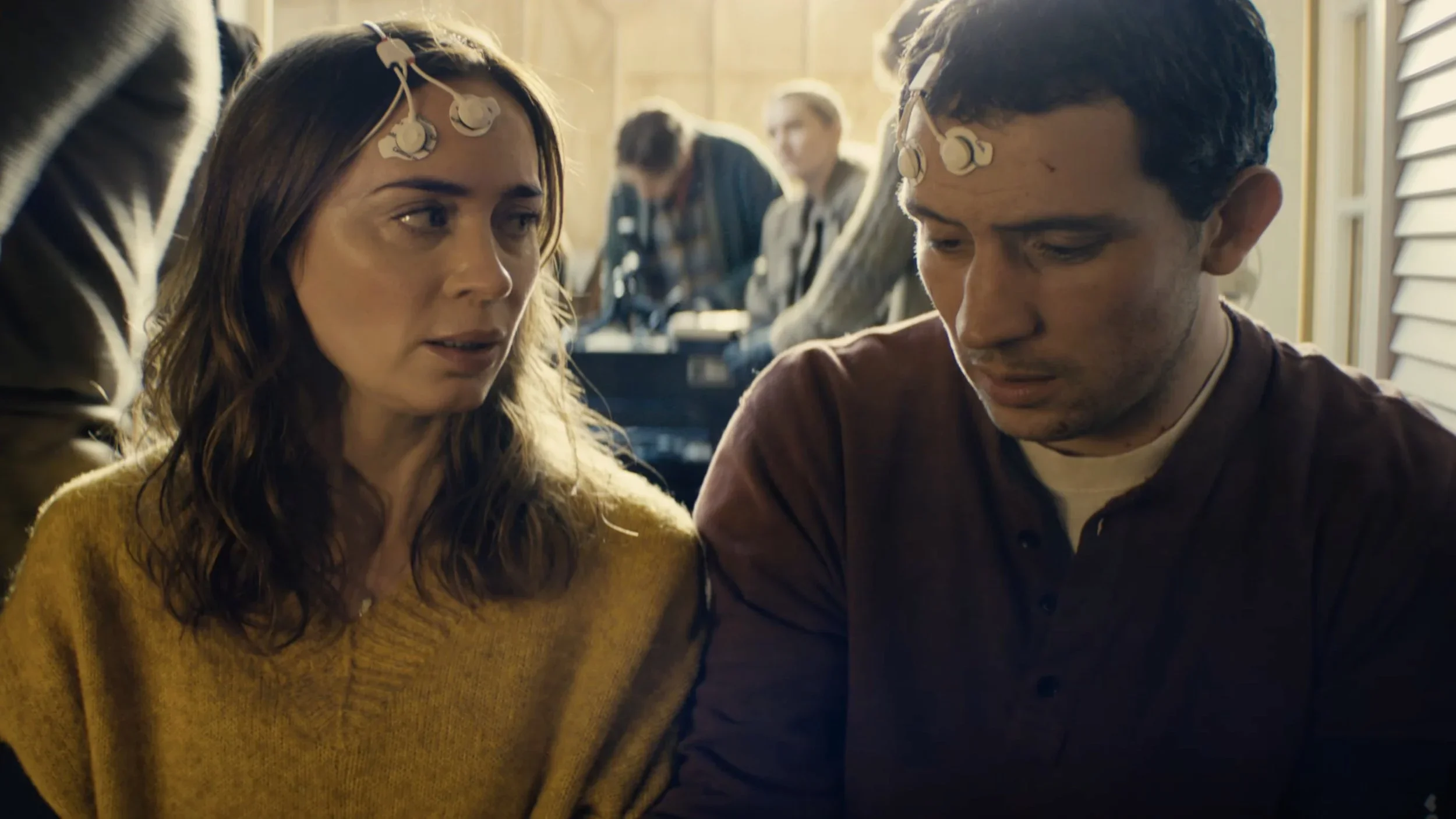
Disclosure Day uses a similar approach. Late in the film, Margaret Fairchild, played by Emily Blunt, is taken to a recreation of her childhood home by defectors from Wardex, the secretive organization that has hidden knowledge of alien existence from the public for nearly eight decades.
The group believes Margaret’s long-buried memories hold the key to understanding her connection to the visitors.
As a child, Margaret was abducted by extraterrestrials and given abilities intended to help establish diplomatic relations between humanity and the alien race later in her life. To embrace that destiny, she must confront memories she has spent years suppressing.
That emotional breakthrough arrives when Margaret and Daniel, played by Josh O'Connor, revisit the moment that changed her life.
The song guiding her back to those memories is “Someday My Prince Will Come” from Snow White and the Seven Dwarfs.
Williams doesn’t simply include the song in the scene. He builds its melody into the score itself, giving it the same thematic weight that “When You Wish Upon a Star” carried in Close Encounters.
The parallel is fascinating. Roy Neary’s story in Close Encounters is ultimately one of fulfillment and transformation. Like Pinocchio, he follows an impossible dream and finds his place in a larger universe.
Margaret’s journey in Disclosure Day mirrors that idea. Through her memories of mysterious, almost magical creatures that revealed themselves to her as a child, she learns to accept who she is and what role she’s meant to play.
In both films, Spielberg and Williams use classic Disney melodies to frame alien encounters through a lens of wonder rather than fear. The extraterrestrials aren’t portrayed as monsters lurking in the shadows. They represent discovery, possibility, and a sense of awe that feels almost childlike.
That creative choice creates a bridge between the two movies, even if they never directly acknowledge one another.
So while Disclosure Day isn’t a literal sequel to Close Encounters of the Third Kind, it does share some of the same DNA. Through Williams’ music and Spielberg’s storytelling sensibilities, the film echoes the emotional spirit of that sci-fi classic in a way that feels intentional and surprisingly meaningful.