Disney Didn’t Want Tony Gilroy to Say “Fascism” While Promoting ANDOR
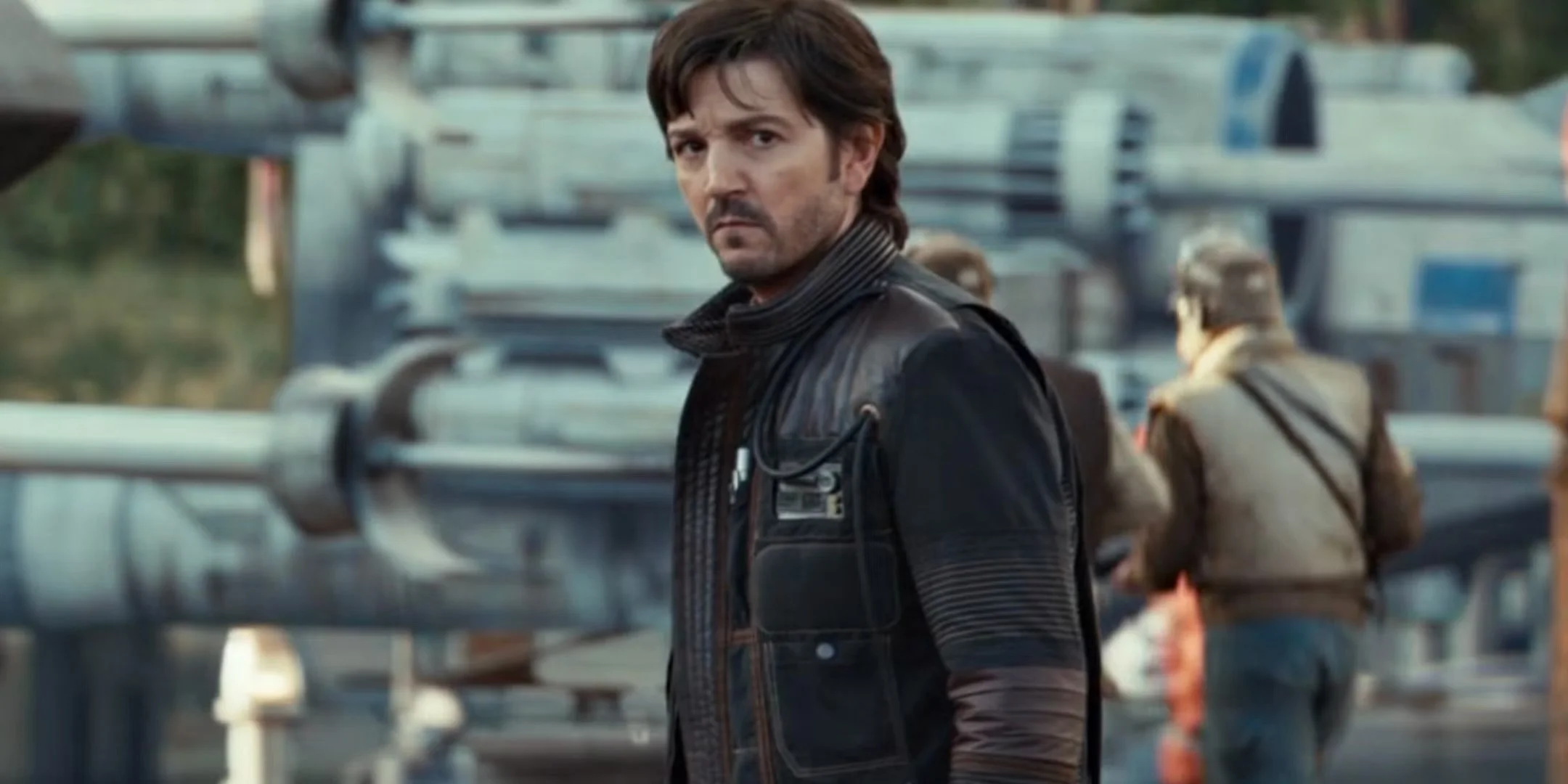
Star Wars has been about taking down a fascist regime. A scrappy Rebel Alliance rises up against a brutal Empire that rules through fear, uniformed soldiers, and planetary genocide.
It’s baked into the DNA of the franchise. But when Andor hit Disney+, the word “fascism” apparently wasn’t something Disney wanted front and center during the press tour.
That little detail comes from Tony Gilroy, the creator of Andor, in a recent interview with The Hollywood Reporter.
Gilroy explained that while the themes of the show were crystal clear to him and to co-star Diego Luna, the marketing conversation had to be handled carefully.
“Diego [Luna] and I had some early, super long-lead press, and we tiptoed out,” Gilroy said. “We were like, ‘Oh my God, this is really electric.’
“So we stepped back, and we had a bunch of people that we were going to put on the road to sell the show. The actors have a broad spectrum of political ideas, and we didn’t want anybody to perjure themselves or violate their conscience.
“So we came up with a legit historical model, and it’s a version of what I’m telling you now. ‘We studied history to make the show, and we based it on historical models. We don’t have a crystal ball. There’s comps for everything that we did all through history.’
“So that was a very, very safe and legitimate place for us to sell the show without ever having to say what I’m free to say now.”
That “safe” approach meant leaning on history rather than labeling the Empire outright. But now that the dust has settled, Gilroy is openly talking about what the show is tackling.
“The simplest answer to the strange synchronicity of [what’s happening in the U.S. right now] is really on them, the outside forces,” Gilroy said.
“We were pretty much doing a story about authoritarianism and fascism, and the Empire is very clearly a great example of that. It’s a great place to deal with those issues, and as we’ve discussed many times before, we had this wide open canvas to deal with it.”
That canvas allowed Gilroy and his team to dig into how oppressive systems form and how ordinary people get pulled into them.
Andor doesn’t just show stormtroopers marching around. It shows bureaucracy, surveillance, prison labor, propaganda, and the slow tightening of control.
It’s less space fantasy and more political thriller set in a galaxy far, far away.
Gilroy even got blunt about how closely reality has mirrored the themes explored in the series.
“So you get out your Fascism for Dummies book for the 15 things you do, and we tried to include as many of them as we could in the most artful way possible,” he continued.
“How were we supposed to know that this clown car in Washington was going to basically use the same book that we used? So I don’t think it’s prescience so much as the sad familiarity of fascism and the karaoke menu of things that you go through to do it.
“You could list them from the show, or you could list them from the newspaper.”
When the show first premiered, some viewers thought it was eerily predictive. Gilroy doesn’t see it that way.
“In the beginning, it was very confusing. People were like, ‘Oh, you’re psychic,’ or, ‘The show is prescient.’
“But in the rear-view mirror, it’s really a much sadder explanation than that,” he concluded.
That sadder explanation is history repeating itself. Andor didn’t need a crystal ball. It just needed a history book.
What makes Andor such a powerful addition to Star Wars is that it doesn’t hide what the Empire represents. It leans into it.
The show takes the familiar imagery of Stormtroopers and Star Destroyers and asks harder questions about complicity, resistance, and how rebellions are born.
Disney may have preferred softer phrasing during the press tour, but the themes were always there on screen.
The Empire has always been a fascist regime. Andor simply chose to explore that idea with more depth, more grit, and more honesty than we’d seen before in the galaxy far, far away.