Guillermo del Toro Says He’s “A Big Fan of Death” While Reflecting on FRANKENSTEIN, Art, Emotion and the Long Road to His Dream Film
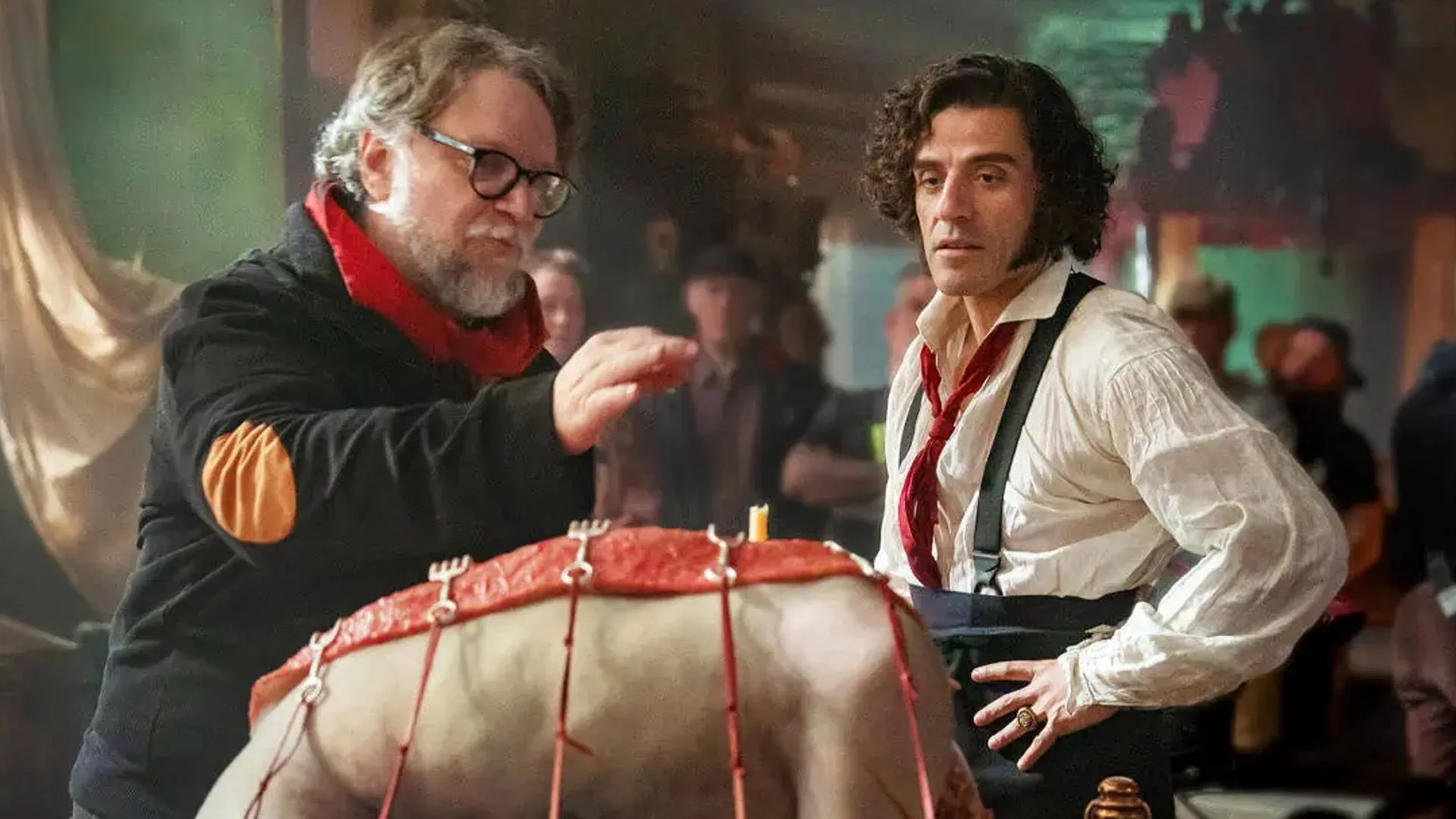
Guillermo del Toro brought his signature mix of sincerity, mythology and mischievous humor to the Marrakech Film Festival, where he surprised the crowd by shifting from the creation themes of his latest film Frankenstein to a candid meditation on mortality.
The filmmaker has always explored life and death through gothic beauty, but hearing him frame the subject so directly fascinated the audience.
“Why should you want to live longer?” he asked the room filled with fans, journalists and aspiring filmmakers. “I’m a big fan of death … I think death is really good. I’m certainly looking forward to it, because it’s the day you go, ‘Well, tomorrow I won’t have any problems.’”
The conversation ran nearly two hours and was moderated by Kim Morgan, screenwriter of Nightmare Alley and del Toro’s wife. Together they traced the influences that shaped his storytelling, especially the Romantic poets whose emotional intensity pulses through so many of his films.
That sensibility is at the center of his new adaptation of Frankenstein, which he described as the culmination of a fifty year journey.
Del Toro shared that connection began when he was seven years old and discovered Boris Karloff’s performance as the monster.
“That was religion. That was my church,” he said. “I immediately felt that what my grandmother used to feel about Jesus, I now felt about Boris. And I saw myself in him.”
Four years later he came across a paperback copy of Mary Shelley’s novel and devoured it in a single sitting. The experience etched itself into his imagination and became the dream he pursued for decades.
That dream finally materialized with his epic Netflix take on the story, starring Oscar Isaac and Jacob Elordi. Completing a project of such scale left him with what he amusingly described as “postpartum depression,” a sense of emotional emptiness after pouring so much of himself into a film he had carried since childhood.
Discussing the scale and intensity of the movie, del Toro explained, “I’m Mexican, so emotion is big for me. I think emotion is very scarce right now. We have come to a point in civilization when emotion seems to be something you hide …
“We are in a horrible moment in which cynicism simulates intelligence. If you say, ‘I believe in love,’ you’re a fool. If you say, ‘I don’t believe in love,’ you’re a wise man. I don’t agree with any of that.”
He wanted Frankenstein to embrace that emotional fullness, tracing its roots directly to the Romantics. His vision, he said, was for the film to “feel like an opera.” That ambition also came with risk, and del Toro was refreshingly open about the vulnerability required to chase something so grand.
“The Romantics took a huge step toward the possibility of ridicule,” he said. Later he returned to the thought with even more conviction. “You have to be completely open to failure if you’re ever to experience success … you have to be ready to be ridiculous. So I’m ready to be ridiculous at all times.”
It was a conversation that revealed Del Toro as sensitive, funny, philosophical and fearless about embracing darkness. Even when he talks about death, it’s with a creative spark and a storyteller’s soul.
Source: Variety