Horror Short Film VERMIN - A Recently Divorced Man Discovers He's Not as Alone as He Thinks
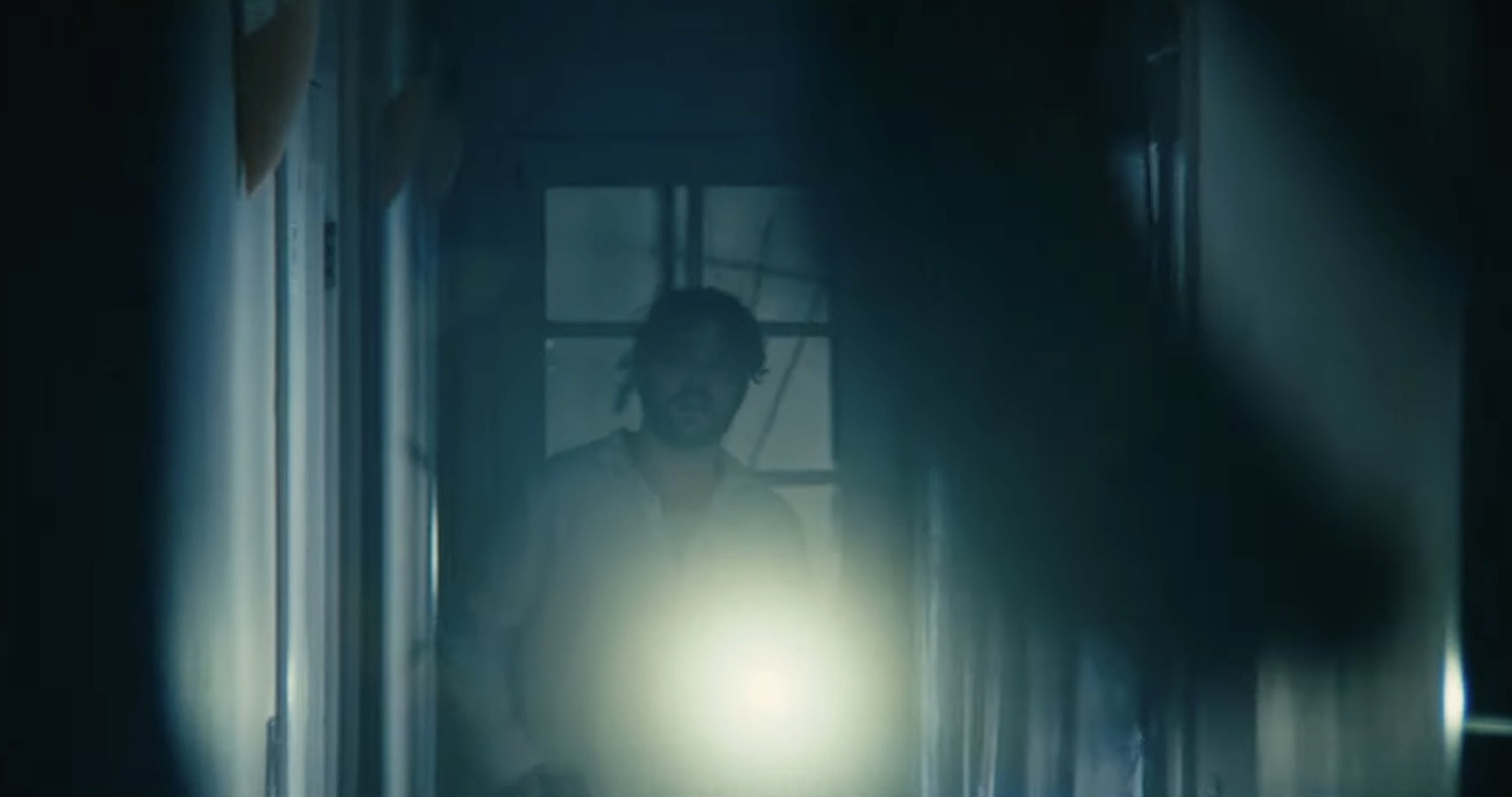
I’ve got a horror short film for you to watch today titled Vermin, which centers on a recently divorced man who discovers he's not as alone as he thinks.
“Vermin is a stand alone story. Taylor, facing an impending divorce, finds he is not as alone as he thinks. His wife Anna is expected to collect the last of her things, and, while waiting for her, Taylor finds a different visitor in the house.
“Heteronormative marriages often suffer from harmful gender roles, and Taylor is both a perpetrator and a victim of making his wife double as his mother.”
The film was written and directed by Kristen Semedo. It is shared in collaboration with the FilmQuest Film Festival, where we are looking to expose some of the great indie genre films and shorts that filmmakers are creating.
I’ve included an interview with the filmmaker below along with the short!
What was the inspiration for your film? How did you come up with the idea?
I was reading a lot of feminist film analysis at the time, and horror has been my favorite genre since I was a kid. I'd never written a screenplay before, and I learned first just by reading books. I listened to the wisdom of much more seasoned filmmakers, and gave myself the restriction of less than 10 pages.
At some point, I just saw the image of a man in my head, sitting in a messy room, getting up and screaming at the sight of spider, and trapping it. And it was immediately obvious to me what that visual could be about. While I've sometimes felt compelled to write female leads that align with my gender and experience, I wanted Vermin to be a fable about a man who suffers as much from patriarchal institutionalization.
It asks what happens when men become the victims, most especially victims of themselves. Vermin is keeping pace with our current social consciousness. I combined these themes with my love for gothic ghost stories. I find it interesting that what haunts us is often a personal reflection of our current mental state, how we feel about ourselves and the world around us, and no two ghosts look the same.
The spider motif was particularly important. Beyond the obvious black widow parallel, spiders are actually quite helpful creatures. They keep things tidy, keep the other pests away, yet we react with fear and disgust. Vermin was an intentional title choice as well. It’s very phonetically similar to the word “women.”
Tell us about yourself. What is your background? How long have you been a filmmaker?
I'm originally from Boston, and while always a writer and horror movie fan, I didn't start working in film until 2021 when I moved to LA. I was a photographer and social worker before that. I started working in the art department on indie sets, music videos, commercials, etc.
During the strikes, when all the work dried up, I decided to start writing my own scripts, and I went back to school and completed a degree in Film and Media Studies. Everything I've learned about actually making a film has come from working on set, and my interest in theme-driven plots was absolutely informed by my undergrad degree.
What inspires you to work within genre cinema and tell these kind of stories?
My very first horror film was the original 13 Ghosts from 1960. My aunt had it on VHS, and I wore the tape out when I was about 5 or 6 years old. Anything Halloween or spooky was addictive to me. I only read horror books, I mostly only watched horror films.
So when I started getting my feet wet in film, I didn't really consider writing anything else. There's something very personal about fear and dread that I feel compelled to explore. I like that a film can be just a fun, scary time, or it can be read as something a bit more profound.
I find myself exploring all kinds of relationships in my scripts, and horror seems to make a lot of sense to me when exploring interpersonal conflict in stories. It makes me feel the most human.
What was your favorite part of the filmmaking process for this project?
Working with our spider wrangler, Steve Kutcher. I really didn't want to have any VFX in Vermin, and we didn't! Steve Kutcher is sort of a bug legend around here. He worked on films like The Goonies, The Lost Highway, Arachnophobia, and so many more.
If it weren't for him, there's no way I would have brought a real Black Widow on set, which made the entire film what it is. It was a testament to resourceful outreach and spending just a bit more time solving a difficult problem for a huge payoff.
What are you most proud of with this film?
There's a very solid sense of atmosphere in Vermin. Thanks to my crew, like a spider weaving its web, we brought our individual skills together and made a really cohesive, spooky world. I also pride myself on telling a succinct, uncomplicated story that doesn't sacrifice subtext or theme. I think we did that extremely well here, and we pulled that off in one, 12-hour overnight shoot. That's all we had.
What is a favorite story or moment from the making of the film you'd like to share?
Myself, my DP, Brook, and a few more of the crew were crowded around the monitor while we were shooting the legs on the attic stairs. Obviously, it was dead quite. I was instructing Elizabeth, our ghost, to turn and point her feet towards camera and wiggle her toes.
As soon as we cut, hearing my entire crew scream, "Ewwwww, that was so gross!" was the most delightful to me. Knowing we freaked ourselves out during the take felt like a really good sign that we had something genuinely unsettling, and I'll never forget how wide I was smiling in that moment.
What was your most challenging moment or experience you had while making your film?
The final shot of the spider crawling out of the attic required a LOT of prep. My extremely talented prop master, Rachel, built a rig I designed that would replicate the crack in the attic door in a close up, and she went over to our bug wrangler, Steve's house to run some tests with a real spider.
There was some back and forth on how to get the design to work without harming the spider, and it was a real lesson in how to communicate effectively when you have department crossover, but once she and Steve piped the spider through a tube, we knew it'd work. We got three beautiful takes in the end, and that final shot ties the whole thing together.
If it did, how did your film change or differ from its original concept during pre-production, production, and/or post-production? How has this changed how you'll approach future projects as a result?
I originally wrote it thinking, naively, that I would be able to shoot in my apartment, because I have an attic ladder. It's a finished attic, and it's where I wrote the script. But the apartment was way too tiny.
In the house we shot in, we had more space, but I severely underestimated how complicated the tracking shots in the living room would be. I really love continuous tracking shots, and I wanted to pull off our laundry-folding-itself gag in one take, but our actor's path and the steadicam's path were not completely smooth. Shooting the living room scene was harder than both the spider and the ladder shots.
We ended up having to cut up the living room tracking shots, so the laundry trick doesn't happen in the same shot. Also, because of the tight schedule, we did lose coverage I would have liked to have, but overall, the story did stay in tact. I have a lot more information to work with now as far as my directorial experience, and I'll (hopefully) have a better idea of blocking and the edit in the future.
Who were some of your collaborators and actors on the film? How did you start working with each other?
Caleb Fietsam plays Taylor, and our meeting was unconventional. I used to photograph concerts, and while in preproduction, I was doing just that, with a band called Cheekface. I turned to the audience to get some shots, and there's this guy having the time of his life.
I got amazing photos of him, and when I found him to deliver those images, I found out he's an actor. He had the right look, and I asked him for a self-tape. The rest was history. Most of my crew--Cassie Lavo, Malachi Moore, Rachel Ra, Carly Graham, Brook Lee Karner--were people I worked with as crew over the years.
They're some of my absolute best friends, and we watched each other work some of the most back-breaking jobs and work our way up. It was natural to ask them to be part of this. The crew I didn't personally know before were all recommendations from the aforementioned, and I trusted them easily and implicitly, and would 100% work with each of them again.
What is the best advice you've ever received as a filmmaker and what would you like to say to new filmmakers?
The enemy of good is perfect. That was one of the first things I remember being told. And it's true; while always pushing to make the best possible version of your story is non-negotiable, I also think that many people don't try to make anything because they fear not being perfect, and subsequent criticism.
It's a killer. Your ideas will die on the vine if you get hung up on how people will feel about what you make. I know Vermin isn't perfect--and I lost many hours of sleep over that fact, so I know it's easier said than done, but my god am I proud of it. I'd rather complete a project and know I put everything I had in it, even if it's not perfect, than to never make anything.
What are your plans for your career and what do you hope this film does for it? What kind of stories would you like to tell moving forward?
I'm still writing, I have several short fiction pieces being produced as audio dramas that I hope to turn into their own scripts, and a few other scripts I'm trying to find a home for. I think I'd try my hand at drama, but otherwise, I don't foresee leaving horror.
I hope people see Vermin and feel, despite its brevity and imperfection, that a lot of thought went into the world and its themes, and trust me to be able to deliver that every time I make something. My stories don't necessarily revolve around trauma, I know that's a bit trite these days, but I am very interested in how people behave in all kinds of interpersonal relationships and the chaos that some of those relationships can cause. I want to push those ideas through ghosts and haunted houses.
What is your next project and when can we expect to see it?
There's too much in the pipeline but nothing in motion quite yet, I'm hoping to make a feature length horror film set in a desert diner, but someone has to be crazy enough to pick that up first! You can look out for my stories in audio form on The NoSleep Podcast.
Where can we find more of your work and where can interested parties contact you? Do you have a website or YouTube/Vimeo channel? Social media handles?
My website is www.kristensemedo.com and instagram is @kristensemedo I don't use other platforms really, and as I'm fairly early in this stage of my career, a YouTube/Vimeo channel is yet to exist!
Bonus Question #1: What is your all-time favorite film?
This is so unfair. It recently changed to Oddity, with It Follows having preceded it. But I can't pick, there's too many over the course of my life!
Bonus Question #2: What is the film that most inspired you to become a filmmaker and/or had the most influence on your work?
Vermin had quite a few stills from It Follows, actually, which is why it's so wide. Oddity and Caviat by Damian McCarthy both have some of my all time favorite scares, and the way he builds atmosphere is so inspiring to me. Not a film, but The Haunting of Hill House series was a huge inspiration, too. The Others and The Haunting for their grasp of atmosphere, too.