How Marshmallow Peeps Are Made: The Surprisingly Fast Process Behind an Easter Icon
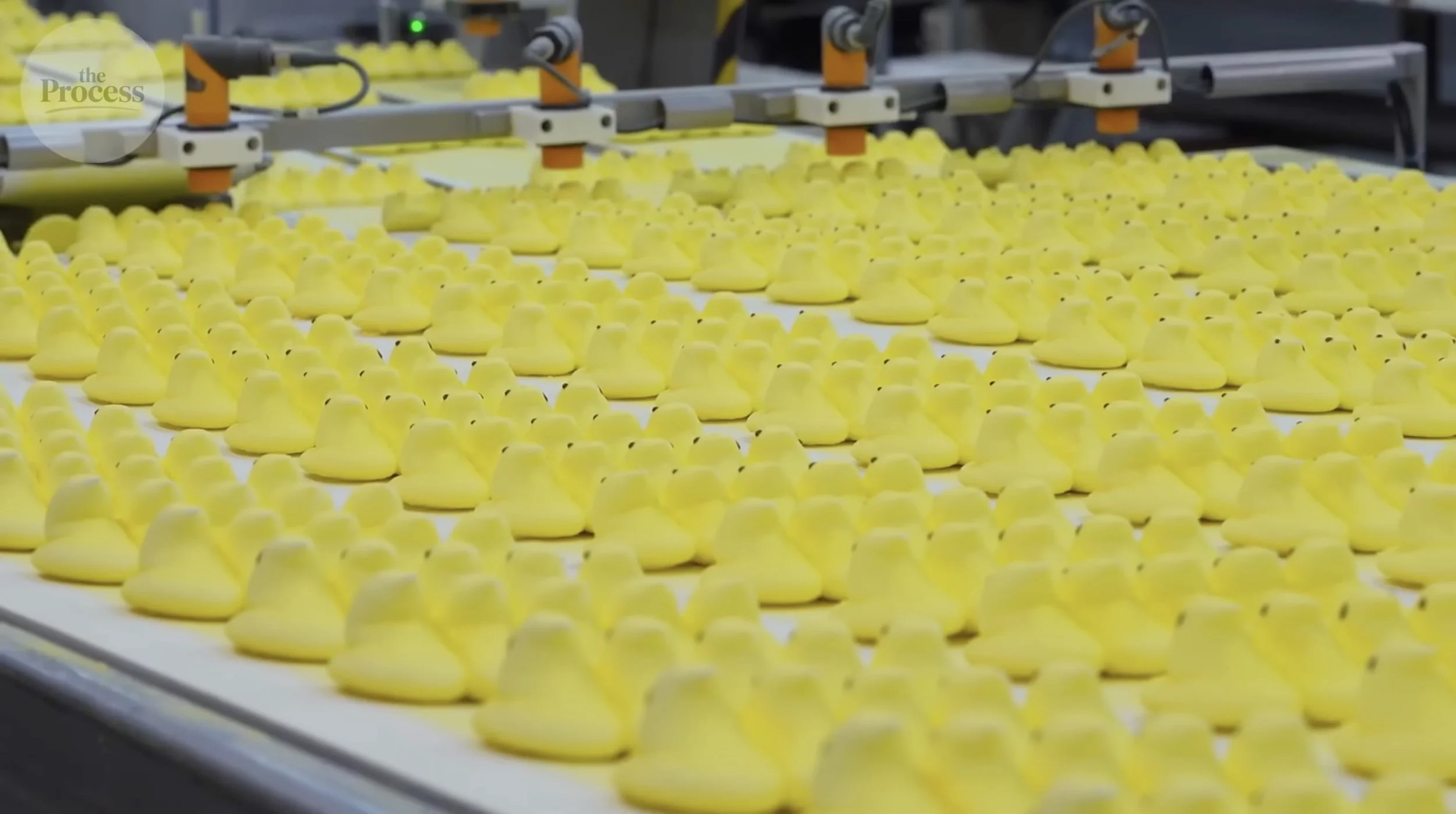
There’s something oddly fascinating about candy production, especially when it comes to those brightly colored, slightly polarizing Easter staples.
A video from The Process reveals how Marshmallow Peeps are made, and the story behind them is way more interesting than you might expect.
What starts as a simple mix of sugar and gelatin actually has a pretty wild history. These soft, sugar-coated chicks weren’t always the uniform little blobs we see today. In fact, they used to be much more… handcrafted.
“Before 1953, every peep took 27 hours. Workers squeezed marshmallow from fabric pastry bags by hand, shaped each chick one at a time, and waited overnight for them to dry. …Then one engineer built a machine that compressed the entire process into 6 minutes. The design worked, but it came with a condition. The chicks had to lose their wings.”
Once automation kicked in around 1955, the process became lightning fast, but the tradeoff was simplicity. No more delicate shapes, no more individuality. Just the smooth, familiar form we all recognize. What used to take more than a day now takes minutes.
“Same colored sugar, same two black eyes staring the same direction. A product that is 90% air made in 6 minutes from a recipe unchanged in 70 years. We do not reach for them because they are exceptional.
“We reach for them because they are there. Same candy, same basket, same time every year. …Two eyes that always look the same way. And wings that never came back.”
That’s kind of the magic of Peeps. They show up every year, unchanged, unapologetic, and somehow still part of the tradition whether you love them or avoid them.