How One BEAVIS AND BUTT-HEAD Episode Sparked MTV’s Biggest Controversy
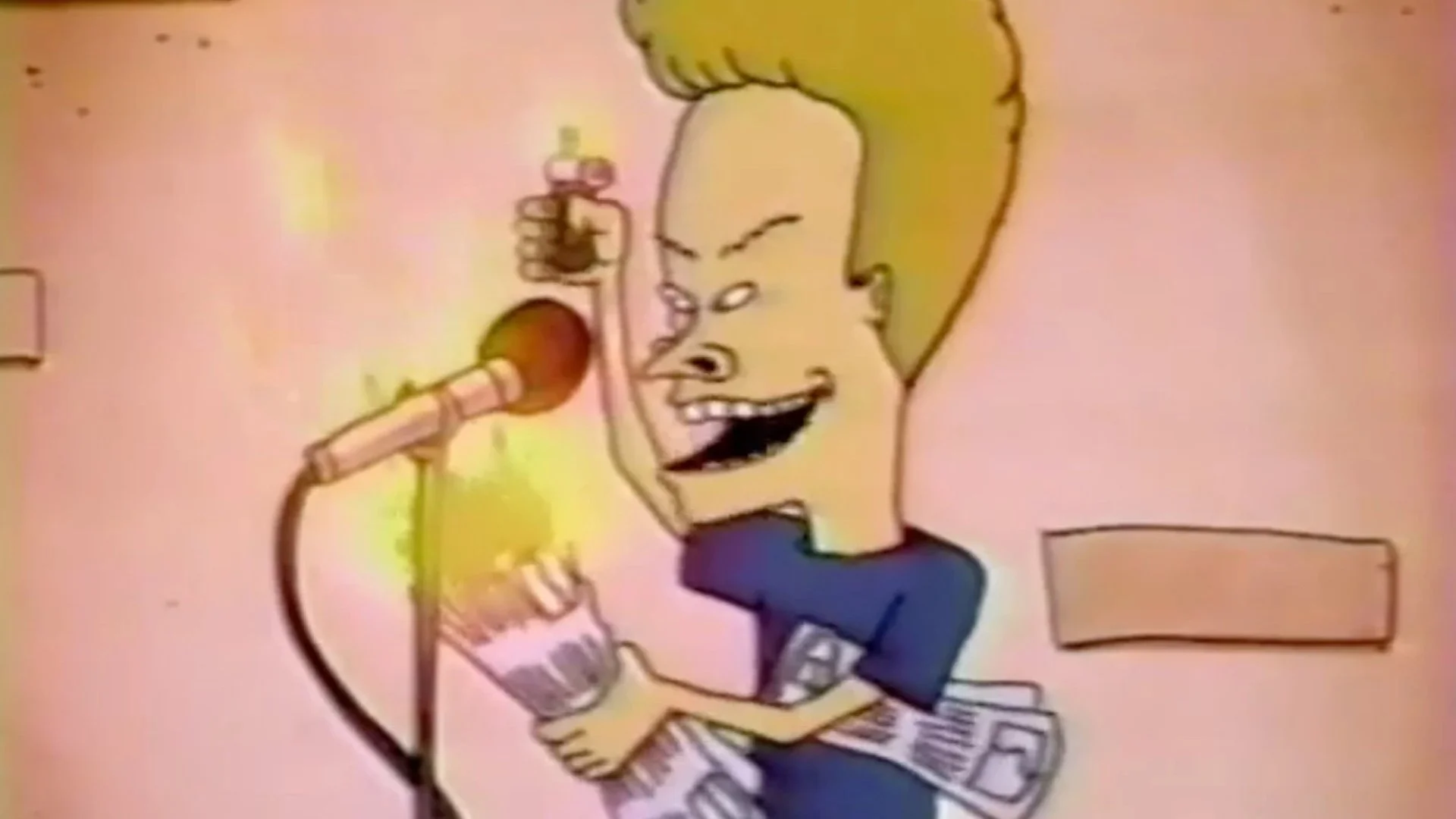
In the early 1990s, MTV built an empire on pushing buttons, and few shows did that more gleefully than Beavis and Butt-Head. Created by Mike Judge, the animated series thrived on stupidity, bad behavior, and the uncomfortable feeling that you probably shouldn’t be laughing but absolutely were.
One episode in particular ended up dragging the show into a real-world tragedy, sparking outrage, policy changes, and a controversy that still follows the series decades later.
The episode was called “Comedians”, which aired on September 6, 1993. In it, Beavis and Butt-Head catch Andrew Dice Clay on TV and fixate on his money and fame. Convinced comedy equals wealth, they wander into a local club’s open mic night with no jokes and no plan.
Beavis decides to imitate something else he saw on television and attempts to juggle flaming newspapers onstage. It goes about as well as you’d expect. The papers hit the floor, the club catches fire, and the episode ends with the duo standing outside the burning building, laughing and congratulating themselves.
Fire wasn’t a one-off gag for Beavis. Early seasons leaned hard into the idea that he was obsessed with flames. He’d shout “FIRE!” whenever he saw one, drift into near-trances, and casually talk about burning things down for fun.
The show framed it as dark comedy, but Beavis was clearly a mess. He had no supervision, and no awareness of consequences. Fire was cool. That was the joke.
Halfway through season three, Beavis abruptly stopped talking about fire. The jokes vanished. Around the same time, Beavis and Butt-Head was quietly moved from its original 7:00pm time slot to 10:30pm.
About a month after “Comedians” aired, a tragic house fire occurred in Moraine, Ohio. A five-year-old boy accidentally set his family’s trailer ablaze while playing with a cigarette lighter.
His two-year-old sister, Jessica Messner, died in the fire. The boy’s mother, Darcy Messner, claimed her son had been imitating Beavis, specifically the behavior seen in “Comedians”. The story spread fast and was soon covered by the New York Times.
Jessica’s older brother, Austin, was identified as the child who started the fire, and Darcy publicly blamed Judge’s show. In the Times article, she said:
"When you take a child in the formative years and you get these cartoon characters saying it's fun to play with fire. This is going to stick in that kid's mind and it's going to be with him for a long time."
Beavis and Butt-Head was never meant for small children, but its early evening air time made it possible for younger viewers to stumble onto it. At the same time, questions quickly surfaced.
A 1994 Rolling Stone article noted that the Messner family lived in extreme poverty and likely couldn’t afford cable television, which meant they may not have even had access to MTV. There were also later, unverified claims that Austin himself said years later that the show had nothing to do with the accident and that his mother’s substance abuse issues played a larger role.
Whether the show was actually involved or not, MTV reacted. Fire jokes were dropped immediately. Episodes were edited. The network added a disclaimer that leaned into sarcasm rather than apology:
"Beavis and Butt-Head are not role models. They're not even human. They're cartoons. Some of the things they do would cause a person to get hurt, expelled, atrrested, possibly deported. To put it another way: Don't try this at home."
MTV never fully accepted responsibility and didn’t hide its annoyance with the backlash. That attitude showed in public statements. Speaking to the Los Angeles Times, MTV senior vice president Carole Robinson said:
"'Beavis and Butt-Head' is made for teenagers and young adults, who make up the overwhelming majority of its audience. [...] These viewers see the cartoon for what it is — an exaggerated parody of two teenage misfits whose antics take place in a cartoon world, antics they know are obviously unacceptable and not to be emulated in real life."
Robinson also said the network decided to “bend over backwards as responsible programmers.” Even so, MTV became noticeably more cautious, scrubbing older episodes and keeping the show firmly in a late-night slot.
By the time Beavis and Butt-Head Do America hit theaters in 1996 with a PG-13 rating, the gloves were back off. Beavis once again fixated on fire, and audiences enjoyed it without much protest.
When the series returned in 2022 on Paramount+, the character’s obsession was fully restored. In the episode “The Special One”, Beavis even hallucinates a face in a dumpster fire and tries to follow its guidance. The fire, hilariously, tells him to exercise, recycle, and do his homework. Beavis hates that and has it extinguished.
The entire controversy fed into a much bigger argument about media influence and responsibility. Whether or not a cartoon inspired a child to play with fire remains disputed. I don’t know, for me personally, I was playing with fire as a kid long before Beavis and Butt-Head came along.