Keanu Reeves' Forgotten The Tracey Ullman Show COmedy Sketch is Wild to Watch Today
Long before he was dodging bullets in The Matrix, chasing revenge in John Wick, or traveling through time with Bill & Ted, Keanu Reeves spent a good chunk of the 1980s playing teenagers.
His youthful charm made him a natural fit for those roles, even after he was well into his 20s. But one of those early performances has become a fascinating time capsule for a very different reason.
In 1989, Reeves showed up in a sketch on The Tracey Ullman Show called "Two Lonely Souls," and looking back on it today, it's the kind of comedy that would immediately spark debate. What was once played as a romantic farce now lands as something far more uncomfortable.
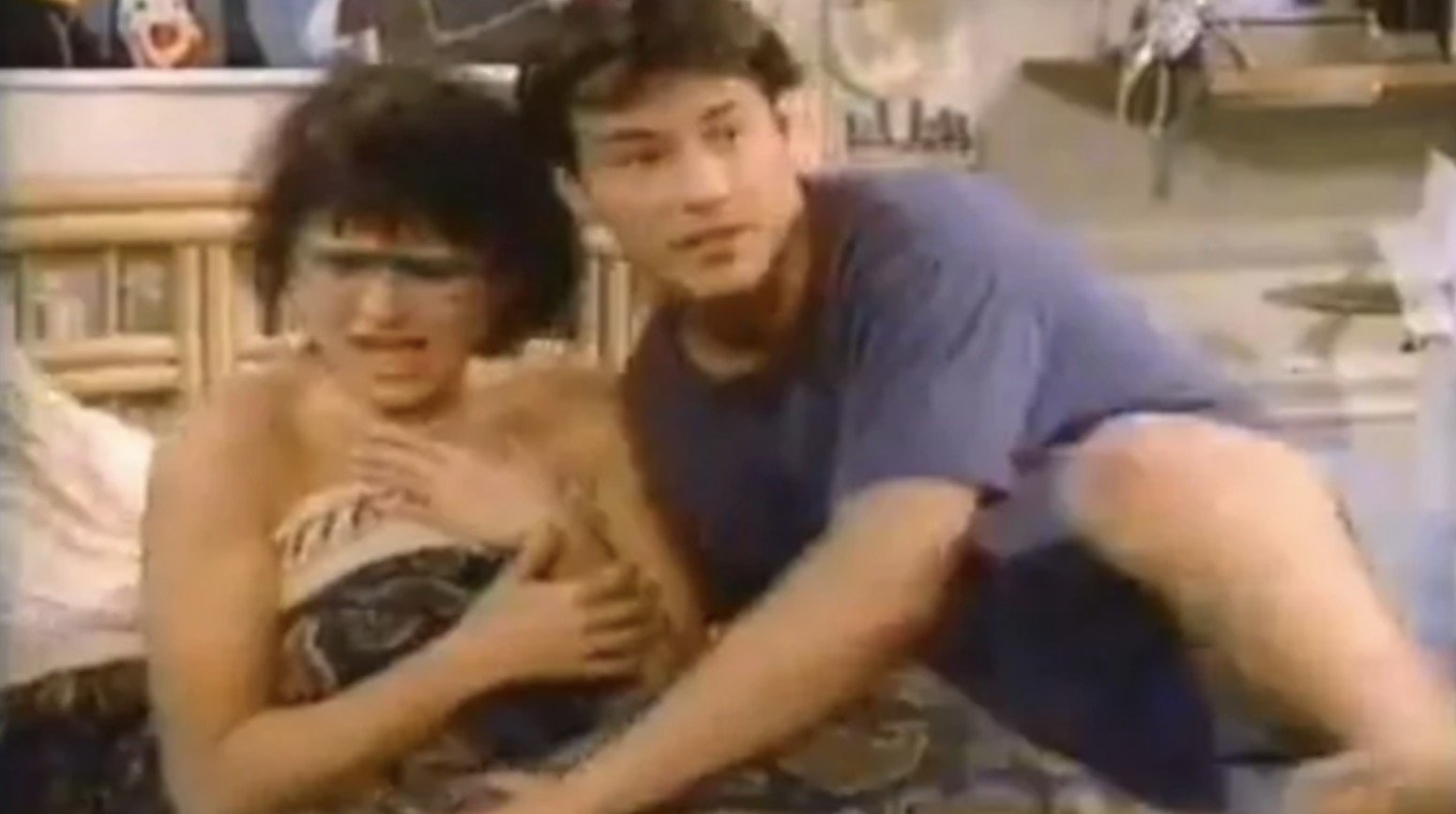
The sketch opens with Tracey Ullman's Barbara waking up in bed after a New Year's Eve party, horrified to discover she's lying next to Jesse Walker, a lovestruck teenager played by Reeves. Barbara has no memory of the previous night, but Jesse couldn't be happier.
As far as he's concerned, the evening was magical. He excitedly explains that they fell in love, got married, and even has photo booth pictures from a quick wedding chapel to prove it.
He gushes about how they bonded over their shared appreciation of filmmaker François Truffaut before enthusiastically throwing himself back onto the bed beside her.
"It's not sweet," he argues. "It's fate." The comedy is built almost entirely around Barbara's panic as she tries to process what happened while Jesse remains blissfully convinced they've found true love. Rather than celebrating the situation, Barbara immediately realizes she's the responsible adult and tries to fix the mistake.
She insists that she's the one who has to take responsibility, plans to call a divorce lawyer, end the marriage, and put the bizarre night behind her. Jesse refuses to accept that idea, convinced destiny has brought them together, and the two even share a brief kiss that sends the studio audience into cheers.
Viewed through a modern lens, it's easy to understand why the sketch raises eyebrows. The entire premise revolves around a woman who appears to be in her 40s waking up beside someone presented as a teenager. The humor comes from Barbara's embarrassment and Jesse's youthful infatuation, not from the obvious ethical issues surrounding the situation.
The sketch never explicitly states Jesse's age. It's possible he's legally an adult since he was apparently able to get married without his parents' permission.
Still, everything about the character is designed to read as a teenager. He still lives at home, excitedly talks about how his mom makes great waffles, and Barbara repeatedly points out that she has to "be the adult," making it clear Jesse isn't operating with the same maturity.
What keeps the sketch from becoming completely unsettling is Reeves himself. He throws himself into the role with infectious energy, bouncing around the room with exaggerated physical comedy and the kind of wide-eyed optimism that made him such a charismatic young performer. His performance is undeniably charming, even if the material surrounding it hasn't aged particularly well.
It also helped that audiences already viewed Reeves as one of Hollywood's rising heartthrobs. Watching Ullman kiss the young actor was likely part of what fueled the crowd's enthusiastic reaction.
Still, it's impossible to ignore how differently this sketch plays today. If the genders had been reversed, with a middle-aged man waking up next to a teenage girl, it's hard to imagine the premise ever being presented as lighthearted comedy. That contrast is part of why "Two Lonely Souls" has become such an interesting relic from late-'80s television.
It's also a reminder that comedy often reflects the attitudes of the era in which it's was created. Plenty of sitcoms and sketch shows from the 1980s leaned into scenarios that audiences accepted at the time but now feel uncomfortable.
Social awareness has evolved, conversations around consent and power dynamics have changed dramatically, and material that once generated laughs is now more likely to prompt criticism.
That doesn't erase the sketch or Reeves' performance in it. Instead, it turns it into an interesting snapshot of how much comedy and culture have shifted over the past few decades.
The Tracey Ullman Show itself was nearing the end of its run when this sketch aired. During its fourth and final season, its animated shorts were spun off into a little series called The Simpsons, while Reeves' career continued its rapid climb toward becoming one of Hollywood's most beloved leading men.
"Two Lonely Souls" isn't remembered as one of Reeves' defining performances, but it's certainly one of his most surprising early appearances.
Watching it today feels less like discovering a forgotten comedy gem and more like opening a time capsule that perfectly illustrates how much mainstream entertainment, and audiences, have changed since 1989.
Via: /Film