Kyle Chandler Reveals Why the LANTERNS Season 1 Finale Brought Him to Tears
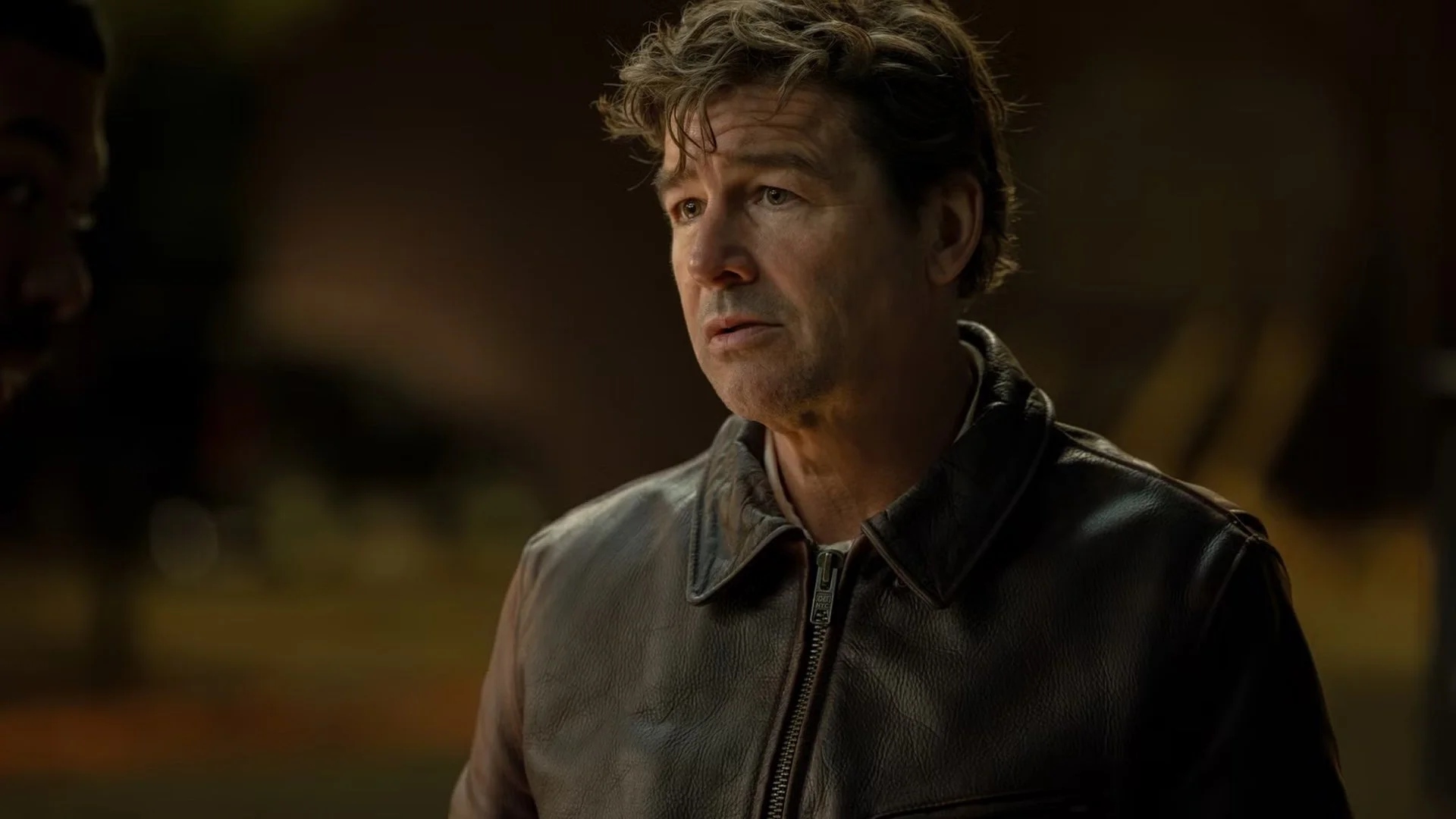
The Season 1 finale of Lanterns hit Kyle Chandler harder than he expected. After spending the season playing Hal Jordan and building his complicated relationship with John Stewart, Chandler watched the finished episode with his wife and found himself trying to hide a tear.
Considering how Hal’s story ended, it’s easy to understand why. The Lanterns finale revealed that Hal was shot and killed by his own girlfriend, with the Green Lantern managing to say “I love you” before he was struck in the head by a bullet. The episode then found another way to twist the emotional knife during its closing moments.
John Stewart (Aaron Pierre) shares one final exchange with the Halogram, who gets John to repeat his “I love you” before answering, “I love you, too, Junior.”
That moment carries even more weight after watching Hal and John’s relationship develop into something resembling a father-son bond. For Chandler, however, watching the finale brought back feelings that went well beyond the show.
During a virtual press conference following the Season 1 finale, Chandler compared the experience to the emotional release that comes after accomplishing something enormous.
“It's like when you win the state championship,” he said. “Tears come to your eye because all the work that you put in slams into you at one moment on the field.”
Watching the episode with his wife brought everything from making the series rushing back. Chandler described the experience as “saying goodbye to a lot of old friends and a lot of great memories.”
He added: “All of it really did come packed in just a little shooting star, and I did have to gently wipe away a tear so my wife didn't make fun of me.”
There was another reason Hal Jordan’s story landed so personally for Chandler. The actor lost his own father when he was 14, making the father-son relationship between Hal and John particularly meaningful. That theme became increasingly important as Lanterns explored the troubled histories of both characters.
Episode 7 made a major change to Green Lantern lore by revealing that Hal’s father died by suicide after crashing his test plane. Hal explains that generations of Jordan men struggled with severe depression and feelings of worthlessness, something he calls “The Jordan Boys' legacy.”
John’s childhood carried its own emotional baggage. His parents trained him relentlessly to become fearless and prepare him for his future as a Green Lantern, leaving him without the kind of conventional parent-child relationship he might otherwise have had.
Hal and John came from very different circumstances, but both grew up missing something important from their fathers. Chandler understood that experience personally. “The father-son aspect of this show, I think, is ... for me, I lost my pop when I was 14, and it is just incredible.”
As filming continued, Chandler began recognizing what was developing between Hal and John. “Hal had that going on with John, that father-son relationship,” he continued.
“It became apparent while we were shooting it, and that wisdom and being able to give back a little bit. So that love story is, he won my heart over in the end. And I was able to do what my father would have done for me.”
That gives Hal and John’s final exchange an especially personal dimension. Hal gets the opportunity to become a mentor and father figure for John, passing along something that Chandler himself lost at a young age.
Hal Jordan’s death proved controversial enough that James Gunn addressed the decision, but Chandler entered Lanterns without years of attachment to the Green Lantern mythology. He previously admitted: “Did I know anything about Green Lantern? I did not.”
Instead, Chandler found his connection through the character and the themes surrounding him. That connection becomes even clearer when looking back at Chandler’s comments about losing his father. In a 2019 interview with the Los Angeles Times, he explained that movies became an important part of his life during that period.
“Films filled a spot for me,” he said. “I had a hard time figuring out how I worked, how I functioned. Even to this day, I'll get a part and something goes back to that period — because there was my life before my father died, and after he died.”
He also spoke about what it meant to grow up without his father there to guide him into adulthood. “It's hard for kids to lose a parent; you're never given this baton of manhood. I'm always searching for that baton, if you will.”
With that history in mind, Hal’s relationship with John feels particularly fitting for Chandler. Hal becomes someone capable of passing along his experience, guidance and affection to a younger man who never had a normal relationship with his own father.
It also gives extra weight to one of Hal’s most personal observations in Lanterns: “Every kid's worst fear is losing a parent. Once that happens, there is nothing to fear anymore.”
Changing Hal Jordan’s family history was always going to be a big swing, especially for longtime Green Lantern fans. Whatever viewers think about that creative choice or Hal’s death, it gave Chandler material that connected directly with experiences from his own life.
By the time Hal tells John, “I love you, too, Junior,” Chandler was watching the conclusion of a relationship that had come to mean something personal to him.
It’s a scene that I’m sure hit a lot of fans in the feels.