Let’s Celebrate the Magical Handmade Craftsmanship of THE MANDALORIAN AND GROGU
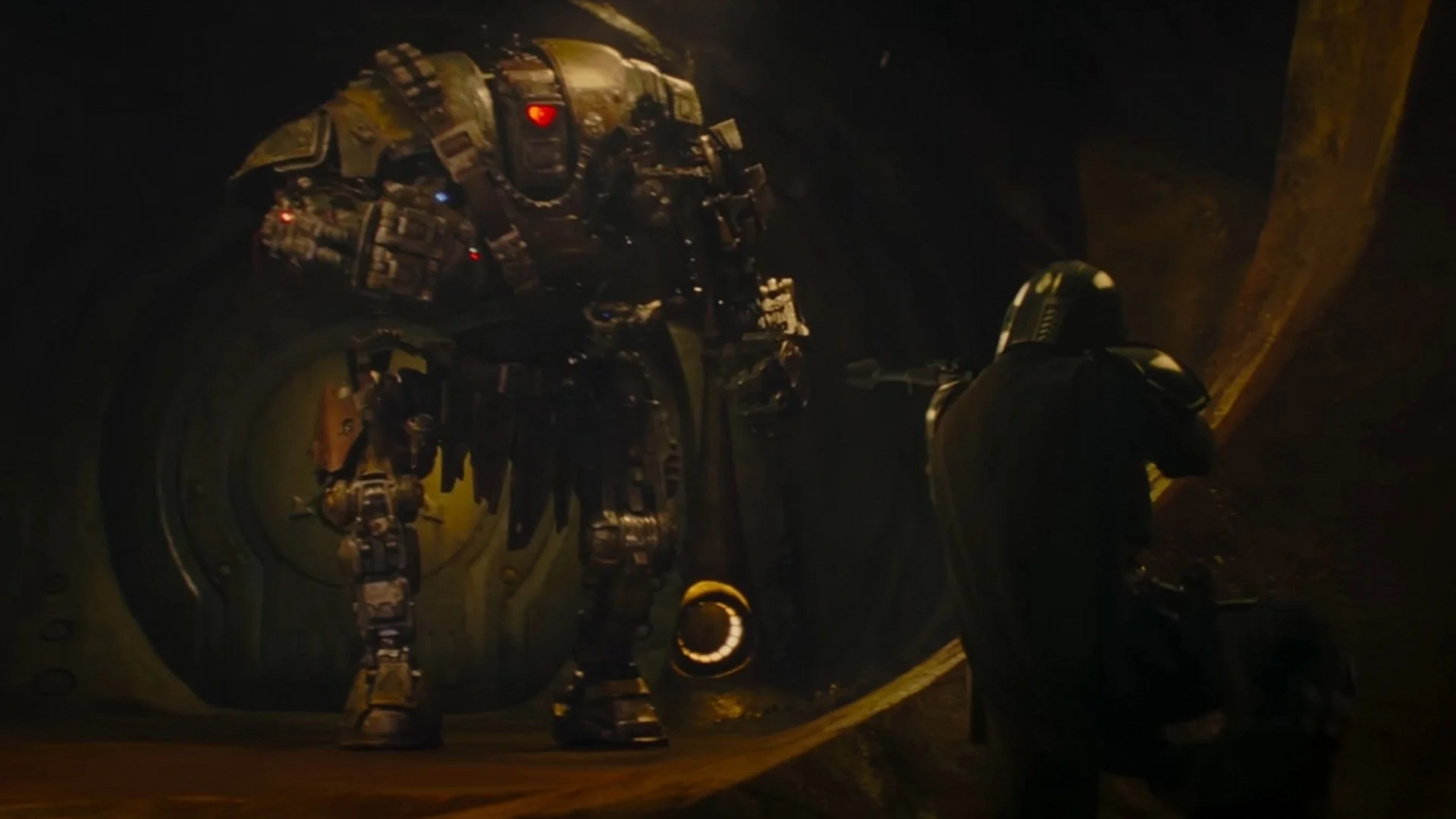
One of the things I absolutely loved most about The Mandalorian and Grogu was the fact that it fully embraced practical visual effects in a way that honestly made me grin like a kid sitting in a movie theater watching Star Wars for the first time.
I’m talking handcrafted miniatures, animatronics, puppets, creature suits, optical-style effects, and especially stop-motion animation. So much glorious stop-motion animation.
And the crazy thing is… I don’t think a lot of people even realized what they were looking at.
I keep seeing complaints online about “bad CGI” or “janky effects,” and I’m over here thinking, “You guys are literally watching old-school filmmaking techniques brought back to life.”
What some people mistook for awkward digital animation was actually handcrafted stop-motion work inspired by the exact same filmmaking methods that gave the original Star Wars trilogy its soul.
I loved every freakin’ second of it. That tactile, imperfect, lived-in texture is part of what made Star Wars feel magical in the first place.
George Lucas and the original ILM crew weren’t trying to make things look sterile and polished. They were experimenting. They were building things with their hands.
Miniatures had weight and creatures moved in strange little ways. Robots clanked around with personality. It felt real because actual artists physically created this stuff.
That spirit is all over The Mandalorian and Grogu. Even though George Lucas hasn’t been directly involved with Star Wars for years, many of the artists and filmmakers who helped shape the franchise are still carrying that torch at Lucasfilm.
You can feel that influence all throughout this movie, especially with the way Jon Favreau approached the visual storytelling.
Instead of relying entirely on ultra-clean digital effects, Favreau and his team pulled techniques straight out of the original trilogy playbook.
One example is the return of the Razor Crest. Yeah, it’s technically a different ship after the original got blown to pieces in The Mandalorian Season 2, but seeing that iconic silhouette back on screen was awesome.
What makes it even cooler is that Lucasfilm actually built a large miniature model of the ship for filming, just like they would’ve done back in the late ‘70s and ‘80s.
Favreau explained before the movie came out: "For the film, we had more time, and we had the knowhow, and we had John Goodson actually build us a larger Razor Crest that was used in the footage you saw. So we're using the models like they would have in the old days."
That’s exactly the kind of thing I love hearing. There’s an artistry to miniature photography that modern CGI still struggles to replicate. Real light hits real surfaces differently. Tiny imperfections create authenticity. That’s why those original Star Wars ships still hold up decades later.
And then there’s the stop-motion work. Seeing legendary visual effects wizard Phil Tippett involved in this movie made me ridiculously happy.
This is the guy who helped create the holographic Dejarik creatures in the original Star Wars, animated the AT-AT walkers in The Empire Strikes Back, brought the rancor to life in Return of the Jedi, worked on RoboCop, Jurassic Park, and later unleashed the nightmare-fueled insanity of Mad God on the world.
The man is a legend. Favreau talked about working with Tippett, saying: "Yes, we are working with Phil Tippett. We’re doing some cool stuff. Star Wars covers several eras of visual effects, cutting-edge stuff and old-school effects, and so we wanted to capture all of that. Selfishly, as fans, we just love working with all those tools.”
You can absolutely feel that passion in the movie. Tippett rcreated two hulking robot guards protecting the Hutts, which was so cool seeing brought to life! I loved how the robots moved and there were so many great little details utilized to bring them to life.
The film also featured a wild gladiator-style sequence involving Rotta the Hutt and Mando battling creatures inspired by the classic Dejarik holochess monsters. Watching those creatures move with that unmistakable stop-motion energy was incredible. It felt like opening a time capsule from the golden age of fantasy filmmaking.
All of this stuff took me right back to the movies that made me fall in love with this style of filmmaking in the first place. Growing up, I was completely obsessed with the incredible stop-motion creatures created by legendary animator Ray Harryhausen in classics like Jason and the Argonauts, Clash of the Titans, and The 7th Voyage of Sinbad.
Watching skeleton armies fight with swords, towering cyclops monsters, giant scorpions, Medusa, and all those fantastical creatures was pure movie magic to me as a kid. There was something hauntingly beautiful and imaginative about the way Harryhausen animated those creations frame by frame with his hands.
The movement wasn’t slick or overly polished, but that’s exactly why it felt alive. You could feel the artistry in every shot. Seeing The Mandalorian and Grogu embrace that same spirit of practical fantasy filmmaking hit me right in the nostalgia center of my brain, and I honestly couldn’t get enough of it.
At one point, Favreau even pointed out: "When you walked in, there were stop-motion models from Tippett. Those were really used in this.” That’s awesome.
This is why practical effects still matter so much. One of the things that always made Star Wars special was the detailing, the craftsmanship, and the obsession with textures, movement, models, matte paintings, puppetry, optical compositing, and handmade artistry. You could feel the human touch in every frame.
That’s what made the galaxy feel lived in. Sure, modern digital effects are incredible, and The Mandalorian series already changed the game with StageCraft and The Volume technology. But what I love about The Mandalorian and Grogu is that it doesn’t abandon the old techniques in favor of the new ones. It celebrates all of it together.
That’s what Star Wars should be. Favreau perfectly summed up why this approach matters, saying: "We think of it like it's quaint that we're doing miniatures, but at the time [when Lucas was working on these movies], it was cutting-edge tech.
“Pushing the limit on technology and storytelling and human artistry too, and how we match up those things — that's been a conversation in cinema since the beginning. It's about tech and storytelling, and finding what also feels authentically Star Wars."
That right there is the heart of it. This movie feels like filmmakers playing with the same toybox that inspired generations of artists and movie lovers in the first place. It respects the history of Star Wars without feeling trapped by nostalgia. It remembers that filmmaking can still be tactile, weird, experimental, and handmade.
I want more of this! Give me miniatures. Give me puppets. Give me stop-motion monsters moving around with jerky little animations. Give me practical creatures and handmade spaceships and artists physically crafting worlds instead of endlessly polishing pixels.
That’s the magic. That’s Star Wars.