Let’s Dig Into the Details of Stephen Colbert’s THE LORD OF THE RINGS: SHADOW OF THE PAST
There's something genuinely exciting about returning to Middle-earth through material that never made it to the screen the first time around. That's exactly what The Lord of the Rings: Shadow of the Past is setting out to do, and it's coming from a creative team that understands both the books and the films.
At the center of it all is Stephen Colbert, teaming up with Philippa Boyens and Peter McGee while reuniting with the filmmakers who shaped the original trilogy, including Peter Jackson and Fran Walsh. This isn't just another return trip to familiar ground. It's a deliberate excavation of a stretch of The Fellowship of the Ring that has lingered in the shadows for decades.
A Story Tolkien Fans Have Been Waiting For
Colbert is zeroing in on a very specific part of Tolkien's story, chapters three through eight of The Fellowship of the Ring, including the wonderfully creepy "Fog on the Barrow-downs," which happens to be one of my favorite elemets of the novel.
As he explained it himself: "You know what the books mean to me and what your films mean to me, but the thing I found myself reading over and over again were the six chapters early on in the Fellowship that y'all never developed into the first movie back in the day."
That's the hook. These chapters have always been rich with atmosphere, dread, and strange mythology that never quite fit the pacing demands of the original films. Now they're finally getting the spotlight they deserve.
A Framing Device That Expands the Myth
What's going to make this work is the narrative structure. Rather than a straight adaptation, the film looks back on these events through an entirely new lens.
The story is set fourteen years after the passing of Frodo. Sam, Merry, and Pippin set out to retrace the first steps of their great adventure, while Sam's daughter Elanor has uncovered a long-buried secret. One that raises a haunting question about why the War of the Ring was nearly lost before it even began.
This dual-track approach lets the film operate on two levels at once. On one side, you have the familiar road out of the Shire. On the other, a mystery slowly unravels as Elanor pieces together what really happened in those early, overlooked days. It's a smart structure, and it gives the story both emotional weight and genuine intrigue.
It also puts Colbert in an interesting creative position he's openly acknowledged, wondering whether they could make something "completely faithful to the books while also being completely faithful to the movies" that already exist. That tension between fidelity and reinterpretation could end up being the film's greatest strength.
The Lost Chapters, Finally Given Room to Breathe
What makes Shadow of the Past so compelling is the source material it's drawing from. Chapters three through eight of The Fellowship aren't just connective tissue between Bag End and Bree. They're packed with tension, strange encounters, and quietly consequential moments that shape the entire saga. Here's what each one brings to the table.
Chapter 3: Three Is Company
Seventeen years pass between Bilbo's farewell party and Frodo's departure from the Shire, a gap that reflects the creeping weight of responsibility before he finally sets out on his 50th birthday, selling Bag End to the Sackville-Bagginses on his way out the door.
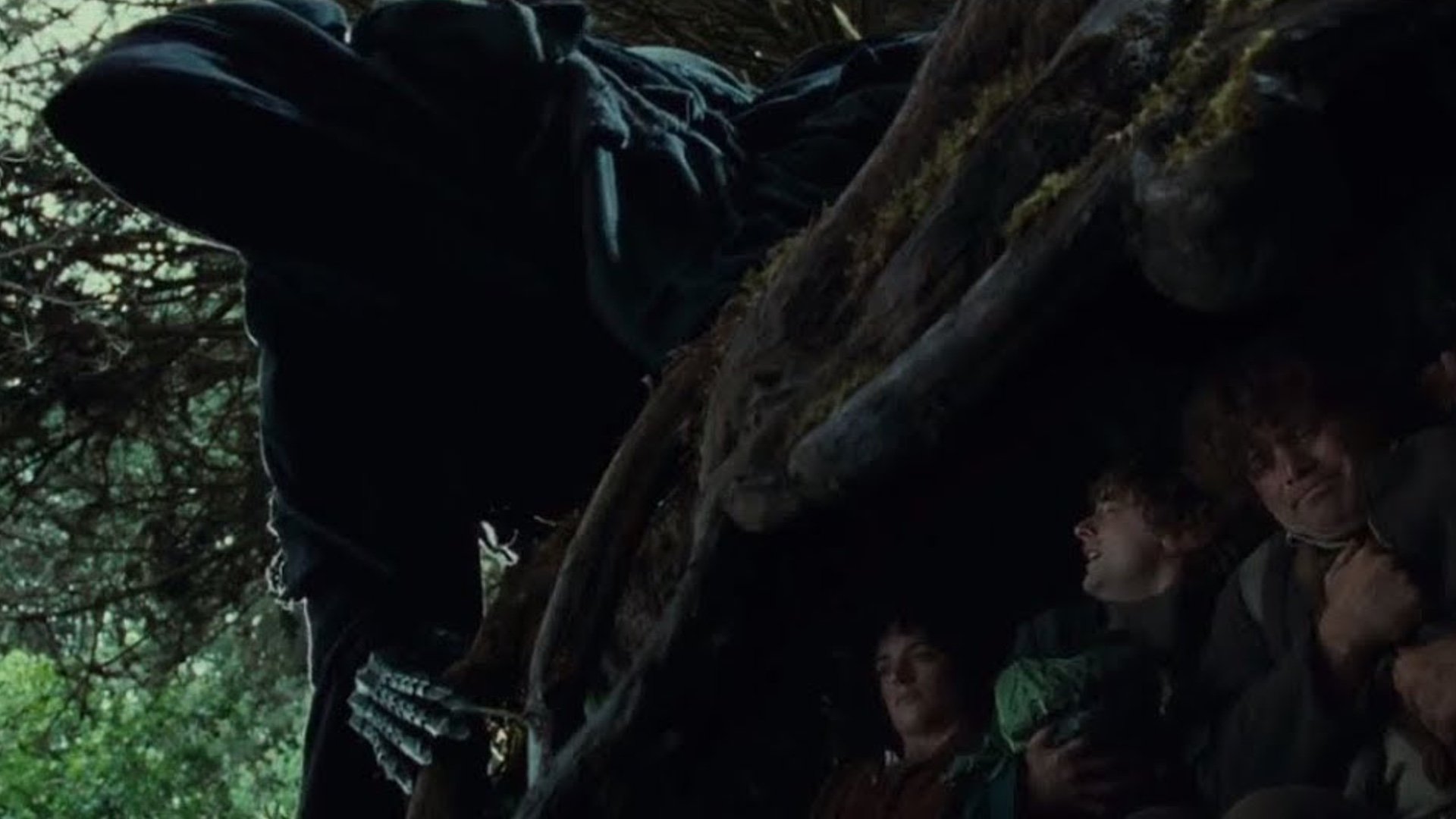
Once on the road, the tone shifts. The encounter with the Black Rider is one of the most unsettling moments in the entire early story. Frodo, Sam, and Pippin press themselves into a ditch while the Rider looms above, sniffing the air. This isn't a servant blindly following orders. It's hunting. The scene made it into the film, but the dread it carries in the book is something else entirely.
There's also a rare moment of relief when Gildor Inglorion and his company of High Elves appear. Their presence pushes back the darkness, if only briefly, and Gildor's guidance cuts right to the point: don't travel alone, don't wait around for Gandalf, and keep moving. It's a chapter that establishes the central tension beautifully, a quiet world that's already being watched.
Chapter 4: A Shortcut to Mushrooms
This chapter plays cleverly with expectations. Frodo's reluctance to cut through Farmer Maggot's land isn't about danger. It's personal embarrassment. As a kid, he used to steal mushrooms from Maggot and once got chased off by dogs. That memory makes Maggot feel like a threat before he even appears on the page.
But the reality flips the idea entirely. Maggot isn't angry. He's sharp, aware, and already caught up in the same danger. A Black Rider came to him offering gold for information about "Baggins," and he refused. That's the kind of moment that quietly defines what courage looks like in Middle-earth.
He feeds the hobbits, shelters them, and drives them to the Bucklebury Ferry himself. These are simple acts, but they carry real weight. The noose is tightening, and help is coming from unexpected places.
Chapter 5: A Conspiracy Unmasked
After two chapters of external threat, this one turns inward, and it's more emotionally resonant for it.
Frodo arrives at Crickhollow convinced he's carrying this burden alone. He's preparing to slip away and say his goodbyes, believing that leaving his friends behind is the only way to protect them. Then everything flips.
Merry and Pippin reveal they've known about the Ring for a long time, quietly piecing together the truth about Bilbo's odd behavior while Sam, the "chief spy" in their little network, was at the center of it all.
What could have been a moment of painful isolation becomes one of stubborn, unshakeable loyalty. Frodo isn't alone unless he chooses to be, and he doesn't choose it.
They decide to avoid the main road, where the Black Riders are surely watching, and cut through the Old Forest instead. It's the right call tactically. It leads somewhere far more dangerous.
Chapter 6: The Old Forest
This is where the story takes a hard turn into something genuinely unsettling.
The Old Forest isn't just a forest. It's aware. The trees lean, shift, and seem to deliberately steer the hobbits away from escape routes and deeper into their center. The further in they go, the more claustrophobic it becomes, as if the forest is working toward something.
At its heart runs the Withywindle River, described as the source of the forest's corruption, and that's where they find Old Man Willow. Merry and Pippin fall asleep against the massive, gnarled tree and are slowly swallowed into its trunk. Frodo and Sam are left helpless against something that doesn't respond to any normal solution.
Then, completely out of nowhere, Tom Bombadil arrives singing. Carefree. Utterly unbothered. With nothing but his voice, he commands the tree to release its captives. It's bizarre, disarming, and a perfect first glimpse of one of Tolkien's most wonderfully strange creations.
Chapter 7: In the House of Tom Bombadil
Tom Bombadil calls himself "Master," and his claims go even further than that. He says he was here before the river, before the trees, before the Dark Lord came from "Outside." That places him in a category that doesn't fit neatly anywhere else in Middle-earth's mythology, and Tolkien never really intended it to.
What makes him endlessly fascinating is his complete immunity to the One Ring. He puts it on and nothing happens. He doesn't disappear. He doesn't change. He can even see Frodo when Frodo is wearing it.
The Ring, which bends nearly every other will it touches, has no hold on him simply because he has no desire for power. It's one of the most quietly radical moments in the entire book.
His power comes through song. It's how he handles Old Man Willow and how he drives away darker forces later on. Meanwhile, Goldberry, the River-daughter, adds to the sense that Tom's house exists in its own pocket of reality, a place slightly outside the normal rules of Middle-earth. Peaceful, dreamlike, and strange.
Frodo also experiences prophetic dreams during their stay, visions of a white tower and a grey figure that clearly gesture toward things still to come, giving the chapter a quality of quiet foreshadowing that would translate beautifully on screen.
Chapter 8: Fog on the Barrow-downs
This is where things get genuinely dark, and honestly, it might be the most cinematic chapter of the bunch.
After leaving Tom's house, the hobbits enter the Barrow-downs and are swallowed almost immediately by a thick, unnatural fog. It feels alive. It separates them, disorients them, and draws them toward ancient burial mounds that have been sitting there since a forgotten age.
Inside one of those barrows, Frodo wakes to a nightmare. A Barrow-wight, an undead spirit bound to the ruins of a long-dead kingdom, has captured them. They're arranged in white cloth, surrounded by cold treasure, as the wight prepares what feels unmistakably like a ritual sacrifice.
It's pure horror. Dread and darkness and the bone-deep sense that they've stumbled into something ancient and indifferent.
And this is the moment Frodo earns something. Rather than slipping on the Ring and vanishing, he resists. He fights back, hacking at the wight's hand and crying out for help. It's an act of genuine courage at his most desperate, most frightened moment.
Tom Bombadil returns, breaks the spell with his song, and drives the wight away. But the aftermath matters just as much as the rescue.
From the barrow's treasure hoard, Tom gives each of the hobbits an ancient dagger, the Daggers of Westernesse. These aren't decorative relics. They were forged by the Men of Westernesse specifically to fight the Witch-king of Angmar, described as being "wound about with spells for the bane of Mordor."
That detail pays off enormously at the Battle of the Pelennor Fields, when Merry drives one of those blades into the Witch-king. The weapon disrupts the dark magic protecting the Ringwraith, leaving him vulnerable and allowing Éowyn to finish the job. There's a cost, though.
The blades aren't built to survive such contact. They wither and vanish when used against a wraith, which is exactly what happens to Merry's weapon the moment its purpose is fulfilled.
It's a perfect example of how deeply interconnected Tolkien's world is. A dagger pulled from a forgotten grave in the fog becomes the key to one of the saga's most important battles hundreds of pages later.
At the center of all of this, of course, is Tom Bombadil, still one of Tolkien's great unsolved mysteries. He is "Eldest and Fatherless," a being who predates nearly everything in Middle-earth.
He stands entirely outside the Ring's influence, outside the war for power, and operates by rules that seem to belong to a different story entirely. Whether he's a Vala, a Maia, or something that doesn't have a name, Tolkien never said, and the ambiguity only makes him more compelling.
There is so much packed into these six chapters, and that's exactly what makes this section of the story so endlessly interesting.
Why This Story Matters
What Colbert and his collaborators are building isn't a side story or a footnote. It's a missing piece, one that has been sitting in plain sight for decades, waiting to be brought to life. I never thought I’d see it happen, but here it is.
The framing device of Elanor's discovery adds a layer of legacy and reflection that feels just right. It's a reminder that even the smaller, stranger, darker moments along the road carried real consequences, and that those consequences rippled far into the future in ways nobody fully understood at the time.
I’m excited to see howShadow of the Past comes together! This could end up being a great film, and I can’t wait to see how Colbert, Jackson, and the rest of the team weave all of these story elements together.