Mike Flanagan Reflects on His CARRIE Series, Teen Cruelty, and Why Horror Connects With Young Audiences
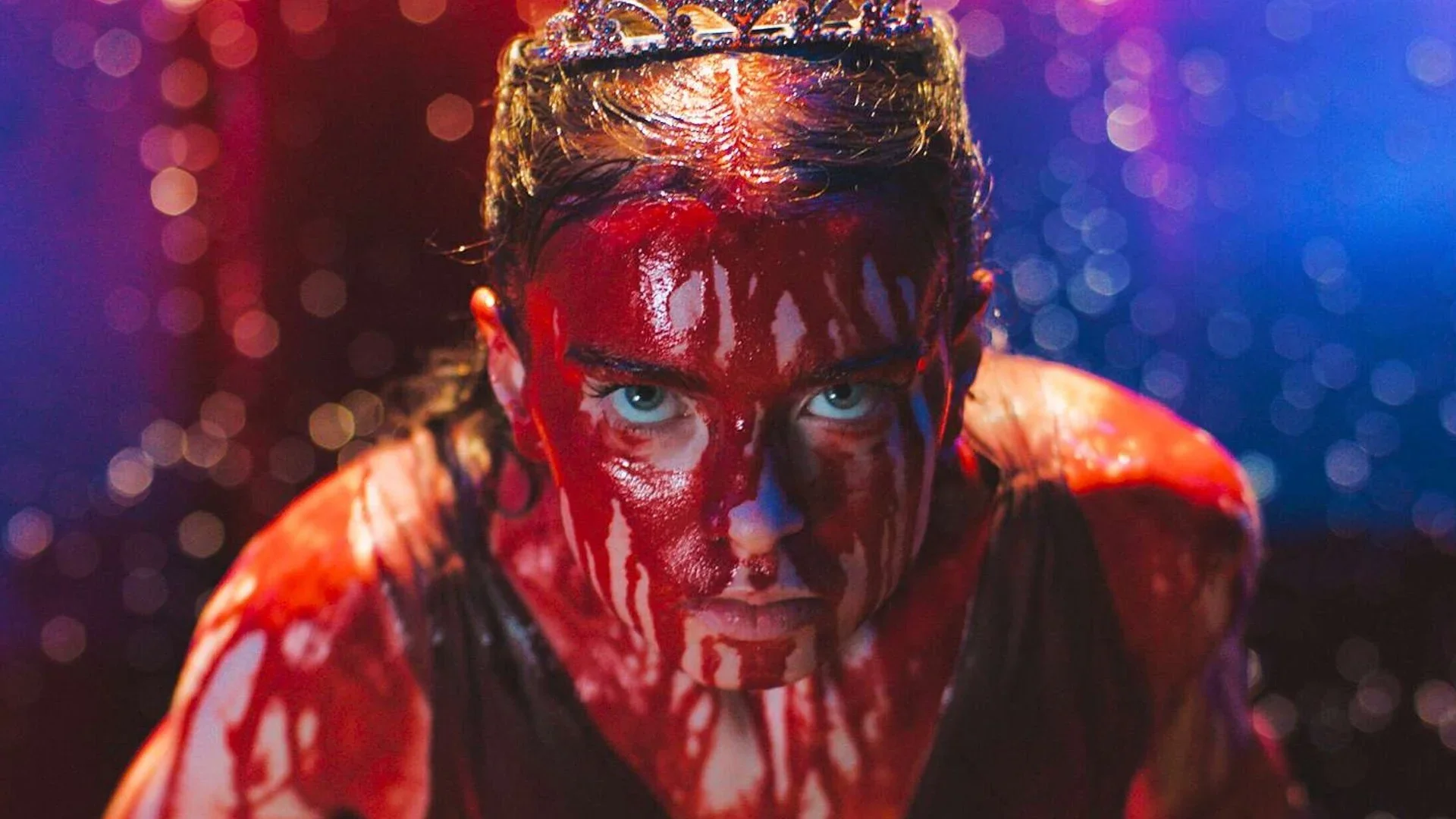
Mike Flanagan has done something pretty awesome with Carrie, taking Stephen King’s classic horror story and turning it into something that feels incredibly relevant to the world teenagers are growing up in today.
I loved what he did with the story in his Prime Video series, especially how he reimagined the characters and explored the cruelty young people face in an age where humiliation can spread across the internet in seconds.
With Carrie officially renewed for Season 2, Flanagan recently spoke with Deadline about his approach to the adaptation, the connection between horror and adolescence, and why he believes young audiences deserve stories that take their fears seriously.
For Flanagan, the new series was always about more than a teenage girl discovering terrifying telekinetic abilities. He wanted to explore how everyday acts of cruelty can spiral into something devastating.
“What I really wanted this to be was a look at what today’s teenagers have to deal with when it comes to cruelty – and the consequences of choosing cruelty,” he said. “We’re talking about a story that has always been about the choice between kindness and cruelty in small moments that add up to something much larger, and the tragic consequences when we choose cruelty.”
The series stars Summer H. Howell as Carrie White, who is quite different from the frightened, withdrawn girl introduced in King's original 1970s novel. This version begins as an optimistic teenager who, following her father's death, leaves behind an isolated upbringing with her mother and enters high school.
Unfortunately, her new life quickly becomes a nightmare as bullying, social pressures, and a viral scandal push her toward discovering her dangerous powers.
Flanagan even described his version of the character by saying, “In a lot of ways, I think of her as the anti-Carrie.”
I liked that Flanagan didn't just retell a familiar story with modern technology thrown into the mix. He found an interesting new perspective on Carrie herself, making her experiences and relationships feel more complicated. The changes give the story a different emotional impact while keeping the tragedy that makes King's original so powerful.
Flanagan, who has a teenage son, explained that today's social environment played a major role in shaping his adaptation.
“In today’s climate, on planet Earth, we have normalised and encouraged cruelty to such a degree that I think it has honestly reshaped the face of the planet in a few short decades,” he said. “It felt like that was a story worth considering.
“I was thinking about the world he was stepping into, how different it was from the world I entered in the 1990s, and how different that was from the 1970s, when Stephen King was writing about it.”
He also pointed out how previous generations could eventually leave their embarrassing teenage experiences behind. Those moments “came and went” as people grew older.
“They didn’t have a digital shelf life that could follow them, potentially for the rest of their lives, and be viewable by the entirety of the internet.”
That modern approach fits naturally into Carrie. The horror comes from the supernatural violence, but it also comes from the everyday reality of being a teenager whose worst experiences can become public entertainment.
Flanagan believes horror and young adult storytelling are particularly well suited to each other. “Horror goes hand in hand with being a young adult. Adolescence is a period of life that’s particularly conducive to relating to horror stories, and our emotions are at their peak.
“We’re living through a kind of body-horror story as we grow into ourselves and our bodies start to go crazy. I do think there’s a natural marriage there.”
It's an interesting way to look at the genre, especially when you consider how much of growing up involves fear, uncertainty, and trying to understand changes that are completely outside your control.
The series also takes a more complicated approach to its villains, something I appreciated. Characters like Carrie's controlling mother, Margaret White, and her high school tormentor, Chris Hargensen, are given more personal history and motivations.
Their behavior is still the worst, but Flanagan wanted audiences to understand how people become cruel rather than simply dismissing them as monsters.
“This is a story for younger people, and we’re hoping to encourage them, when they come to those moments where they have to choose between cruelty and kindness, to think a little longer than they might and lean towards kindness,” he said.
“It didn’t seem helpful to paint the antagonistic characters as entirely other, entirely unsympathetic. In fact, I thought that would be counterproductive to the goal.”
Not everyone gets that treatment, though. Flanagan admitted that Billy Nolan, Chris's boyfriend, remains the “closest we have to a black-and-white monster on the show.”
Another aspect of Flanagan's approach is his refusal to treat young adult entertainment as something that needs to be simplified for its audience.
He criticized the industry's tendency to underestimate younger viewers, saying that “young adult entertainment has a tendency to talk down to those viewers.”
“I’ve never liked the demarcation between adult entertainment and young adult entertainment that suggests younger viewers aren’t capable of dealing with heavy themes, real anxieties and real-world stakes. “My experience of this generation is that they’re acutely aware of things that even many adults have blinders on to.
“Most of the young adults I know are very aware of the dangers facing our planet politically and environmentally. Many are also acutely aware of the challenges they face entering a depleted workforce.
“Their odds of owning a home, or of converting a university education into a career, are getting slimmer and slimmer. They’re aware of this at younger and younger ages, and it comes with a real weight.”
That philosophy helps explain why his adaptation works so well. It respects its younger characters and audience without softening the disturbing material.
The response to Carrie has certainly been encouraging. The series debuted October 7 and became Prime Video's most-watched show during its premiere week, while also topping the U.S. streaming charts for October 5 through October 11, according to Nielsen.
Those numbers helped secure a second season, and Flanagan already has ideas about where the story could go. In an earlier interview with Collider, he described a three-season run as his ideal plan. “I think Carrie has a wonderful three-step arc,” he said. “It’s a trilogy, really.”
Flanagan also discussed the broader horror genre and why audiences continue responding to such different films. He pointed to Sinners and Weapons from 2025, along with 2026 releases Backrooms and Obsession, as examples of stories connecting with viewers in different ways.
“You look at last year and films such as Sinners and Weapons, and then this year you look at Backrooms and Obsession,” he said. “These are very different films, with very different approaches, speaking to very different fears.
“All of them resonated with audiences in a major way; unpacking why is difficult. Every studio in town has teams of people trying to figure out what makes these stories speak to audiences.
“The thing about the horror genre – and the reason it endures, why it’s one of our most vital and most frequently underestimated genres – is that it reflects some of the most universal emotions we have.
“The first emotion we all feel – we don’t remember it because we’re brand new in the world – is fear. That stays with us for the rest of our lives. It changes form and is triggered by different things, but it connects every human being on the planet.
“Horror is one of the only genres that lets us confront fear head-on. It holds a mirror up to our anxieties, shortcomings and the things about our lives, our world and ourselves that terrify us and make us uncomfortable.”
He believes younger audiences connected with Backrooms and Obsession because their stories reflect fears about the future and the possibility that their dreams might never work out.
Those reactions, he said, were “driven by their anxieties about the world they’re inhabiting and the futility of their wishes,” adding: “The idea that even wanting things in this world might turn around and hurt them is something that really strikes me about Obsession.”
Flanagan has plenty of experience finding the human fears that make horror effective. His credits include The Haunting of Hill House, The Haunting of Bly Manor, The Fall of the House of Usher, Doctor Sleep, Hush, and Absentia. He's also working on The Exorcist: Martyrs, contributed the first draft of Clayface, and is involved with Henry Cavill's upcoming Warhammer 40,000 adaptation.
Despite the changes taking place across Hollywood, including the Paramount and Warner Bros. merger, Flanagan remains optimistic about horror's future.
He believes the genre's relatively affordable production costs will continue making it attractive to studios. “Will always appeal to studios and producers because it can be made more cheaply [than other genres].
“It can be done without movie stars and without major effects, and it can draw huge audiences without requiring as much money up front. The cynic in me says horror will always be popular for that reason.”
As for Carrie, I'm happy Flanagan is getting another season to continue exploring his version of King's story. I loved how he handled the first season, particularly his willingness to change familiar characters while keeping the emotional heart of the material intact.
With Season 2 moving forward and Flanagan envisioning a possible three-season story, I'm excited to see where he takes Carrie next. He's already shown that there's plenty of room to do something fresh with this horror classic.