New Report Reveals Why Your Favorite TV Shows Keep Getting Canceled

Getting hooked on a new TV series has become a bit of a gamble. You invest eight or ten hours, get attached to the characters, hit the finale, and then spend the next several months wondering whether the show will actually come back.
A report from data intelligence company Luminate offers a pretty revealing look at why so many TV shows are getting canceled, what can help a series survive, and how streaming has changed the renewal game.
Luminate released a 32-page study examining TV renewals and cancellations across streaming, broadcast, and cable, with the data primarily covering 2022 through 2025. One of the more surprising findings involves Netflix, which has developed quite the reputation for sending shows to an early grave.
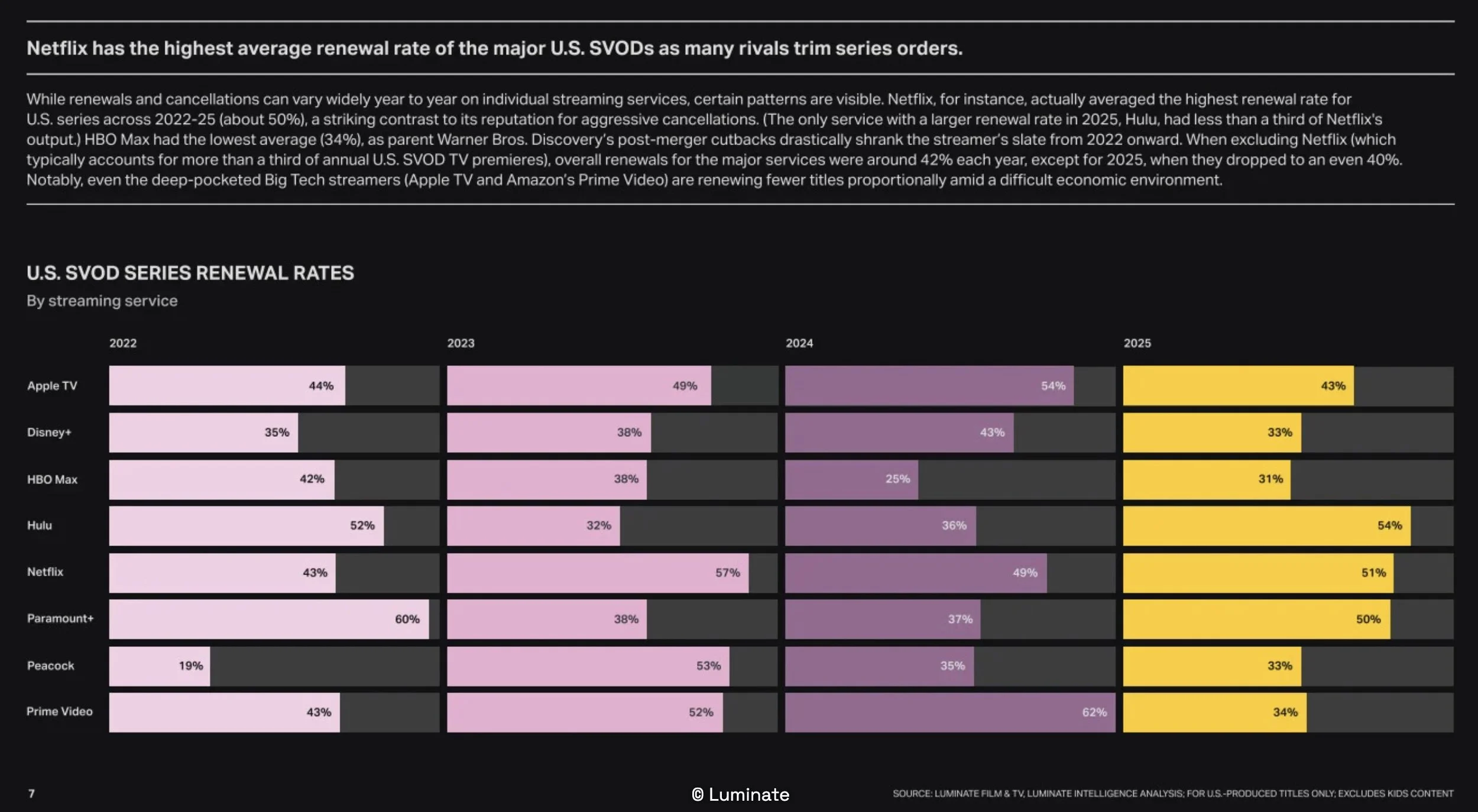
The numbers suggest Netflix might not deserve all of that heat. During the period Luminate studied, Netflix renewed around half or more of its scripted and unscripted programming in certain years, putting it near or ahead of several major competitors.
In 2023, Netflix posted a 57% renewal rate compared with Paramount's 38%. In 2024, Netflix landed at 49%, while Prime Video reached 62%.
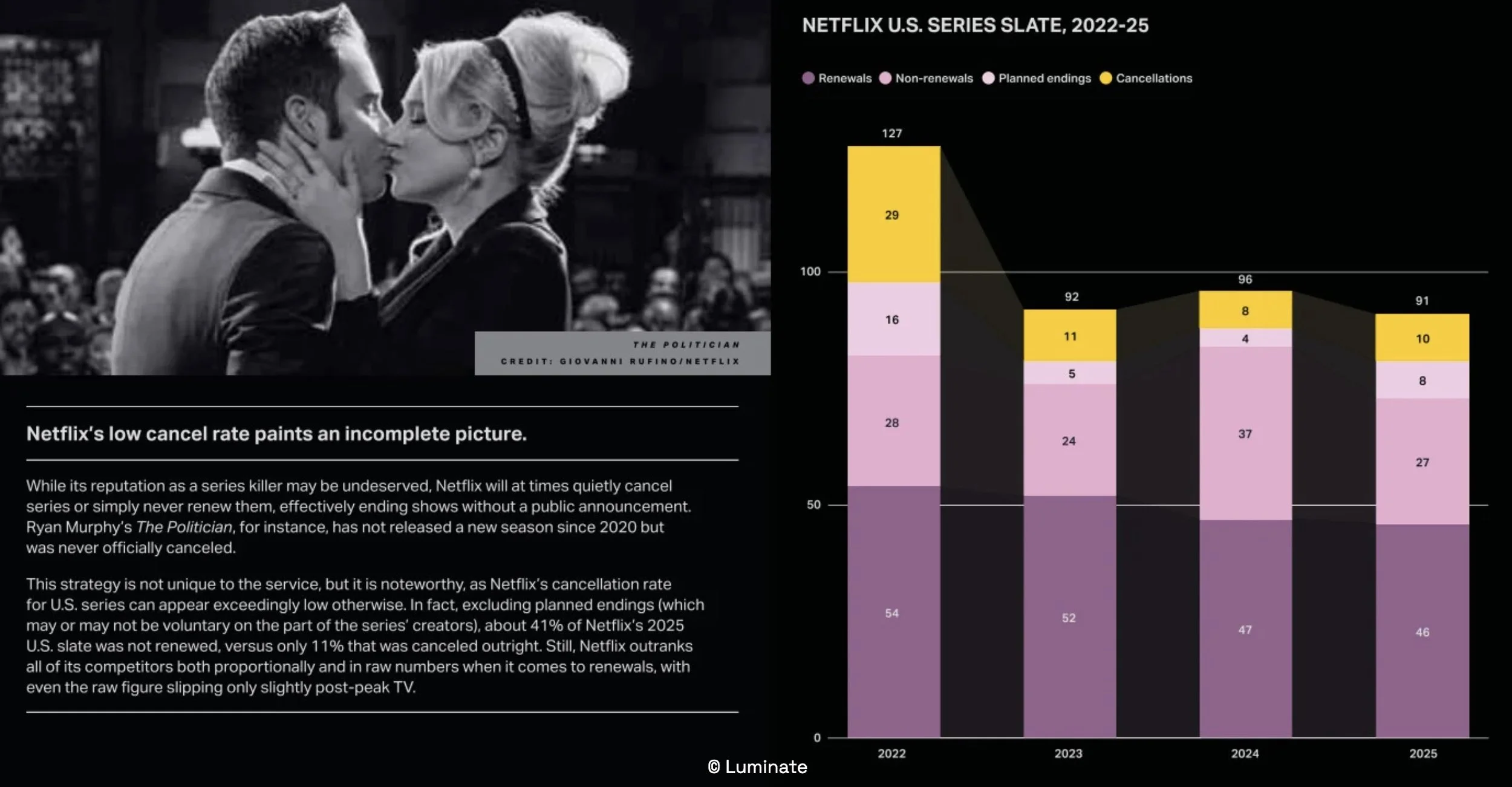
There is, however, a catch when looking at cancellation statistics. A series doesn't necessarily have to receive an official cancellation announcement to be dead. Some shows simply don't get renewed, while others reach planned endings that may or may not have been entirely the creators' choice.
Luminate explained: “Excluding planned endings, which may or may not be voluntary from the series’ creators, about 41% of Netflix’s U.S. slate in 2025 was not renewed, versus only 11% that was canceled outright,” wrote Luminate. “Still, it outranks all of its competitors both proportionally and in raw numbers when it comes to renewals.”
So Netflix still kills plenty of shows, but its reputation as the uniquely ruthless executioner of television doesn't really tell the whole story. The bigger problem appears to be streaming itself.
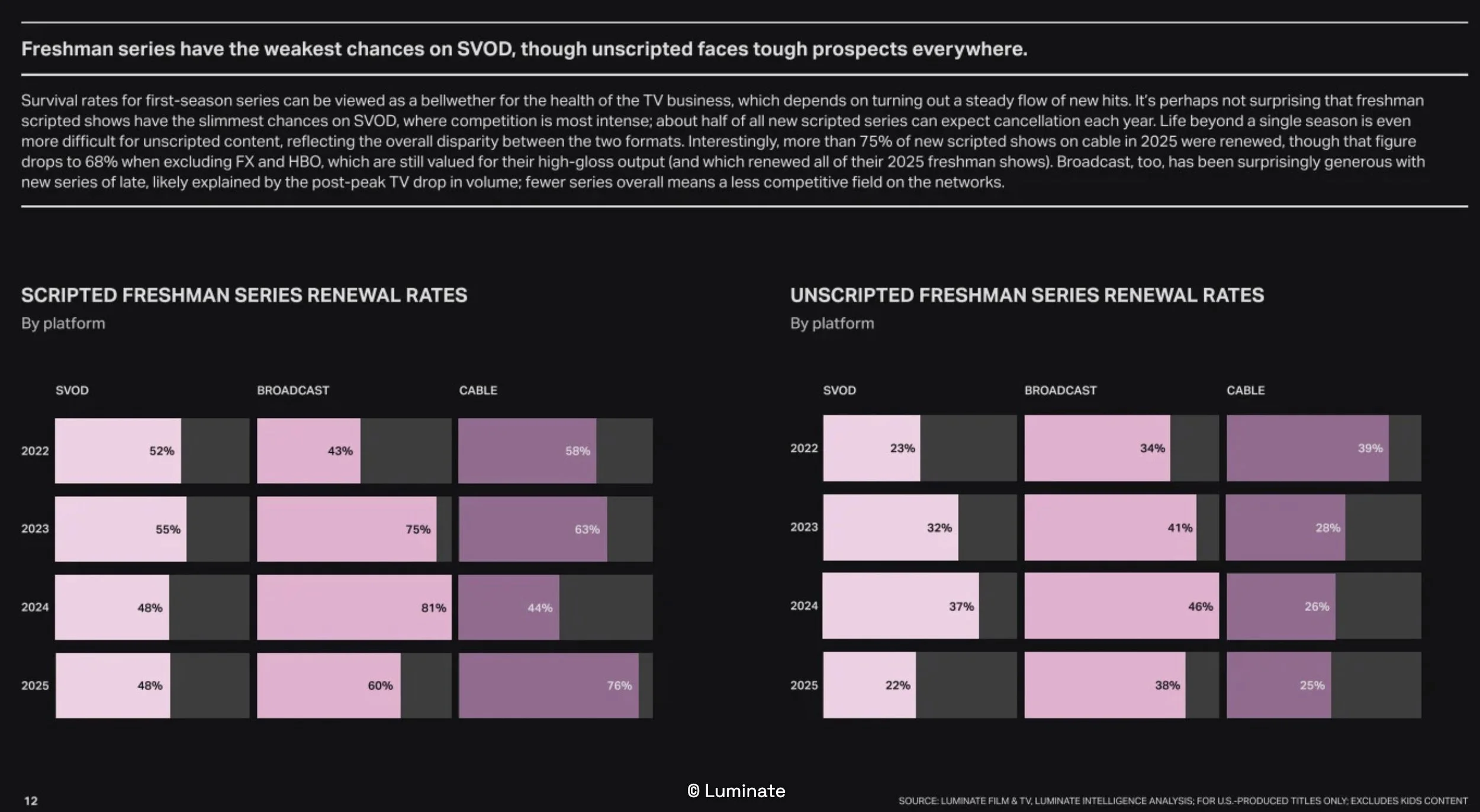
If you're watching a first-season streaming series, its chances of reaching Season 2 aren't particularly comforting. Across the four years studied, scripted streaming shows had renewal rates ranging from a low of 48% to a high of just 55%.
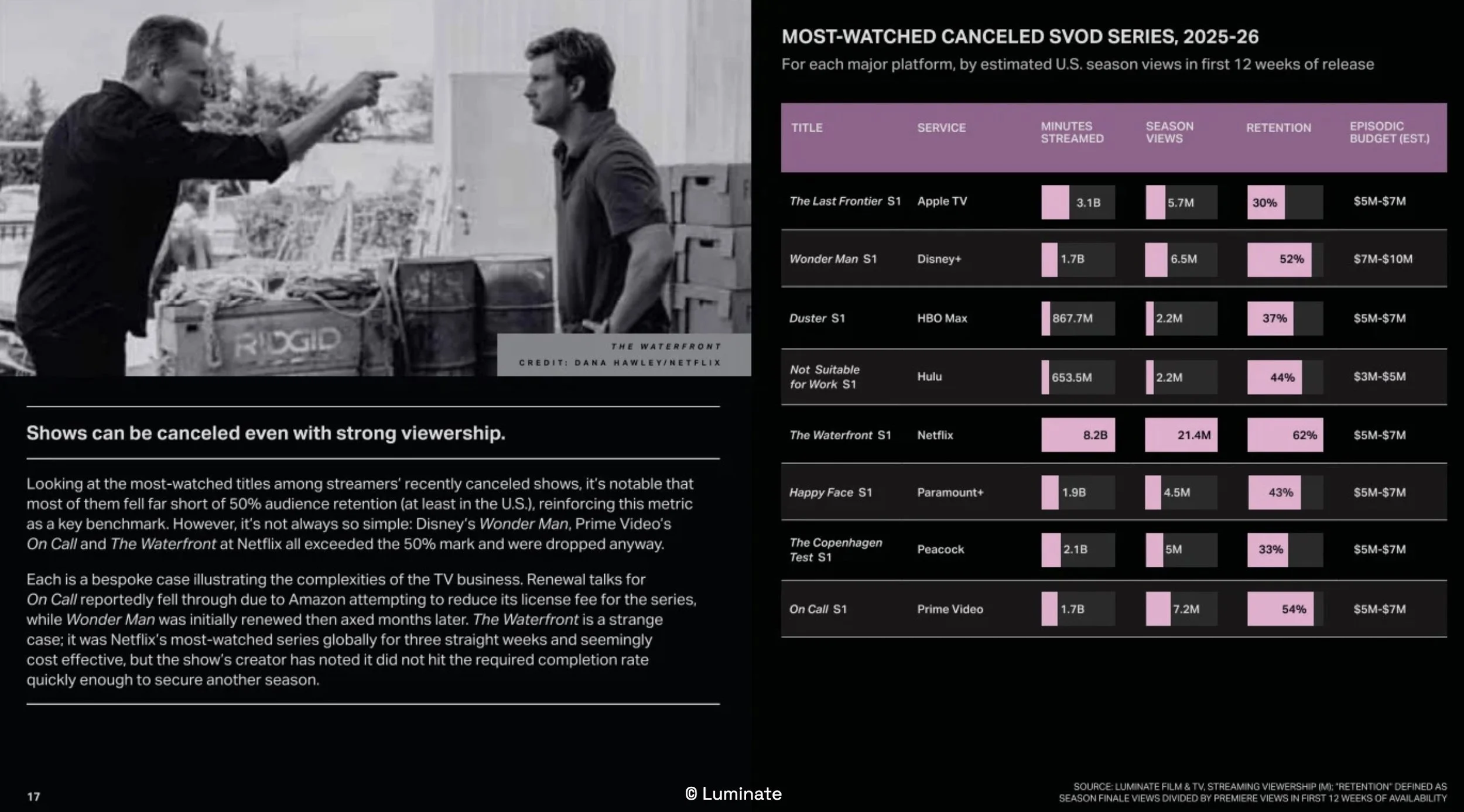
Basically, getting a second season is hovering around coin-flip territory. Viewer retention plays a major role in those decisions. Luminate's examination of recently canceled shows from major streaming services included Wonder Man, which managed a 52% retention rate and an estimated 6.5 million views.
That made it the third-highest performer among the canceled shows examined. At the other end was Apple TV's The Last Frontier with a 30% retention rate.
Normally, reaching 50% retention or better is a pretty encouraging sign for renewal. Wonder Man proved that even clearing that threshold doesn't guarantee anything.
That's an important part of the modern TV cancellation problem. Of course, viewership matters, but it isn't the only factor. A show can seemingly hit the numbers expected of it and still disappear because the equation also includes cost, corporate strategy, subscriber value, programming priorities, and whatever else a company decides matters at that particular moment.
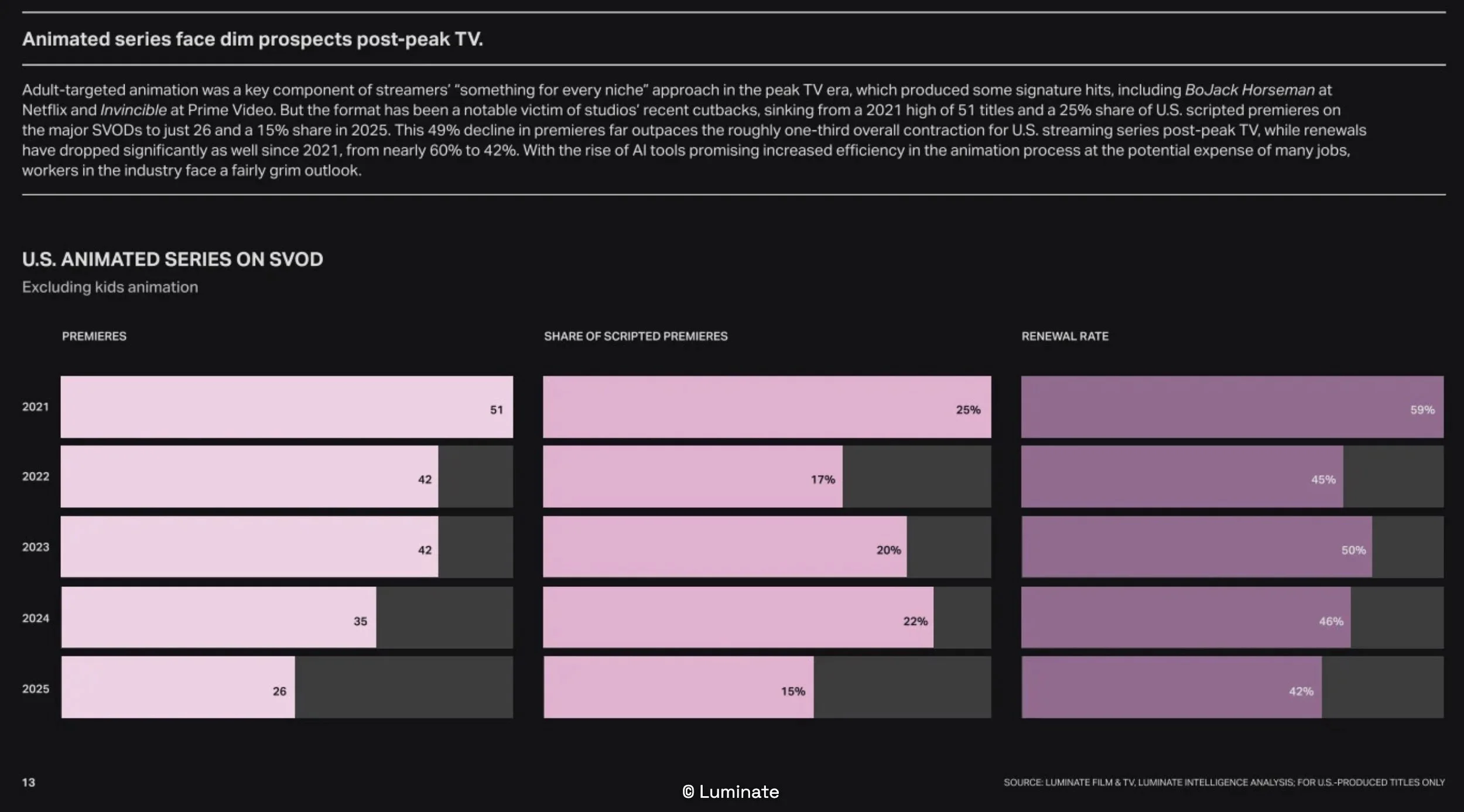
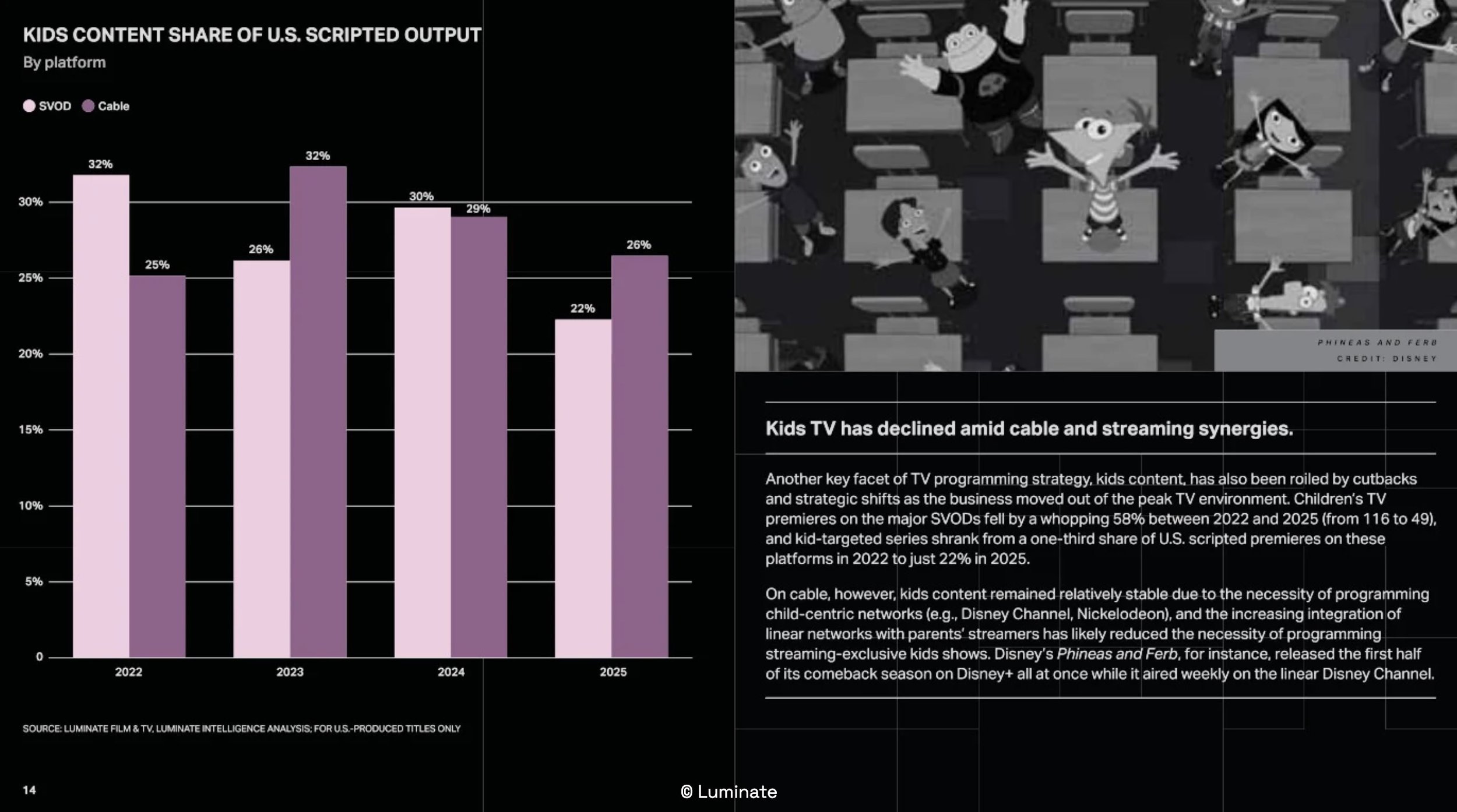
Animation isn't escaping the carnage either. Luminate found that adult animation on streaming declined in both premieres and renewals between 2021 and 2025. Kids animation has also taken a beating.
By 2025, renewal rates across streaming and cable had fallen to around or below 25%. Both areas have faced major cutbacks and shifting corporate priorities, although children's programming reportedly maintains a “relatively stable” presence on cable.
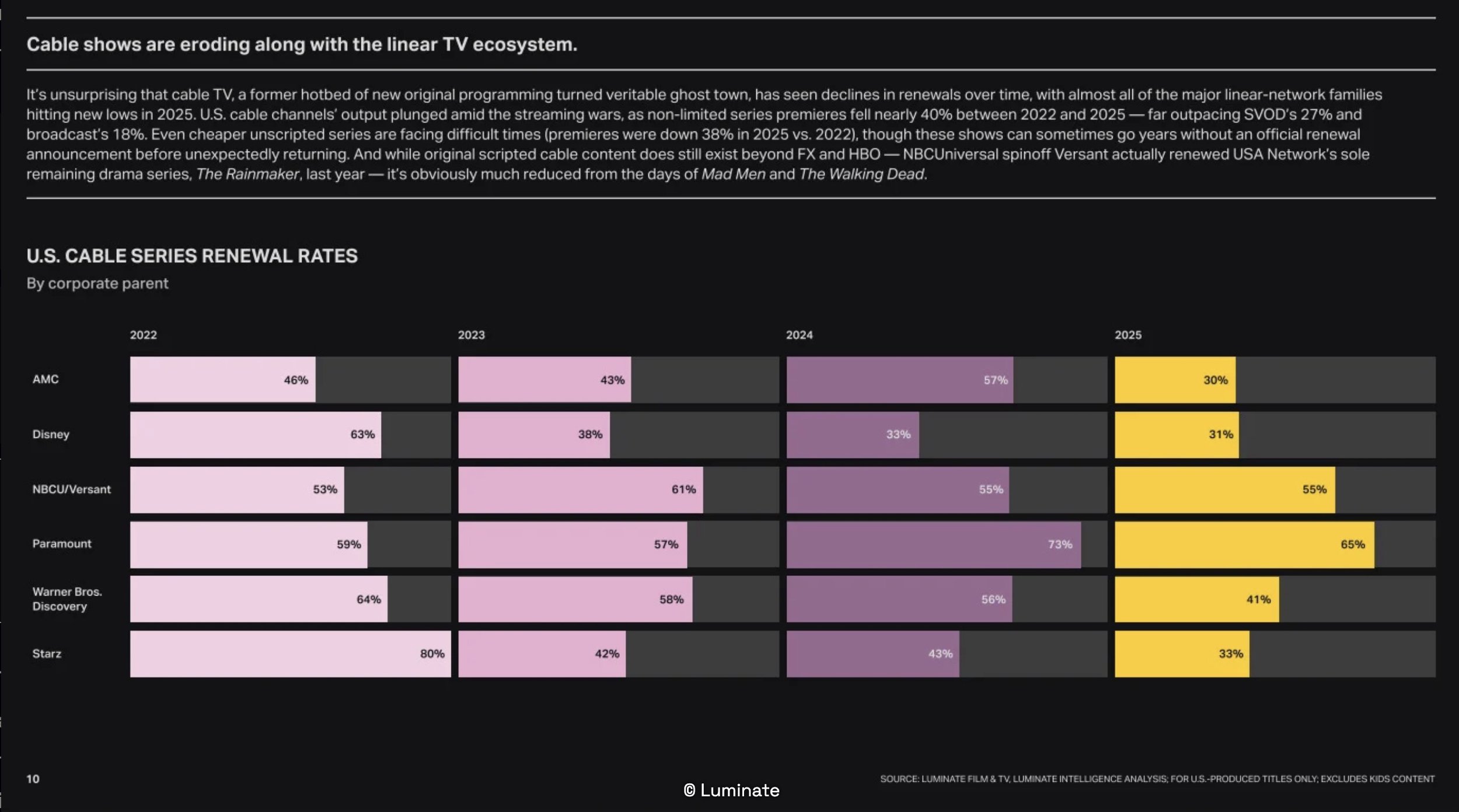
Cable itself is another story, and it's an ugly one. Broadcast television appears to have a better shot at keeping shows alive because of what Luminate describes as “often more straightforward programming decisions…and uncomplicated viewership data.” Cable, meanwhile, is turning into what the report calls a “veritable ghost town.”
Companies including NBC and Disney have reduced renewals. Disney dropped slightly from a 33% renewal rate in 2024 to 31% in 2025. AMC's decline was considerably harsher, falling from 57% to 30% over the same period.
That's a rough shift in only a year, and it shows how quickly the ground underneath a TV series can change. There are obviously still major successes. Shows such as Lanterns and Reacher are reportedly performing well, and television isn't suddenly going to disappear.
People still want great shows. The troubling part is the shrinking margin for those shows to find an audience, grow over multiple seasons, and justify their existence before a company decides to move on.
That's especially rough when you remember how many classic TV shows needed time to become what audiences eventually loved. The current streaming model doesn't always seem particularly interested in patience.
Unfortunately, 2026 isn't looking much better. Based on data gathered from the first half of the year, Luminate describes the outlook as “not encouraging.” The information remains incomplete, but the company says it would be “not surprising” to see streaming renewal rates continue dropping by the end of 2026 or cable remain stuck with its “dire” renewal rate.
None of this means every cancellation is some inexplicable corporate decision. Some shows cost too much, some fail to hold viewers, and some simply don't connect with enough people. But Luminate's numbers make show that even a seemingly healthy audience isn't always enough anymore.
That's what makes following new television increasingly frustrating. Viewers are being asked to invest in new characters, worlds, and stories while knowing there's a very real chance they'll never get an ending.
At this point, finishing Season 1 of a streaming show might need to come with a new ritual to enjoy the finale, check the retention numbers, and hope somebody in a boardroom likes the math.