Phil Lord and Christopher Miller Explain How The SPIDER-VERSE Inspired the Visual Ambition of PROJECT HAIL MARY
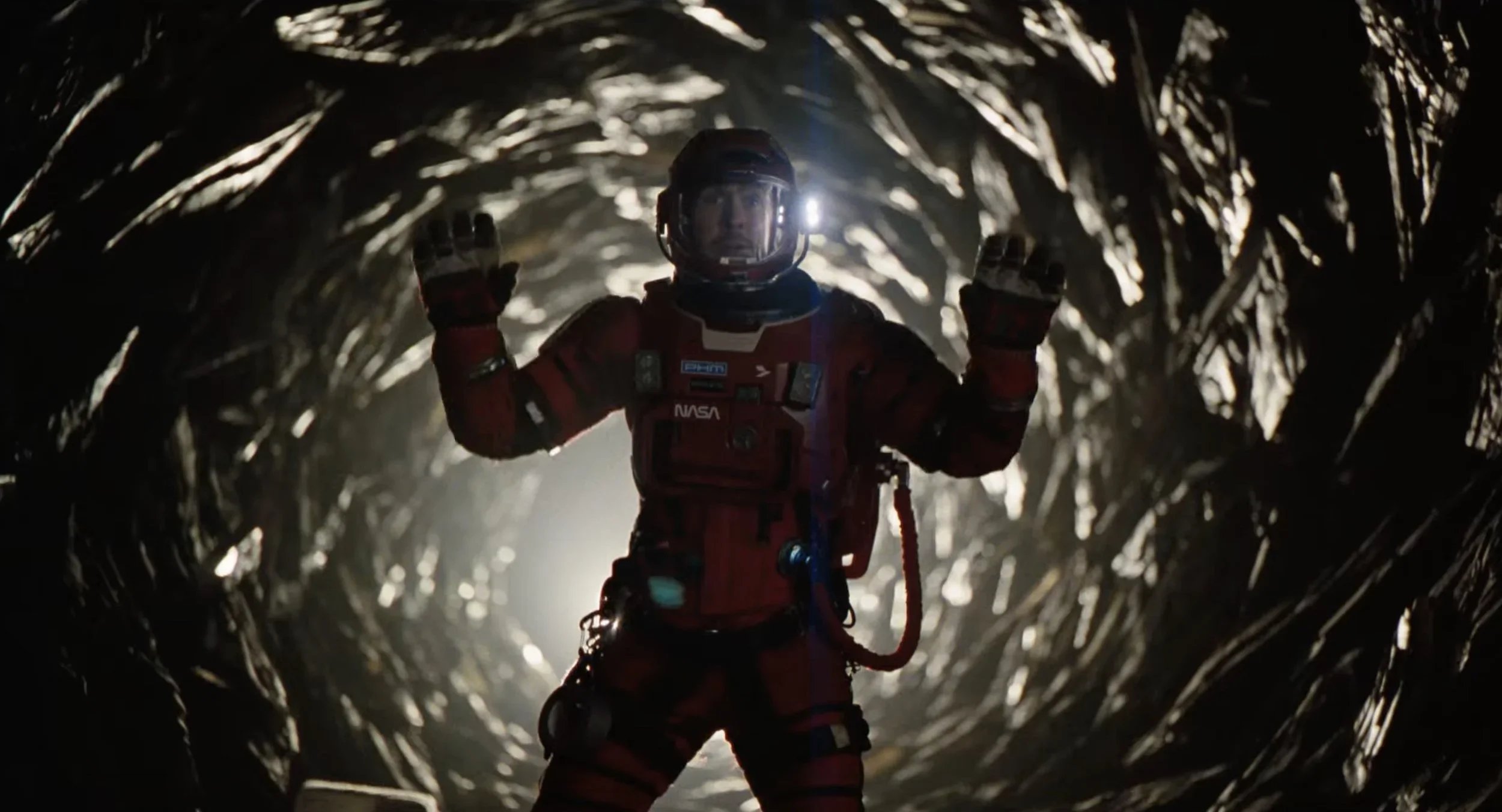
The filmmaking duo behind the visually groundbreaking Spider-Verse movies are taking what they learned from animation and applying it to their latest live-action sci-fi adventure.
Phil Lord and Christopher Miller return to theaters with Project Hail Mary, and while the film trades animated superheroes for deep-space science fiction, the creative philosophy that powered the Spider-Verse films played a huge role in shaping how this new movie looks and feels.
Lord and Miller first broke into the industry with Cloudy With a Chance of Meatballs in 2009, and animation has remained a major part of their creative DNA ever since.
That experience paid off in a big way with the wildly inventive Spider-Verse franchise. Lord wrote Spider-Man: Into the Spider-Verse and later teamed with Miller to write Spider-Man: Across the Spider-Verse, with Spider-Man: Beyond the Spider-Verse still on the way.
Those movies pushed animation into exciting territory, blending styles and perspectives to bring multiple Spider-heroes and universes to life. That same mindset carried over when the duo stepped back into live action for Project Hail Mary.
Miller explained that their animation background helped shape how they approached the film’s visuals and camera work, especially when dealing with the strange physics of space.
"For sure our animation background was a factor in thinking about how we wanted to visualize the movie," Miller tells GamesRadar+.
"And the Spider-Verse movies, because they can stick to walls and walk on walls, we were constantly rotating the camera, and we found that the audiences went with it as long as you were engaged in the story. In space, there's no up and down, so we wanted to make sure that our camera was broken from the fixed up and down."
The film is based on the novel by Andy Weir, the author of The Martian. The story centers on Ryan Gosling’s character Ryland Grace, a scientist who ends up teaching elementary school before waking up aboard a spacecraft headed on a desperate mission to save Earth. The catch is that he has no memory of how he got there or why the mission matters.
Lord says part of the creative challenge was trusting audiences to keep up with a story packed with science and big ideas, much like the novel itself.
"I think those movies taught us to trust the audience," Lord adds. "They're really capable of going anywhere with you. And I think Andy [Weir]'s novel does that.
“It trusts us. You know, with throwing a lot of hard science at us and trusting that we'll follow, and I thought that Drew [Goddard] wrote a screenplay that also respected the audience's intelligence. And so when you watch the movie, you're like, 'Oh, this movie thinks I'm smart,' and it makes you feel good."
That same respect for the audience also pushed the filmmakers to aim high with the film’s visuals. The Spider-Verse movies showed them that viewers respond to something that feels fresh and immersive.
"On top of that, we learned from those movies that people want a visual experience they've never seen before," Miller continues.
"They want to be surrounded and overwhelmed by the images. We wanted to make sure that we were giving them a spectacle that felt new and fresh and original, and so that was like a real driver for us."
If Project Hail Mary delivers on that goal, audiences could be in for a wild ride through space with the same inventive spirit that made the Spider-Verse movies such a hit.
Project Hail Mary lands in theaters on March 20, and I can’t wait to watch it!