Review: Christopher Nolan's THE ODYSSEY Is One of the Most Epic Fantasy Adventure Films Ever Made
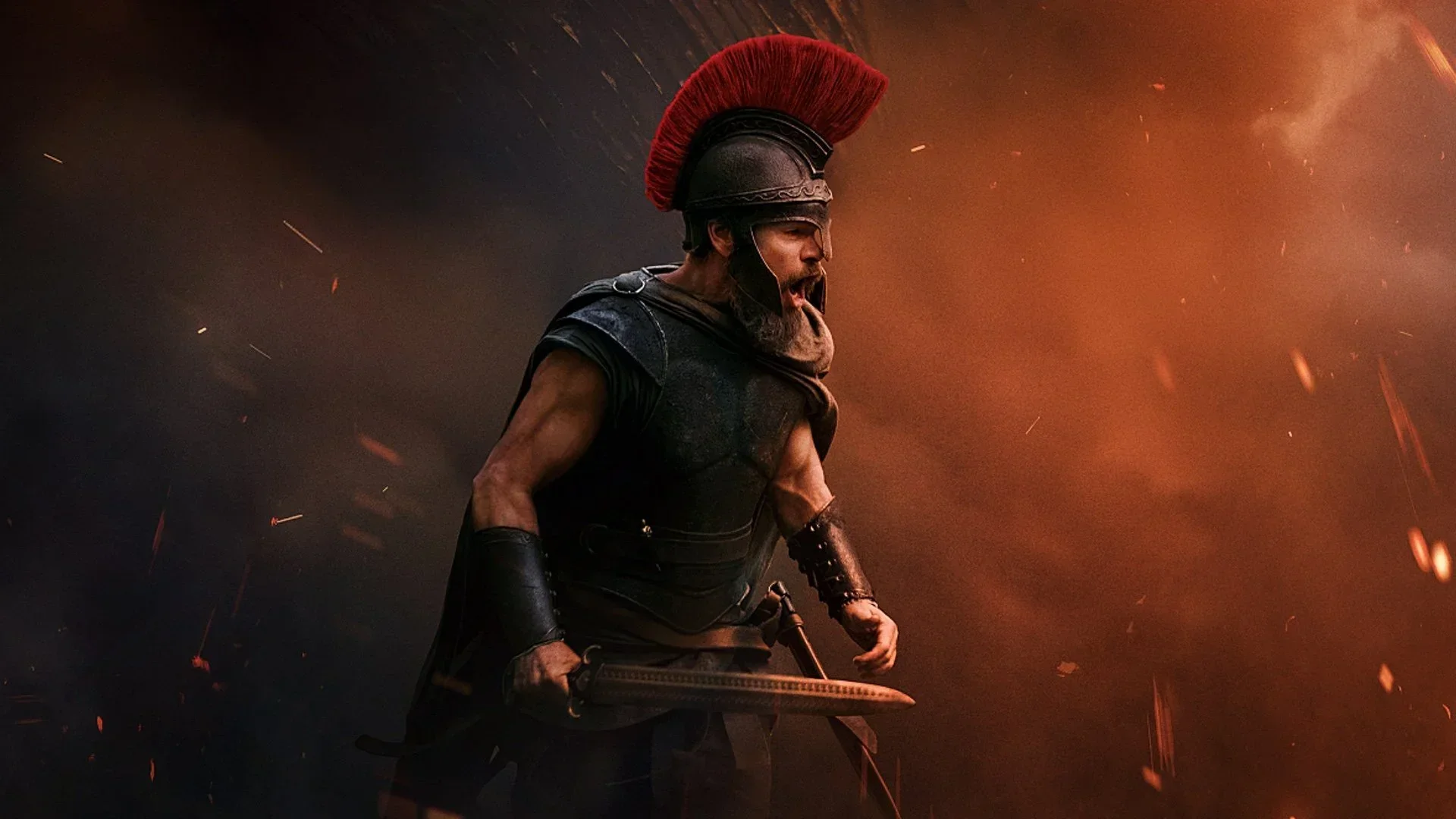
I love the films that Christopher Nolan makes. The guy has earned the trust of movie goers over the years with his directing and storytelling talents. Whether it's Memento, The Prestige, The Dark Knight, Inception, Interstellar, Dunkirk, or Oppenheimer, Nolan always swings for something ambitious.
Sometimes those swings connect more than others, but you can always count on him to deliver an experience that feels different from everything else playing in theaters.
So when it was announced that Nolan was taking on Homer's The Odyssey, my excitement shot through the roof. This is one of the most influential adventure stories ever written, a tale that's inspired countless fantasy films, novels, comics, and video games over the centuries.
Bringing that story to the screen is already a monumental task. Bringing it to life the way Christopher Nolan would? That felt like something genuinely special.
I had an absolute blast with The Odyssey. It's an enormous fantasy adventure that reminded me why I fell in love with these kinds of stories in the first place.
What impressed me most is that Nolan didn't simply make another historical epic. He made a fantasy adventure that embraces mythology in all of its weird, terrifying, and wonderfully unpredictable glory.
This isn't a grounded retelling that strips away the gods and monsters in favor of realism. It fully commits to the myth. The Cyclops is terrifying and Circe feels genuinely nightmarish. Every island Odysseus visits introduces another impossible situation that somehow feels even more dangerous than the last.
Watching the journey unfold reminded me of sitting down with those old Ray Harryhausen classics where every stop along the adventure revealed another incredible creature or impossible challenge waiting just over the horizon.
That's one of the reasons I connected with this movie so much. Growing up, I absolutely loved movies like The Seventh Voyage of Sinbad, Jason and the Argonauts, and Clash of the Titans. Those films had this wonderful sense of adventure where literally anything could happen next.
Every new destination introduced another mythical creature, another larger-than-life obstacle, or another unforgettable set piece that made you wonder how the heroes were ever going to survive. Those movies captured the imagination in a way that stuck with me, and The Odyssey gave me that same feeling all over again.
It honestly felt like Christopher Nolan made his own version of one of those classic fantasy adventures, only with the resources, technology, and filmmaking craftsmanship of one of the greatest directors working today.
That sense of discovery is baked into every chapter of Odysseus' journey. You never know what nightmare is waiting around the next corner, and that's exactly what makes the adventure so much fun.
Then there's the sheer scale of everything. This movie is the definition of epic. People throw that word around all the time, but The Odyssey actually earns it. Nearly every sequence left me wondering how Nolan and his crew managed to pull this off.
Knowing that so much of what you're watching was created practically and captured in-camera makes the experience even more jaw-dropping. Massive ships, sprawling battlefields, towering sets, and enormous creatures all feel tangible because they're interacting with real environments instead of existing inside an obvious digital playground.
There's a physical weight to this movie that's becoming increasingly rare in modern blockbusters, and it makes every scene feel bigger than life.
You can tell Nolan wanted audiences to feel like they were witnessing something real, and that commitment pays off in a huge way. There were several moments where I caught myself completely forgetting about the filmmaking because I was so immersed in the world.
Then I'd suddenly remember that much of what I was looking at had actually been built and photographed, and I'd find myself asking, "How in the hell did they do that?"
The visuals are simply astonishing. Hoyte van Hoytema has once again crafted what I think is some of the most breathtaking cinematography of his career. Every frame feels enormous without losing sight of the characters inside it.
The sweeping landscapes are gorgeous, but they also reinforce just how isolated Odysseus has become. Whether he's standing against endless oceans, wandering through haunting ruins, or facing monsters that completely dwarf him, the imagery constantly reminds us that this is a man struggling against forces far greater than himself.
It's easily one of the most beautifully photographed fantasy films I've ever seen. As spectacular as the visuals are, though, one thing caught me completely off guard. I wasn't expecting The Odyssey to play out like a horror film.
That's probably one of my favorite surprises the movie had to offer. If you've ever wondered what Christopher Nolan might do if he leaned into horror, this movie gives you a pretty great answer. While it's absolutely a fantasy epic first, horror is woven into the DNA of the story in ways I never expected, and those moments ended up becoming some of my favorites in the entire film.
The sequence with the Cyclops, Nolan stages it like a full-blown horror movie. He patiently builds suspense, lets the tension tighten until you're practically holding your breath, and then unleashes complete chaos.
The creature itself is absolutely horrifying, but it's the atmosphere surrounding the encounter that really sells it. You can practically feel the fear coming off every member of Odysseus' crew as they realize exactly what they're trapped with.
Nearly every mythical encounter carries that same sense of dread. Each one feels genuinely dangerous, unpredictable, and unsettling. Every island becomes another nightmare to survive, and Nolan does an incredible job making each encounter feel completely different from the last while still maintaining the relentless tension that hangs over Odysseus' entire journey.
That's where the movie really surprised me, because underneath all the fantasy spectacle and incredible action, The Odyssey slowly reveals itself to be something much more personal and emotionally devastating.
As much as I loved the giant monsters, breathtaking visuals, and larger-than-life adventure, none of that would've mattered if there wasn't an emotional story holding it all together.
Thankfully, that's where The Odyssey really shines. Beneath all the spectacle is what I think is one of Christopher Nolan's most personal films, and it's built around an idea that's every bit as timeless today as it was nearly 3,000 years ago.
At its heart, The Odyssey is a story about PTSD. That theme has always been buried within Homer's original poem, but Nolan pulls it to the surface in a way that's incredibly powerful without ever feeling like he's beating the audience over the head with it. Instead of turning the story into a straightforward psychological drama, he lets the mythology do the heavy lifting.
The monsters, the gods, the impossible landscapes, and the endless trials all become extensions of Odysseus' fractured state of mind. They're physical manifestations of the guilt, trauma, grief, and shame he's been carrying ever since the Trojan War ended.
That's what makes this version of The Odyssey so fascinating. Odysseus isn't simply fighting to get back to Ithaca. He's trying to figure out whether the man who left for war even exists anymore. That's an incredibly heartbreaking question, and Nolan keeps returning to it throughout the film.
The war ended years ago, but for Odysseus, it never actually stopped. Every decision he made during the fall of Troy continues to haunt him. Every life he took weighs on his conscience.
Every monster he encounters feels less like another obstacle on his voyage and more like another piece of himself he has to confront before he can ever think about going home.
The genius of Nolan's approach is that he never separates the fantasy from the emotional journey. The mythology isn't just there because audiences want to see giant creatures and supernatural beings.
The mythology becomes the language the film uses to explore trauma. Every horrifying encounter feels connected to something happening inside Odysseus rather than simply existing to provide another action sequence.
It makes every stop along the journey feel meaningful. One of the biggest surprises for me was just how emotional the movie becomes by the time it reaches its final act.
The closer Odysseus gets to home, the more obvious it becomes that getting there was never really the point. The real battle is figuring out whether someone who's been psychologically broken by war can ever reconnect with the people they left behind.
It's a painful idea because there isn't an easy answer. War changes people. Even if a soldier survives physically, there's no guarantee they'll ever return emotionally.
The person who comes home isn't necessarily the same person who left, and the family waiting for them has changed as well. Life kept moving while they were gone. Relationships evolved. Children grew up. The world didn't stand still waiting for their return.
That's where Nolan's interpretation really hit me. Homecoming isn't presented as some triumphant ending where everything magically falls back into place. It's awkward. It's painful.
It's filled with uncertainty because nobody involved knows how to bridge the emotional distance that's grown over the years. That's a far more honest and mature way to tell this story than simply treating it as another hero finally returning to reclaim his throne.
The film's most powerful moment comes late in the story when Odysseus finally explains to Penelope why it took him so long to come home. I won't spoil the details, but it's one of the strongest scenes Christopher Nolan has ever directed.
Everything Damon has been carrying throughout the film finally comes pouring out, and it perfectly captures the agony of realizing that surviving a war doesn't necessarily mean you've escaped it.
It's an incredible piece of writing, and Matt Damon absolutely knocks it out of the park. This might honestly be my favorite performance of his career.
Damon doesn't play Odysseus like some invincible mythological hero. He plays him like a man who's completely exhausted. There's a sadness hanging over him from the very beginning of the film, and it never really goes away.
Even during the biggest action scenes, you can see the emotional weight sitting behind his eyes. He's constantly pushing forward because he has to, not because he believes there's some glorious reward waiting for him at the end of the journey.
He's still capable of incredible acts of courage, but Nolan never lets us forget how much every decision costs him. Every victory comes with another emotional scar, and Damon sells every ounce of that burden.
He's surrounded by an outstanding cast, too. Anne Hathaway gives Penelope so much more agency than she's often given in previous adaptations. She isn't simply waiting for her husband to return.
She's holding an entire kingdom together while navigating political chaos, protecting her family, and keeping dangerous men from taking everything Odysseus left behind. Hathaway plays her with remarkable strength and intelligence.
Tom Holland also delivers one of the strongest performances of the film as Telemachus. His story becomes much more than a son searching for his missing father. He's trying to understand what kind of man he's supposed to become when the only example he's ever had disappeared before he truly knew him. Holland brings a vulnerability to the role that makes his journey just as compelling as Odysseus' own adventure.
Then there's Robert Pattinson, who looks like he's having the time of his life playing Antinous. He's manipulative, smug, cruel, and completely insufferable in the best possible way.
Every time he walked onto the screen, I couldn't wait to see someone finally knock him down a few pegs. Pattinson understood exactly what this character needed to be, and he absolutely delivers.
I also loved Jon Bernthal, who brings his usual intensity to Menelaus, while John Leguizamo gives Eumaeus a warmth and humanity that grounds several of the film's emotional moments. Even actors with limited screen time leave a lasting impression. That's a credit not only to the cast but to Nolan's ability to give nearly every character a memorable presence.
I also have to give a shoutout to Samantha Morton, who is phenomenal as Circe. She doesn't have a massive amount of screen time, but she absolutely owns the part of the film that she’s in. It’s wild, and nightmarish!
Morton brings this eerie, almost otherworldly presence to the character. There's a quiet confidence to her performance and she makes Circe feel ancient, mysterious, and incredibly dangerous all at once, and she ends up leaving a much bigger impression than you'd expect from the amount of screen time she has.
While the movie is filled with stunning visuals, monsters, and massive action sequences anymore, it’s a thought provoking story that makes you think about what war takes from people. It left me thinking about how impossible it can be to return home after experiencing something that fundamentally changes who you are.
For all the giant creatures, mythical gods, and breathtaking spectacle, that's the part of The Odyssey that stayed with me the longest.
Christopher Nolan didn't simply adapt one of history's greatest adventure stories. He reminded us why it's endured for thousands of years in the first place.