SPIDER-MAN: BRAND NEW DAY Concept Art Sparks Backlash Over Alleged Generative AI Use
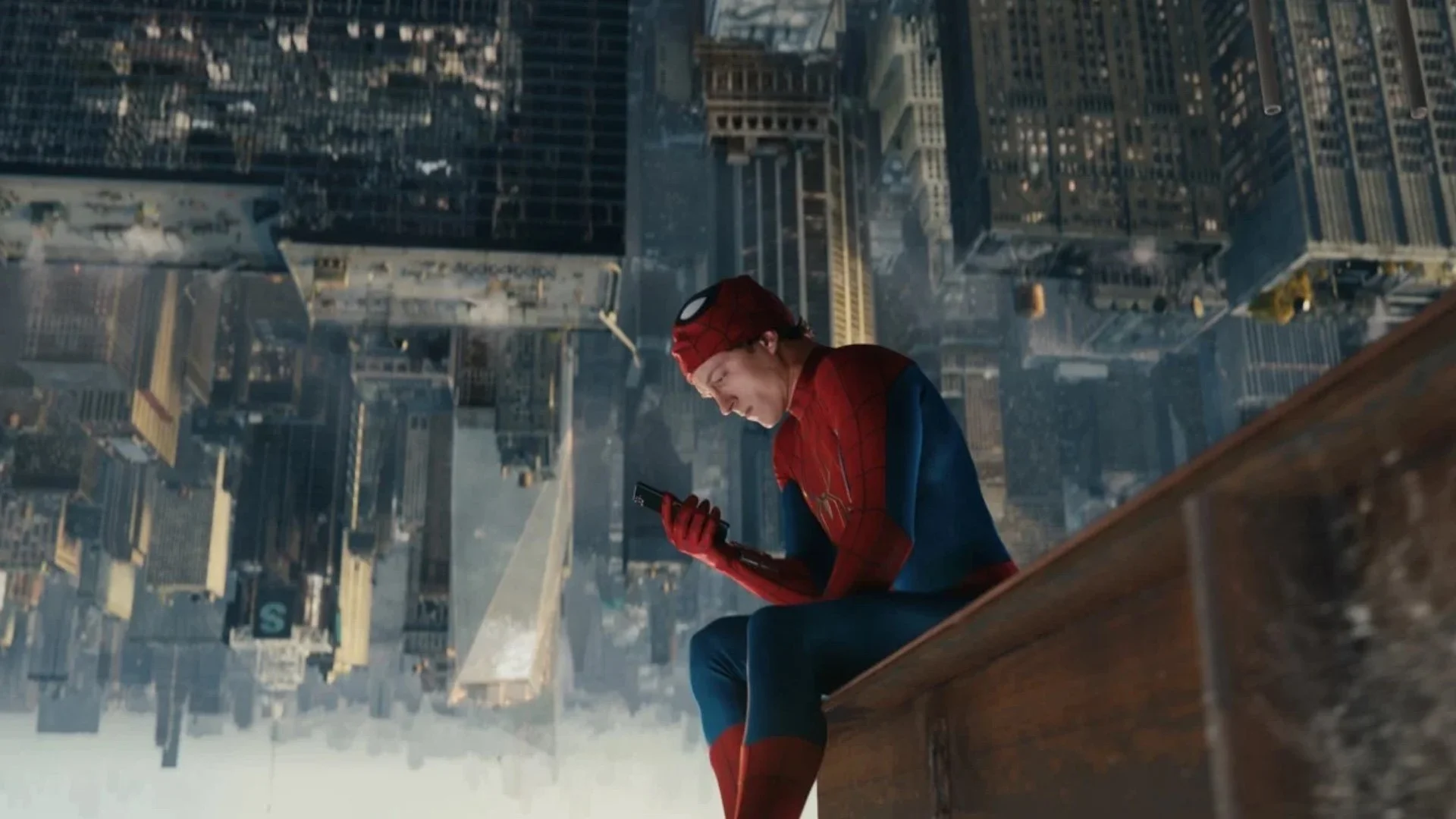
Generative AI has found itself tangled in another superhero production, and this time Spider-Man is caught in the web.
Marvel Studios’ newly released art book, Spider-Man: Brand New Day – The Art Of The Movie, is facing criticism after fans spotted what they believe could be generative AI in one piece of concept art created for the Marvel and Sony movie.
Nothing has been confirmed, but some of the details in the image have been enough to get fans examining it closely and asking questions about how it was made.
The artwork in question is called “Big City, Little Spider” and was created by Scott McInnes. It depicts a New York City street filled with buildings, traffic, yellow taxis, signs, and other familiar Manhattan scenery.
According to fans studying the image, several of those elements have strange visual inconsistencies commonly associated with AI-generated imagery.
Reddit user TheArtbookCollector highlighted warped buildings and oddly shaped taxis as some of the biggest concerns, explaining:
"When looking at details of the buildings and taxis, you can see strange warping and shapes, which are indicators of AI use. This is the only image in the book that raises big red flags for me, despite others saying there is more, in which I don't agree. Another piece does have stock image watermarks though."
Other fans on social media have since pointed toward the traffic lights and a deli sign as additional details that appear unusual.
McInnes has worked on several major Hollywood productions, including Fantastic Four, Masters of the Universe, and Gladiator 2, so we’re talking about an artist with experience working on some very large-scale movies.
It’s also important to keep the accusation in perspective. There currently aren’t similar allegations surrounding the other artwork in the Spider-Man: Brand New Day book, and there aren’t allegations that generative AI was used in the finished movie itself.
Still, fans aren’t particularly thrilled about the possibility that AI-generated material could have made its way into an official Spider-Man art book.
One fan wrote: As much as I loved the movie this is still inexcusable, this a problem within the industry as a whole that needs to be corrected.” Another joked: "You have to understand, pictures of New York City are extremely rare."
A third fan offered some additional context, arguing that even if AI was involved, there currently isn’t much evidence suggesting its use went beyond this particular piece:
"FOR CONTEXT in the book it was used in one image by one artist, obviously not every piece made for the movie makes the book, but it being the only one is telling that it was probably just This Guy and not a widespread thing,"
One questionable piece of concept art doesn’t automatically mean Marvel Studios or Sony had generative AI running throughout the production pipeline. Unless more evidence emerges, the controversy is centered on this specific image and the way it was created.
Spider-Man also isn’t the only superhero caught up in this debate recently.Supergirl faced its own generative AI controversy after director Craig Gillespie appeared in a featurette showing Jason Momoa a mock-up of Lobo that viewers believed looked AI-generated. Warner Bros. later removed the video from its official YouTube channel after the footage drew widespread criticism online.
I’ve said it before and I’ll say it again: whether you like it or not, AI is now part of Hollywood’s moviemaking system.
Generative AI and other AI-powered tools have already worked their way into different areas of film production, from early visual development and pre-production to post-production tools and other parts of the creative process.
Now that studios, vendors, and individual artists have access to this technology, it isn’t simply going to disappear because audiences and artists object to it.
That doesn’t mean every use should get a free pass. There are legitimate questions surrounding where AI belongs in filmmaking, how it affects working artists, what material these systems are trained on, and whether studios should disclose when generative AI has been used. Those conversations are only going to become more important as the technology gets better.
The Spider-Man: Brand New Day situation also shows why transparency matters. If “Big City, Little Spider” wasn’t made with generative AI, then the artist is getting criticized over something he didn’t actually do.
If AI was used, fans understandably want to know how and why it became part of an official art book celebrating the creative work that went into the movie.
For now, the artwork remains just that… alleged generative AI use, not confirmed generative AI use.
Either way, Hollywood’s AI debate isn’t going anywhere. The technology is already here, filmmakers and artists are experimenting with it, and audiences are getting increasingly good at spotting anything that looks suspicious.
The real fight going forward won’t be over whether AI exists in the filmmaking process. It’ll be over how it’s used, who gets affected by it, and how transparent studios are willing to be about it.