STAR WARS: MAUL – SHADOW LORD Rebuilt Darth Vader Around David Prowse’s Physical Performance
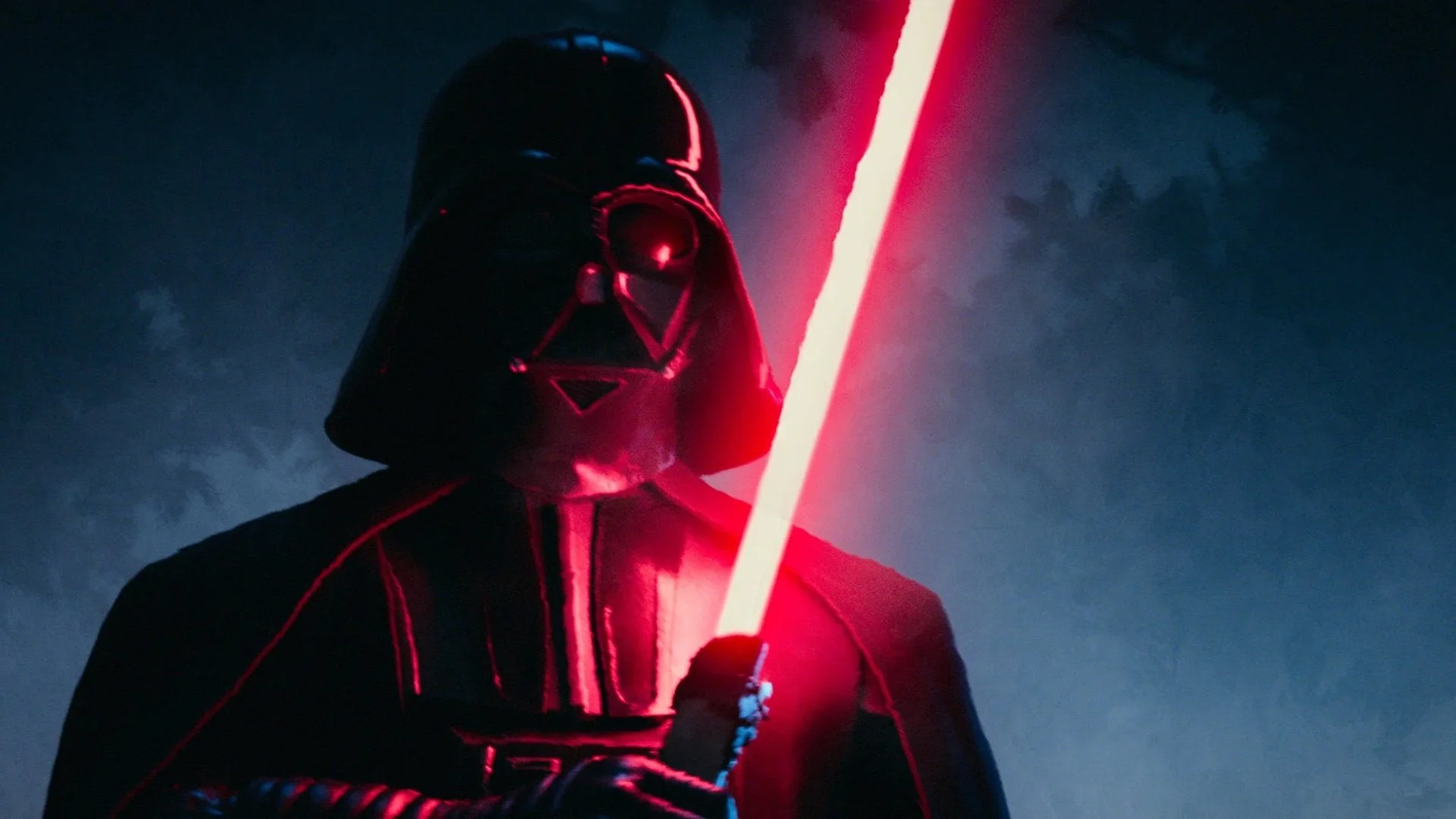
One of the coolest things about Star Wars: Maul – Shadow Lord is that the series didn’t just bring Darth Vader back for another animated appearance.
The creative team completely reworked him from the ground up to make him feel heavier, scarier, and more physically intimidating than we’ve seen in previous animated Star Wars projects, and the level of detail that went into it is kind of insane.
From the earliest stages of production, the goal wasn’t simply to make Vader recognizable. Everybody already knows what Vader looks like. The challenge was figuring out how to make him feel like a looming nightmare the second he stepped on screen.
Brad Rau explained just how deep the process went while developing the Sith Lord’s appearance for the show’s painterly animation style.
“There's a lot to this whole decision to bring this guy in, a lot of math and science and trigonometry. We wanted his silhouette to be more horrific than we've seen in animation previously."
That silhouette became one of the biggest priorities. Vader had to feel massive, almost unnatural in the way he occupied space. The team looked back to the original trilogy, particularly Star Wars: The Empire Strikes Back, and started studying the physicality of original Vader actor David Prowse.
Instead of simply referencing Vader’s armor, they focused on Prowse himself. “Kirk quickly began incorporating original Vader actor David Prowse’s body type into this new incarnation. Taking inspiration from Star Wars: The Empire Strikes Back, they began to choreograph his movements to match elements of Prowse’s performance.”
That attention to Prowse’s frame became a huge part of why this version of Vader feels so imposing. Rau even explained that the team studied photos of Prowse outside the costume to understand how his body would naturally move inside the armor.
“We really use that as a point of reference. He's a horror in that movie,” Rau says. Kirk and designer Chris Madden also folded in elements found in images of Prowse out of Vader’s uniform, both in the wrestling ring or doing stunt work on other movies, to complete the physique.
“We used that as our guide to how he would fit in this suit. The shoulder pads are even bigger than you think,” Rau adds.
That detail about the shoulders honestly says a lot about the overall philosophy. Every shape and proportion was pushed to make Vader feel physically overwhelming. The armor becomes less like clothing and more like the shell of some towering machine stalking through the fog.
Then there’s the helmet. Anybody can model Vader’s helmet, but getting it to work within Shadow Lord’s stylized visual language was a whole other challenge.
The team spent a huge amount of time figuring out how light would interact with the surface, especially because the series uses a textured, painterly aesthetic rather than a hyper-clean CGI look.
Joel Aron became a major part of that process early on. “The way that the shine or scuffiness of his helmet is translated into our painterly style is something we talked about with Joel all the way through, even before it ever got to lighting,” Rau says.
That “scuffiness” is important. It gives Vader’s helmet age and texture. Instead of looking polished and pristine, it feels worn, battle-tested, almost scarred. Under the dim lighting and fog-heavy environments of the finale, those little imperfections make him look even more menacing.
The movement design might be the most impressive part of all, though. The animation teams spent a massive amount of time planning Vader’s motion down to individual steps and saber swings. Rau described how precise the process became as different departments coordinated choreography, camera placement, and environmental interaction.
“It's not just a theory; we literally have a proxy version of our sets, which helps define what is going to be a painting from Kyra Kabler and the matte team working with Joel. It's really astounding.
“But the sets and the characters, where the camera is, what lens we're using, all the kinks, all of the story, all of the motion as much as we can, we work out all of that in the previs phase.”
That preparation allowed the animators to build Vader’s physical presence with almost surgical precision. Every movement needed to communicate power without sacrificing speed.
“With Nate Villanueva and his team, we used specific lenses to magnify the enormity of Vader in frame,” Rau continues. “He’s just relentless, a scourge that doesn't say anything. He hardly has any audible effort.
“His moves needed to be both heavy and quick, which is really hard to do both of those things. The way we try to set it up is that it's almost as though he knows where people are going to strike before they strike. So every movement is a quick bit of precision and it's astounding.”
That description explains why Vader feels so unnerving throughout the episode. Most characters in Star Wars move with visible effort during combat. Vader barely seems to exert himself at all. He advances with this cold efficiency that makes everyone around him look frantic by comparison.
And that’s ultimately what makes this version of Vader stand out. The animation team studied his proportions, his posture, the shine on his helmet, the shape of his shoulders, and even the rhythm of his footsteps to turn him into something that feels closer to a movie monster than a traditional sci-fi villain.
For animation fans and Star Wars nerds alike, it’s the kind of craftsmanship that makes you really appreciate what these talented artists do.