The STRANGER THINGS Finale Played It Way Too Safe Like a DUNGEONS & DRAGONS Game Full of Natural 20s
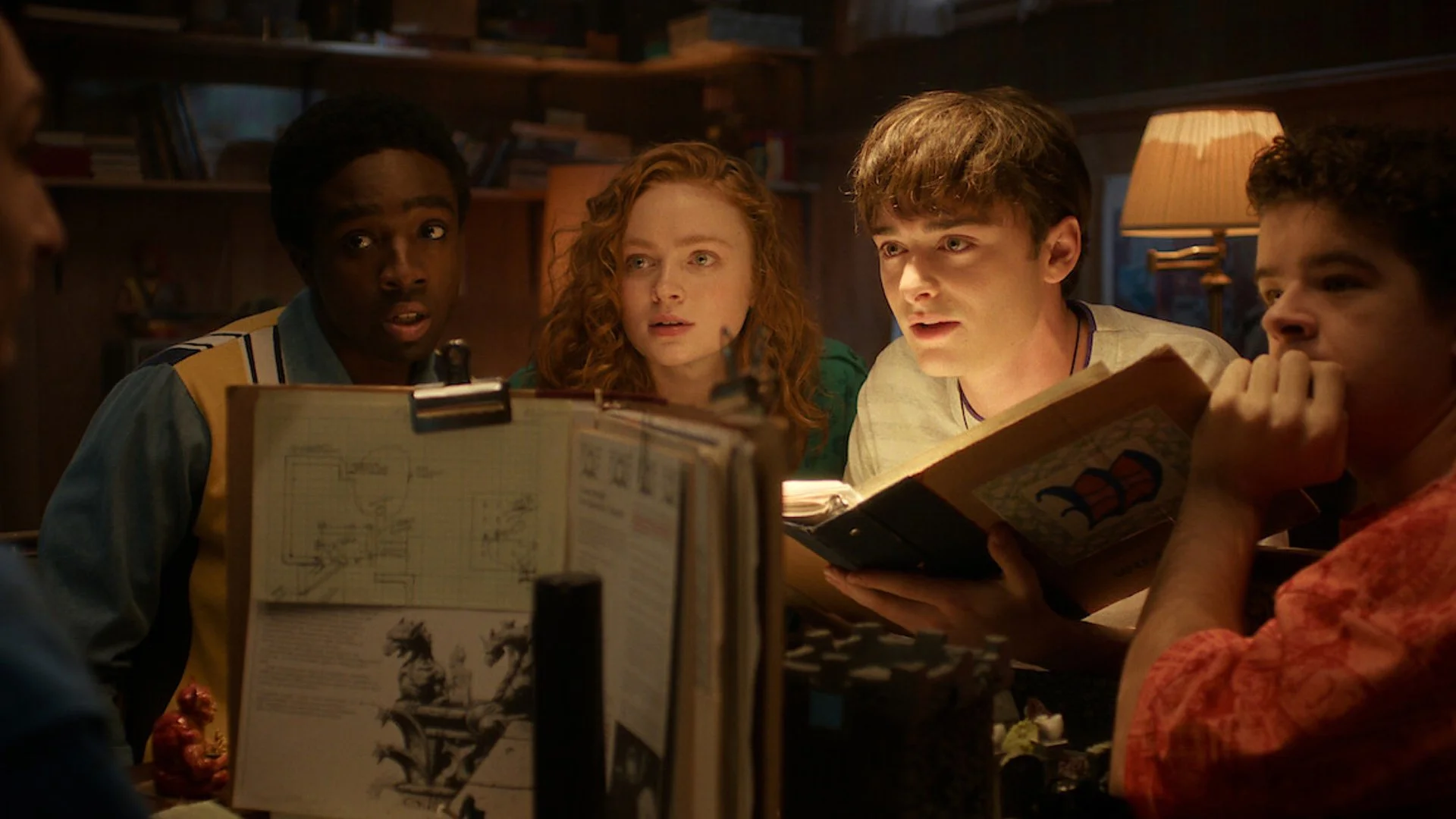
After nine years, five seasons, and a ton of Dungeons & Dragons, Stranger Things has come to an end. I enjoyed watching the finale in a theater filled with fans, and initially liked how it all came to an end. After watching the finale again, though, without the audience energy, the finale landed differently.
It was bloated, loud, emotional, and somehow weirdly hollow. This was supposed to be the ultimate throwdown. The final campaign. The night the Dungeon Master stops pulling punches.
Instead, what we got felt like a table where every major player rolled a natural 20 over and over again until the dice lost all meaning.
If this ending were an actual D&D session, the DM would’ve been fired.
The two-hour series finale throws everything it can at the screen. Godzilla-sized monsters, flame throwers, fake-out deaths, one real death that barely registers, and more heartfelt conversations than should be happening during an apocalypse.
It’s maximalist in scale and strangely timid in consequence. For all the chaos and noise, the episode lands with a soft thud. Not a disaster, but absolutely a whimper.
That’s the core problem. This ending plays it incredibly safe. Almost aggressively so. Characters are constantly positioned on the edge of danger, only to be yanked back at the last possible second. Steve looks dead until he isn’t. Hopper looks dead until he isn’t. El sacrifices herself until she maybe doesn’t. Even death itself feels negotiable here, like a failed saving throw that someone decided to re-roll again behind the scenes.
Matt and Ross Duffer know D&D. They built this entire show on it. Which makes it baffling that they forgot the most important rules storytelling. Stakes matter. Failure matters. Sometimes the dice are cruel, and that’s what makes victory feel earned.
Instead, every major confrontation in this finale unfolds like the party is wrapped in plot armor enchanted at level 20. Vecna should feel terrifying, but he’s constantly delayed by conveniently timed emotional beats.
Characters stop mid-doom to have long, tidy heart-to-hearts, confess feelings, resolve arcs, and explain themes. The world is ending, but everyone somehow has time for closure.
The finale opens strong enough, picking up immediately after the previous episode’s cliffhanger. Vecna, played by Jamie Campbell Bower, is mid-seance, slowly dragging his nightmare realm toward Earth. It’s creepy in theory, but the execution keeps undercutting itself.
Every time the threat escalates, the show cuts away to another group having a very calm, very articulate emotional conversation. It happens so often that the apocalypse starts to feel like a polite background inconvenience.
The plan itself is a mess, but that’s nothing new for this show. The real issue is that no matter how badly things go, it never feels like anyone important is actually going to pay the price. The military shows up at exactly the wrong moments, but somehow never causes lasting damage. The villains make bafflingly bad choices. Allies arrive just in time. Threats collapse under their own weight.
Even when the show flirts with something bold, like potentially killing Steve, it swerves hard. The fake-outs pile up until death loses its teeth entirely. When someone finally does die, it’s Kali, a character the show never fully reintegrated and clearly didn’t know what to do with. It’s the safest possible loss. The equivalent of killing an NPC the party met once in a tavern.
Then there’s Vecna himself. For two seasons, he worked because he was vicious in a way that felt intimate. Now he is joined by a massive CGI spider monster that was conjured by Henry, recalling the giant spider-like "predator" he had envisioned as a child.
It’s big, sure, but it’s also emptier. The giant spider really poses no threat as the gang take it on easily, and it doesn’t really hurt any of them in the process.
And yes, Nancy firing bullets into this giant spider cosmic horror, and Steve and Dustin pricking its egg sacks with spears, and having it actually work is where suspension of disbelief fully packs its bags.
The final battle resolves exactly how you expect. The monster falls. Vecna is defeated. Everyone survives. Joyce literally beheads the villain, because subtlety left this series a long time ago. The Upside Down explodes. The gang escapes. Cue relief, tears, and swelling music.
What follows is an extended victory lap of codas, time jumps, and aggressively sentimental wrap-ups. El’s sacrifice is walked back. The military, who were very eager to kill children earlier, suddenly forget all about it. Eighteen months later, everyone’s fine. Thriving, even. Careers are forming. Relationships are cozy. Trauma is neatly filed away.
Dustin becomes valedictorian, which is crazy! How in the hell did he keep his grades up after going through all of the shit that he went through!? Hopper and Joyce get engaged. Steve becomes a teacher. The group plays D&D one last time, then literally shelve the game, just in case anyone missed the metaphor.
It’s all so carefully wrapped that it borders on suffocating.
Great D&D campaigns are remembered not just for their victories, but for their losses. For the character who didn’t make it. For the roll that went wrong. For the moment when the party realized the world didn’t care how much they wanted to win.
The Stranger Things finale refuses to allow that kind of messiness. Everyone gets their ending. Everyone gets their closure. Sure, I admit, I apprciated aspects of that, but that’s no how things play out in D&D! The Dungeon Master made sure no one left the table upset.
That’s not how stories work, it’s not how they stick. By the end, it feels less like the conclusion of an epic journey and more like the end of a very long campaign where the DM was too attached to the characters to let the dice do their job. The show became trapped by its own success, afraid to hurt the people it spent years making us love.
Maybe there was no perfect way to end something this big. Maybe disappointment was inevitable. But playing it this safe was a choice.
And in a story built on Dungeons & Dragons, that choice feels like the biggest misfire of all.