This 16-Year-Old Interview with Valve's Gabe Newell Nails the Piracy Debate and Feels Way Too Relevant Right Now
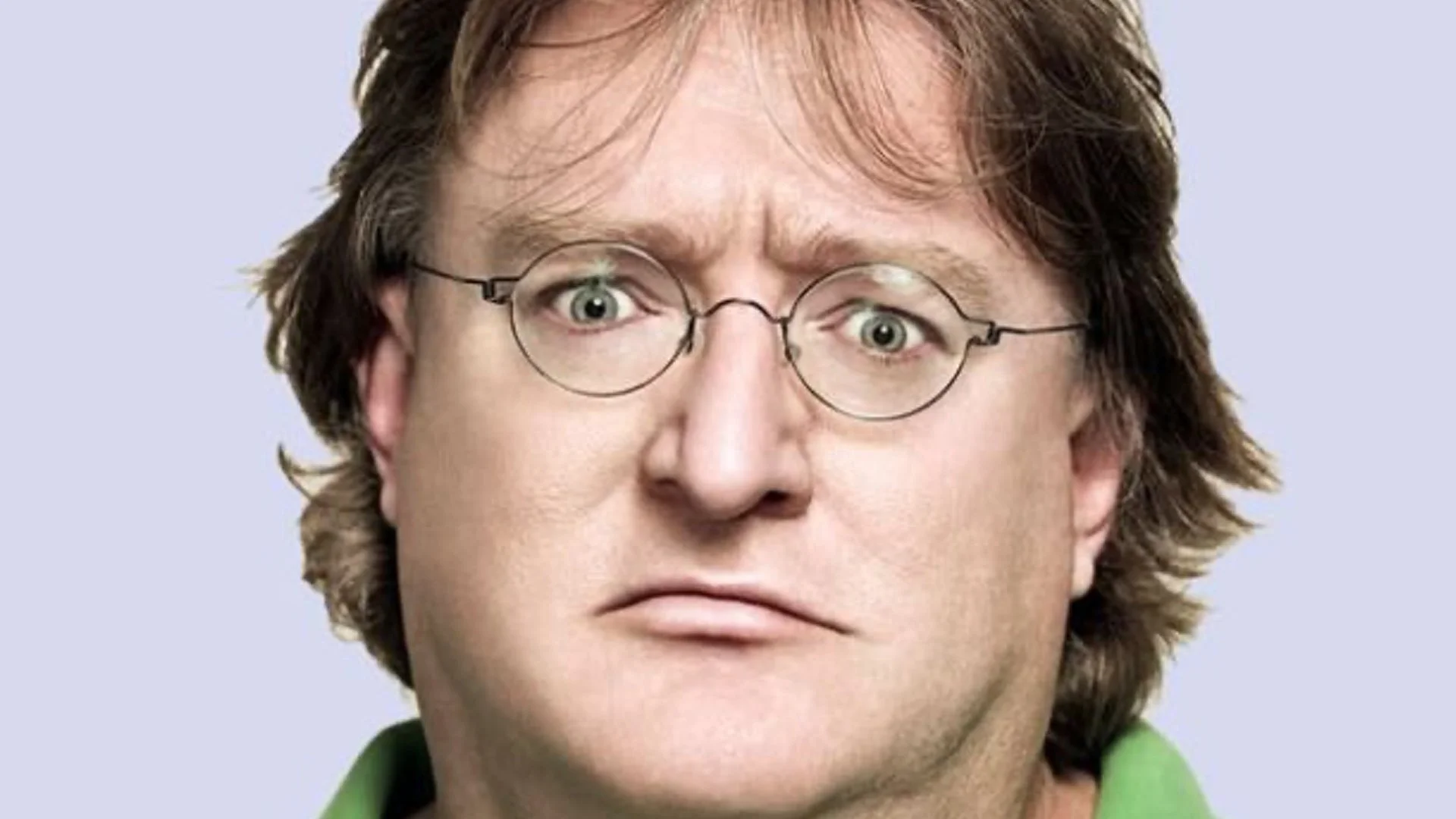
A 16-year-old low-resolution, 180p clip from 2009 is suddenly everywhere again, and it’s one of those rare internet resurgences that actually deserves the attention.
The video features Gabe Newell, co-founder of Valve, calmly dismantling the games industry’s long-running piracy panic with an argument that still lands hard in 2026. Sixteen years later, his point hasn’t aged. If anything, it’s sharper now.
The clip comes from an interview on ABC Good Game back in 2009 and recently resurfaced thanks to a tiny YouTube channel whose subscriber count exploded after posting the footage on January 2, 2026.
The uploader describes it, saying: “This is the un-abridged, web-exclusive [Australian] version of ABC Good Game's interview with Gabe Newell.” The video has already pulled in hundreds of thousands of views, which says a lot about how closely Newell’s words still track with today’s digital mess.
At the time, Newell explained that piracy simply wasn’t a major concern inside Valve. “We don't really worry about piracy,” he said, noting that it was “almost never” even close to the top ten issues discussed at the company. That runs counter to the fear-driven messaging publishers still rely on.
He continues: “The reason that we think that we don't have issues with piracy is that there's misconceptions in the industry about what piracy is, right? There's this assumption. What is piracy? Piracy is about people wanting to steal stuff from you, right?
“They don't want to pay any money and they wanna get your content. But when you look at the fact that these people have $2,000 PCs and they're spending 50 dollars US a month or more on their internet connections, clearly, they're willing to spend money.”
In 2026, $2,000 might barely cover a high-end GPU, assuming you can even find one, and $50 a month for internet feels quaint. Still, the point stands. The audience wasn’t refusing to pay. They were refusing bad service.
Newell went further, framing piracy not as theft but as a symptom. “What we saw more and more is that piracy was a result of bad service on the part of game companies.” He pointed to Russia as a case study, pushing back on the idea that the market was impossible due to rampant piracy. In his view, pirates were simply doing a better job than official distributors.
“If I wanted the product, and I didn't want to wait six months to get the product, and if I wanted it in Russian, I was gonna have to go to a pirate simply because I couldn't get it any other way,” Newell said.
Once Valve made its games available in Russia at the same time as other regions and properly localized them, the issue faded fast. “As soon as the product became available at the same time as it was available in Australia or the UK or the United States, and it was localized in Russia, all of the sudden our piracy problems in Russia disappeared.”
Beat pirates on convenience, availability, and quality, and people will follow. That philosophy became foundational to Steam, and it’s a big reason the platform still dominates PC gaming.
Pricing mattered, but Newell downplayed it even then, calling it one of the “less important” factors. What mattered more was respect for the customer. “People are happy to pay money if they're getting what they perceive as a great product delivered on their terms.”
Today’s digital landscape is cluttered with fractured storefronts, restrictive launchers, and licenses that feel more like rentals than ownership. Back in 2009, Newell framed buying on your terms as being able to access your games across devices, while traveling, at a friend’s house, after upgrading hardware, or after “I reinstall my operating system.”
Some of those examples are dated, but the core idea maps cleanly onto Valve’s current ecosystem, from portable hardware to a unified platform that prioritizes accessibility and player choice.
Newell wrapped up the interview by boiling it down to customer focus. “By focusing on the customer and doing useful things for the customer, piracy really becomes sort of a non-issue for us.”
Steam isn’t perfect, and Valve still draws plenty of criticism, but on this specific front, the results speak for themselves. In an era where digital ownership keeps shrinking and friction keeps growing, a clip from 2009 somehow feels like one of the clearest takes we’ve got.