Val Kilmer’s Daughter Defends The AI Resurrection of Her Dad in New Film AS DEEP AS THE GRAVE
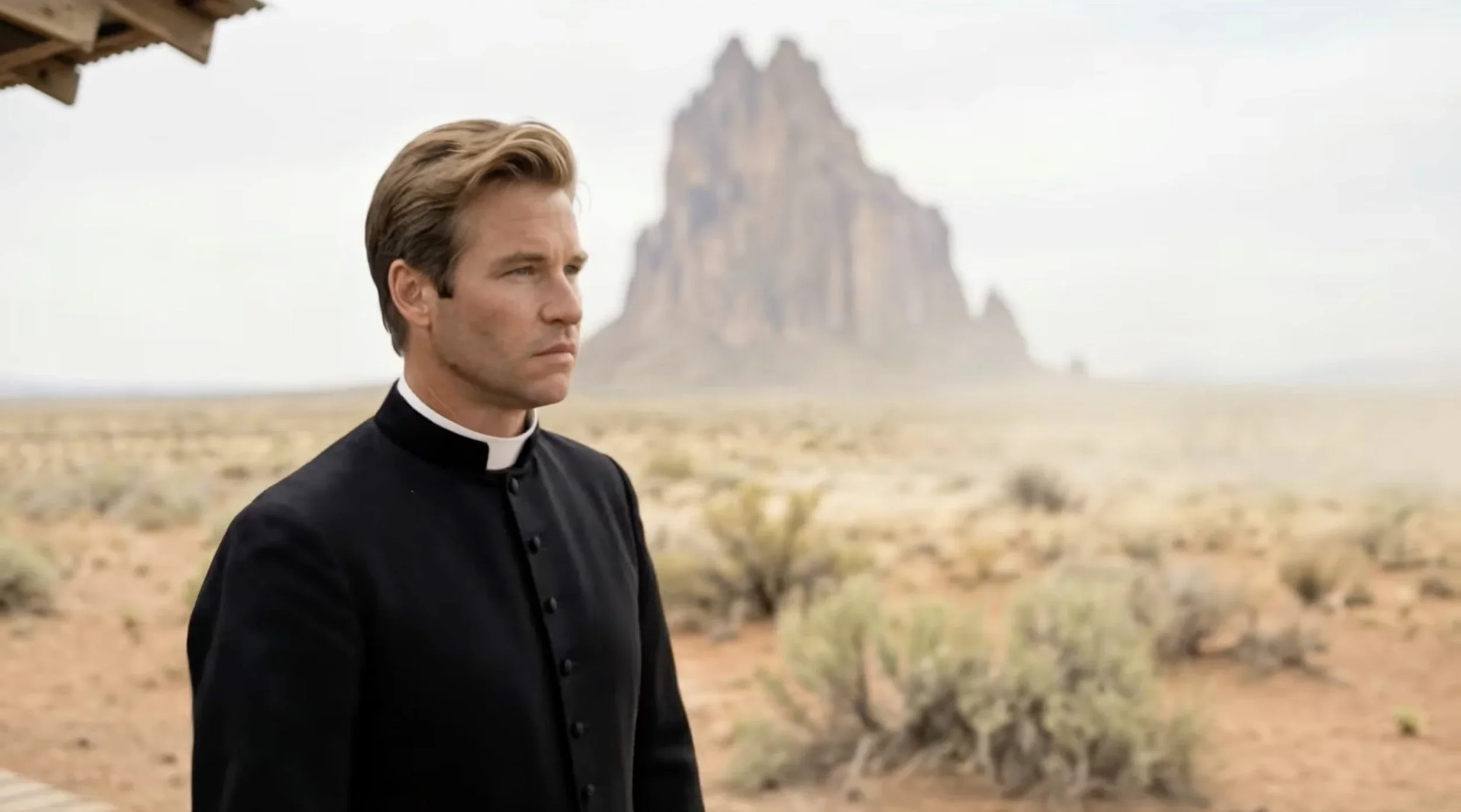
The conversation around AI in Hollywood just got a lot more personal. Following the passing of Val Kilmer, his daughter Mercedes Kilmer is stepping forward to address the use of AI to bring her father back to the screen in the upcoming indie film As Deep as the Grave.
It’s a topic that’s sparking debate across the industry, and now we’re hearing directly from someone closest to it.
Kilmer, who died in 2025 after a long battle with throat cancer, had originally been cast in As Deep as the Grave, a historical action project that was built with him in mind.
Unfortunately, his health made it impossible for him to shoot his role. Instead of rewriting or recasting, the filmmakers, with full cooperation from Kilmer’s estate and daughter, chose to use generative AI to recreate his image and presence.
This isn’t entirely new territory for Kilmer. Fans will remember that he previously worked with AI voice technology when he returned as Tom “Iceman” Kazansky in Top Gun: Maverick, using tools developed by the company Sonantic to help restore his voice.
Still, using AI to fully recreate an actor’s performance is a different level, and not everyone is comfortable with it. Speaking on the Today Show, Mercedes Kilmer opened up about the mixed reactions:
“It started off as a way to overcome the limitations of his illness, but then it evolved into something that he really was like, ‘Oh, wait. I have a chance to actually set a precedent,’” she said.
“It’s kind of fallen into two camps. People that maybe have a more precarious position in the industry and are worried and see AI as a threat — which is absolutely valid — and younger people, younger actors and musicians. I’m a musician and a lot of people that I know are so scared of this technology.”
She didn’t shy away from acknowledging the fear surrounding AI, especially among creatives trying to build their careers. At the same time, she pointed out that there’s another side to the conversation:
“At the same time, I’ve gotten a lot of like really good responses from people — older people, people maybe more established in the industry — that see it as a way to protect that actors’ ownership of their IP.
“We have to contend with this technology one way or the other. And avoiding it, it’s not necessarily the way. It’s much easier to structure the rights if you proactively license something.”
That idea of control seems to be at the center of her argument. Instead of resisting AI entirely, she’s suggesting that artists and estates can use it on their own terms.
Director Coerte Voorhees also weighed in on the decision, explaining just how deeply Kilmer was tied to the film from the beginning.
“I was looking at a call sheet the other day, and we had him ready to shoot,” he said. “He was just going through a really, really tough time medically, and he couldn’t do it.”
Voorhees made it clear this wasn’t a casual choice or a gimmick. It came from a desire to honor Kilmer’s involvement and passion for the project.
“His family kept saying how important they thought the movie was and that Val really wanted to be a part of this. He really thought it was [an] important story that he wanted his name on. It was that support that gave me the confidence to say, ‘Okay, let’s do this.’ Despite the fact some people might call it controversial, this is what Val wanted.”
This wasn’t a studio decision made in a vacuum. According to those closest to him, Kilmer himself was interested in what this technology could do.
Mercedes reinforced that perspective in a previous statement: “He always looked at emerging technologies with optimism as a tool to expand the possibilities of storytelling,. This spirit is something that we are all honoring within this specific film, of which he was an integral part.”
There’s no denying that AI in film is a complicated subject. For every person who sees creative potential, there’s another who sees risk. But As Deep as the Grave is shaping up to be one of the most personal case studies yet.
Whether audiences embrace it or push back, this film is stepping right into the center of a debate that isn’t going away anytime soon.