What David Harbour’s Canceled HELLBOY Sequel Would Have Been About
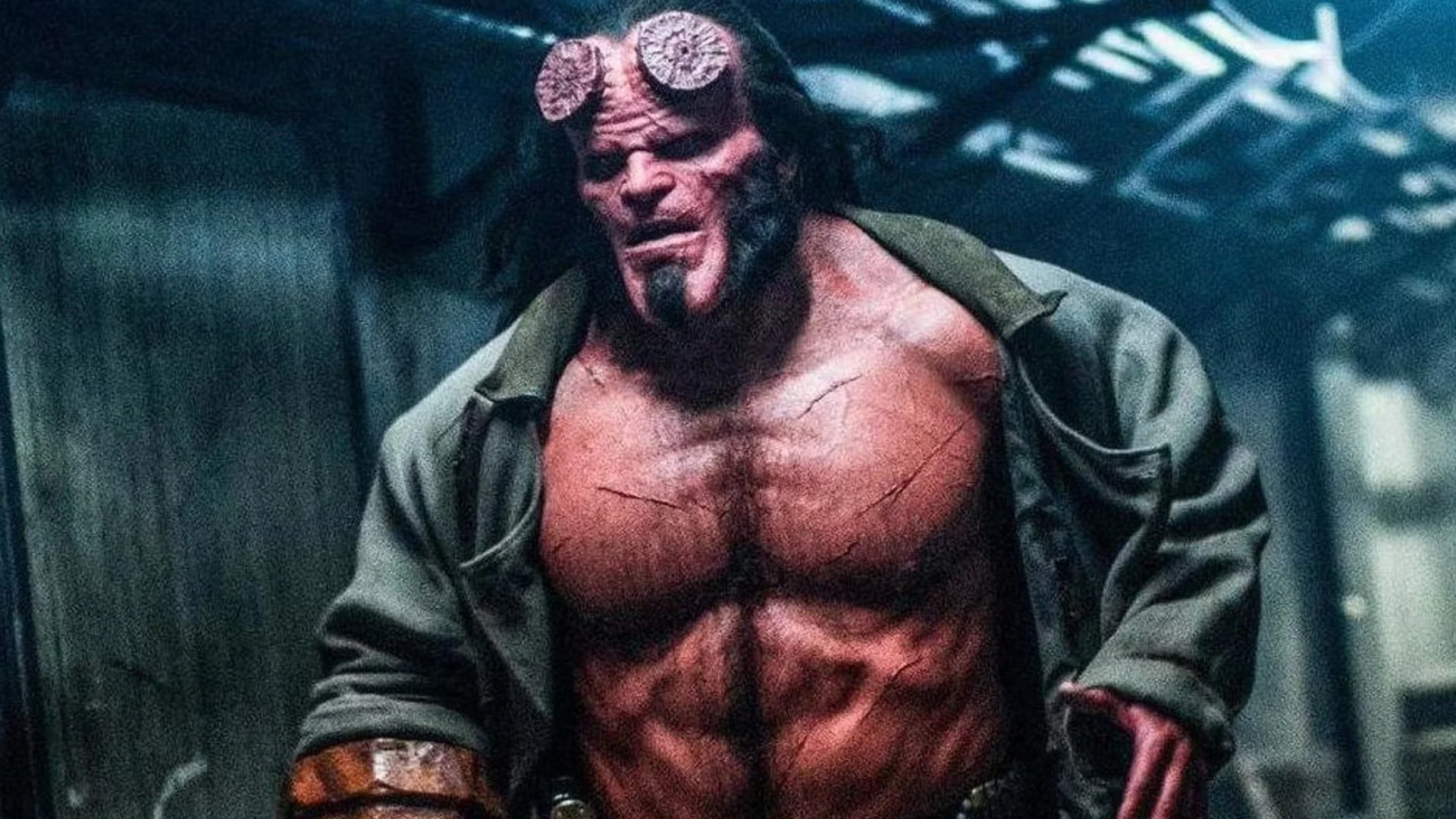
When Hellboy hit theaters in 2019, it was meant to kick off a new era for Mike Mignola’s iconic demon hero. Instead, it became a messy reboot that landed with a thud.
Directed by Neil Marshall and starring David Harbour, the film pulled heavily from some of the darkest and most climactic Hellboy comics right out of the gate. Critics weren’t kind, audiences didn’t show up, and comparisons to Guillermo del Toro’s earlier films were unavoidable.
By the time Harbour suited up as Red Guardian in Black Widow, he’d already made it clear that Hellboy was an experience he was ready to move on from.
Still, that movie wasn’t designed as a one-and-done. The final act and credits were packed with sequel setups that pointed toward a much more comic-accurate future. Looking back now, the canceled follow-up paints a interesting picture of what might have been.
The 2019 film loosely adapts The Wild Hunt and The Storm and the Fury, two major Hellboy stories that, in the comics, serve as the end of his journey. Hellboy is revealed as a descendant of King Arthur, the apocalypse looms, and the ancient witch Nimue is resurrected to bring the world to ruin.
In the comics, Hellboy dies defeating her. On screen, the movie sidesteps that finality, but the choice to begin a reboot with such heavy material left little room to grow.
Gruagach, portrayed by Stephen Graham, suffers the most in translation. The pig-faced fairy works on the page but looks awkward in live action, and the film turns a tragic antagonist into comic relief. The result is a story that feels rushed and incomplete, especially since the ending clearly expected audiences to come back for more.
Instead of using familiar faces like Abe Sapien or Liz Sherman, the reboot paired Hellboy with Alice Monaghan, played by Sasha Lane, and Major Ben Daimio, portrayed by Daniel Dae Kim.
In the comics, Alice was kidnapped by Irish fae as a baby and swapped with a disguised Gruagach, which is why he despises Hellboy. In the original stories, Alice grows up touched by magic, falls in love with Hellboy, and ultimately mourns him after Nimue kills him. The film retools her into an active fighter, giving her a gun and ghost-summoning abilities to keep her in the action.
The biggest tease arrives just before the credits roll. Hellboy, Alice, and Daimio raid a warehouse tied to the Oannes Society, a doomsday cult. Inside, they find a water tank holding an “Icthyo Sapien.” A webbed hand presses against the glass. That was Abe Sapien.
Makeup artist Joel Harlow later confirmed that if a sequel had moved forward, Abe would’ve been fully introduced with a new look that separated him from the del Toro version:
“If we had done the entire character, first of all, it would be vastly different from the other films, more thug-like, and we wouldn’t have even have gone with that hand you see at the end of the film.
“We would have designed something from scratch. That’s one of the ones that, because I have an affection for fish people and fish characters, would have been really fun to work on, but alas, no.”
The Oannes Society hint suggests the sequel may have finally explored Abe’s comic origin as Langdon Everett Caul, a 19th-century man transformed into something else entirely. That backstory never made it into the earlier films, and it could’ve helped ground the reboot in unexplored territory.
The movie also drops two post-credits scenes loaded with Mignolaverse lore. One revisits Hellboy’s 1944 arrival on Earth, with Markos Rounthwaite as Grigori Rasputin and Thomas Haden Church appearing as Lobster Johnson, the Nazi-hunting vigilante who brands criminals with a burning claw. In the mid-credits scene, Hellboy drunkenly encounters the Lobster’s ghost, who warns that worse evil is on the way.
In the comics, Lobster Johnson is a pulp-era legend whose true history was buried beneath fiction. Hellboy idolizes him, insisting the Lobster was real long before the truth came out. His appearance in the film felt like a trial run for either a future team-up or a prequel spinoff. Neither ever materialized.
The final credits scene digs even deeper. Baba Yaga, played by Emma Tate and Troy James, is still furious with Hellboy after he outwits her instead of sacrificing his eye as he does in the comics.
Speaking to someone unseen, she promises him death if he kills Hellboy. Fans familiar with the comics know exactly who she’s addressing… Koshchei the Deathless.
Koshchei’s story comes from Darkness Calls, where Baba Yaga sends the immortal warrior after Hellboy in a twisted fairy-tale realm. That arc actually takes place before The Wild Hunt, which highlights one of the reboot’s biggest missteps. By jumping straight to the endgame, the film skipped over the character-driven stories that make Hellboy’s world work.
Harbour was a strong choice for the role, capturing the gruff exterior and buried kindness that define the character. His work as Jim Hopper on Stranger Things proved he could balance toughness and vulnerability, which is Hellboy in a nutshell.
The 2019 film also embraced more of Mignola’s mythology than the del Toro movies ever did, diving headfirst into the wider universe.
There was real potential in building a long-form saga from those comics. Instead, the movie rushed to lay groundwork without earning the audience’s trust. A sequel might’ve corrected course, introducing Abe properly, exploring Darkness Calls, and letting the world breathe. But it would’ve had to do that while standing on a shaky foundation.
A Hellboy sequel could’ve been something special, but the opportunity slipped away before it ever had a chance to grow. The franchise was then rebooted again, and that seemed to be the final nail in the coffin for Hellboy because it crashed and burned.