Steven Spielberg's TAKEN Already Told a Better Version of the Story DISCLOSURE DAY Wanted to Tell
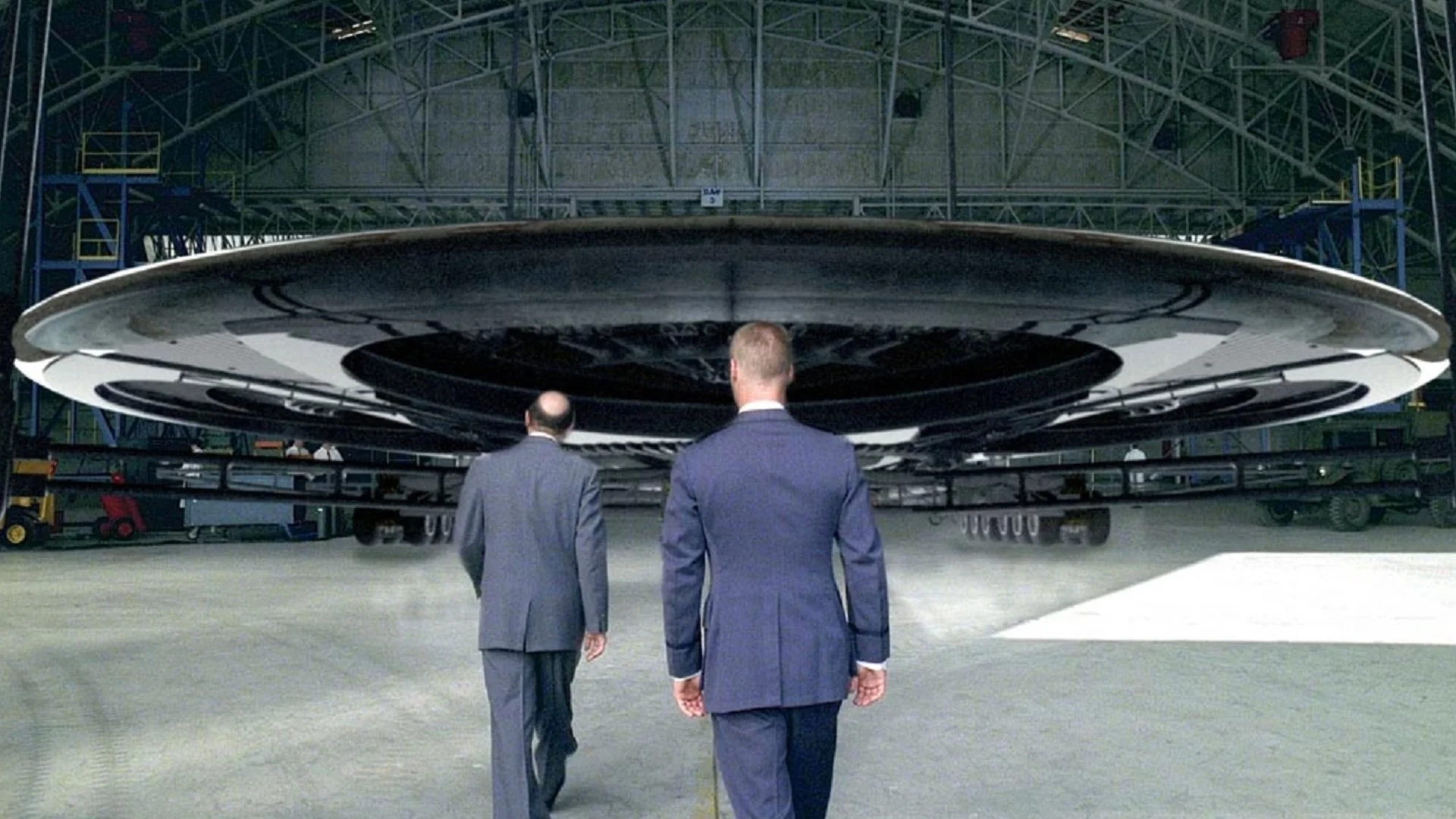
When Steven Spielberg announced Disclosure Day, many fans immediately saw it as another entry in the filmmaker's long-running fascination with extraterrestrial life.
After all, this is the director who gave us Close Encounters of the Third Kind, E.T. the Extra-Terrestrial, and War of the Worlds. Few filmmakers have explored humanity's relationship with the unknown as often or as successfully as Spielberg.
Now that Disclosure Day is out, it's clear that the film isn't simply another alien invasion movie or a first-contact spectacle. It's a story about revelation. It's about humanity confronting a truth that has existed for generations and the consequences that follow once that truth can no longer be hidden.
As I watched the film unfold, I kept finding myself thinking about another Spielberg project that doesn't get nearly enough attention: Taken, the ambitious 2002 sci-fi miniseries that aired on the Sci-Fi Channel.
The two projects are obviously different in execution. One is a modern blockbuster movie built around a global event. The other is a sprawling ten-part miniseries that unfolds across decades.
Yet the more I thought about it, the more I realized that Disclosure Day feels like Spielberg revisiting many of the same ideas that made Taken such a fascinating piece of science fiction. It's one of the reasons Disclosure Day works so well.
But while the new film updates those concepts for a contemporary audience, I couldn't shake the feeling that Taken still offers the deeper and more emotionally satisfying exploration of them.
Both Stories Are About Humanity Learning the Truth
At their core, both Disclosure Day and Taken are built around the same fundamental question: What happens when humanity discovers it isn't alone?
That question has fueled countless science fiction stories over the years, but what makes both projects interesting is that neither one is primarily concerned with proving the existence of extraterrestrial life. In both cases, the existence of aliens is almost secondary to the effect that knowledge has on humanity.
In Disclosure Day, the story revolves around the revelation itself. The film examines how governments, institutions, and ordinary people respond when hidden information finally comes to light. The mystery isn't whether the truth exists. The tension comes from what happens when that truth can no longer be controlled.
Taken approached the same idea from a different angle. Instead of focusing on a single moment of disclosure, the miniseries explored decades of secrecy, cover-ups, abductions, and encounters. The truth was always lurking beneath the surface, shaping the lives of multiple generations long before the wider world was ready to acknowledge it.
That's one of the first major similarities that jumped out at me while watching Disclosure Day. Both stories are fascinated by the idea that humanity has been living alongside a hidden reality. The difference is that Disclosure Day focuses on the day that reality becomes public, while Taken explores the long and often painful journey leading up to that point.
That distinction may seem small, but it ultimately shapes everything that follows. Because once both stories move beyond the mystery itself, they become far more interested in the people caught in the middle of it all. And that's where Taken begins to pull ahead.
The Human-Alien Relationship Feels Strikingly Familiar
One of the things that surprised me most about Disclosure Day wasn't the reveal itself. It was the way the film approached the relationship between humanity and the extraterrestrial intelligence at the center of the story.
For all the secrecy, political fallout, and global uncertainty surrounding the disclosure event, the film ultimately becomes something much larger than a story about aliens showing up.
It's a story about connection. It's about two species whose histories have been intertwined far longer than most people realize and what that means for humanity moving forward. That's where I found myself thinking about Taken again.
Back in 2002, Taken wasn't content with presenting aliens as mysterious visitors observing humanity from a distance. The series built its entire narrative around the idea that human and extraterrestrial destinies were becoming increasingly connected.
Alien abductions, genetic experimentation, hybridization, and the gradual merging of two vastly different civilizations weren't side plots. They were the foundation of the entire story. As the story for Disclosure Day unfolded, I kept noticing echoes of those same ideas.
Both projects explore the possibility that alien intelligence isn't simply interested in humanity as a curiosity. Instead, there appears to be a larger purpose driving these interactions. The relationship extends beyond observation and into something much more personal and consequential. In both stories, humanity isn't standing on the outside looking in. It's becoming part of the equation.
That's a fascinating concept because it shifts the conversation away from the familiar question of whether aliens exist. Instead, it asks something far more interesting: What if humanity's future is tied to theirs?
It's the kind of idea that opens the door to endless possibilities. Can two completely different species coexist? Can they learn from one another? Are they destined to become partners, rivals, or something else entirely? And if humanity is evolving because of that relationship, what does that evolution actually look like?
Disclosure Day explores these questions in ways that feel fresh and relevant to modern audiences. The film presents them through a contemporary lens shaped by current discussions surrounding disclosure, transparency, and humanity's place in an increasingly connected world.
But while the ideas feel current, many of them were already at the heart of Taken more than two decades ago. The difference comes down to time.
Disclosure Day introduces these concepts and develops them within the confines of a feature film. It does an impressive job planting those seeds and exploring their implications. Taken, on the other hand, had ten episodes and multiple generations of characters through which to examine them.
The series was able to sit with those ideas. It could explore how alien contact affected families over decades. It could show how individuals struggled with experiences they couldn't explain. It could examine the emotional, psychological, and even biological consequences of humanity's connection to something beyond Earth.
Rather than simply presenting the possibility that humanity and extraterrestrial life were linked, Taken immersed viewers in the messy reality of what that relationship looked like.
That's ultimately why so much of Disclosure Day felt familiar to me. Not because the film is repeating old ideas, but because it seems to be revisiting themes that Spielberg was already deeply interested in exploring years ago.
The difference is that Taken had the luxury of treating those concepts as the destination rather than a stop along the way. And because of that, the series was able to dig much deeper into the emotional and philosophical questions that make those ideas so compelling in the first place.
That emotional investment becomes even more apparent when you look at how each story handles its characters, which is where Taken arguably gains its biggest advantage over Disclosure Day.
Disclosure Day Updates These Ideas for a Different World
As much as this comparison keeps circling back to Taken, what makes Disclosure Day such an interesting companion piece is that it isn't simply recycling the same concepts.
Spielberg appears to be revisiting many of the ideas that fascinated him more than two decades ago, but he's filtering them through a completely different cultural landscape.
The result is a film that feels connected to Taken on a thematic level while also reflecting how dramatically the conversation surrounding UFOs and extraterrestrial life has changed since 2002.
When Taken debuted, UFO culture was still largely defined by Roswell, Area 51, government cover-ups, and the lingering influence of 1990s conspiracy theories. The possibility that governments might be hiding evidence of extraterrestrial life was a topic that generated endless fascination, but it remained firmly on the fringes of mainstream discussion.
That atmosphere played a significant role in shaping Taken. Much of the series was built around secrecy, hidden agendas, and a handful of individuals searching for answers that most people either dismissed or refused to believe.
Disclosure Day arrives in a very different era. Over the last several years, conversations surrounding unidentified aerial phenomena have become far more visible in the public sphere.
Congressional hearings, military footage, whistleblower claims, and ongoing media coverage have transformed what was once considered a niche topic into something that regularly enters mainstream discussion.
Whether people believe every claim or remain skeptical, UFOs and UAPs are no longer treated quite the same way they were when Taken first aired.
That shift is woven into the DNA of Disclosure Day. Rather than focusing on whether the truth exists, the film is more interested in examining how society reacts when long-held secrets can no longer remain hidden.
The story feels shaped by a modern world where information travels instantly, public opinion forms in real time, and every major revelation becomes the subject of endless analysis, debate, and scrutiny.
The film understands that if a disclosure event of this magnitude were to happen today, it wouldn't unfold behind closed doors. It would play out across television broadcasts, social media platforms, livestreams, podcasts, and countless online conversations happening simultaneously around the globe.
Another aspect that gives Disclosure Day its contemporary identity is its portrayal of public trust, or perhaps more accurately, the lack of it. Modern audiences have become increasingly skeptical of governments, corporations, media outlets, and institutions in general.
That skepticism creates a fascinating backdrop for a story centered on disclosure. Even when information is finally revealed, the questions don't stop. People want to know who knew the truth, how long they knew it, and why it remained hidden in the first place. The film wants to tap into those anxieties in a way that feels authentic to the current moment.
This is where Disclosure Day deserves a tremendous amount of credit. The movie isn't simply taking ideas from Taken and repackaging them. It's examining many of those same concepts through the lens of a world that has changed dramatically over the past two decades.
The questions may be familiar, but the context surrounding them is entirely different. That's part of what makes the film such a compelling piece of science fiction. It understands that stories about alien contact are often reflections of the era in which they're made, and Disclosure Day feels very much like a product of today's cultural and technological landscape.
At the same time, watching the film reinforced why Taken why Taken should resonate with so many science fiction fans. While Disclosure Day does an excellent job updating these ideas for a modern audience, the miniseries had the luxury of exploring them on a much larger canvas.
That difference becomes increasingly apparent when you look at how each project develops its characters and emotional stakes over time, which is ultimately where Taken gains its greatest advantage.
Why Taken Ultimately Had More Emotional Weight
As impressive as Disclosure Day is, this is the point where I believe Taken separates itself from the film in a meaningful way.
The difference isn't the quality of the storytelling, the visual effects, or even the ideas being explored. It comes down to something much simpler: time.
One of the greatest strengths of Taken was its willingness to tell a story across multiple generations. Rather than following a single protagonist through a single extraordinary event, the miniseries tracked several interconnected families whose lives were shaped by extraterrestrial contact over the course of decades.
Viewers weren't just watching a mystery unfold. They were watching the ripple effects of that mystery pass from parents to children and eventually to grandchildren.
That approach allowed Taken to explore the human side of its story in a way that few science fiction projects have managed. The alien presence wasn't simply a source of intrigue. It became a force that influenced every aspect of these characters' lives. It shaped their relationships, fueled their obsessions, deepened their fears, and left emotional scars that lasted for generations.
As viewers, we spent years with these characters, even if only across ten episodes. We watched them struggle to understand experiences they couldn't explain. We watched families fracture under the weight of secrets.
We watched people dedicate their lives to searching for answers while others desperately tried to move on from encounters that had changed them forever. By the time major revelations arrived, they carried genuine emotional weight because we understood exactly what those moments meant to the people involved.
That's where the format of Taken became such a powerful advantage. The series had the freedom to slow down and focus on consequences. It wasn't rushing toward a major event or building toward a singular moment of revelation.
Instead, it spent time examining how extraordinary experiences affect ordinary people. The alien mythology remained fascinating throughout the series, but what kept viewers invested were the characters living through it.
Disclosure Day certainly has compelling characters of its own, but its primary focus is understandably much larger. The film is concerned with the worldwide implications of disclosure and the societal shockwaves that follow.
The story operates on a grand scale, which allows Spielberg to explore some incredibly interesting ideas about humanity's future and its place in the universe. The scope is one of the movie's greatest strengths.
At the same time, that larger focus naturally leaves less room for the kind of long-form character exploration that made Taken so effective. A feature film has to make choices about where its attention goes, and Disclosure Day wisely prioritizes the event itself and its global impact.
Taken had the luxury of devoting hours to the emotional aftermath, showing how lives were shaped and reshaped by encounters that most people could never fully comprehend. That's why the two projects ultimately land in different places emotionally.
Disclosure Day delivers the spectacle of disclosure while Taken delivered the emotional cost of it. That distinction is what continues to make the miniseries feel so special all these years later.
While Disclosure Day asks audiences to imagine how the world would react to a revelation of this magnitude, Taken asks something much more personal. It asks what that revelation would do to the people forced to live with it every day. The answers aren't always comforting, but they're often fascinating, heartbreaking, and human.
And it's that human element that continues to elevate Taken above many other alien stories, including one that Spielberg himself has now brought to the big screen.
Spielberg May Have Already Made His Ultimate UFO Epic
When people talk about Steven Spielberg's contributions to UFO and alien science fiction, the conversation usually begins with Close Encounters of the Third Kind and E.T. the Extra-Terrestrial. War of the Worlds has also earned its place among the filmmaker's most memorable explorations of extraterrestrial life. Each of those projects approaches the subject from a different angle, and each has left a lasting mark on the genre.
Close Encounters captured the wonder and mystery of contact. E.T. explored friendship and empathy through the eyes of a child. War of the Worlds transformed alien visitation into a terrifying survival story. Even now, decades later, those films remain defining entries in Spielberg's filmography and in science fiction as a whole.
But after revisiting Taken and watching Disclosure Day, I found myself asking a question that probably sounds a little crazy: What if Taken is actually Spielberg's most ambitious UFO story? The more I think about it, the harder that question becomes to dismiss.
Part of what makes Taken so unique is that it doesn't limit itself to a single genre or perspective. The series is constantly shifting between different storytelling styles while somehow managing to keep everything connected.
At one moment it's a family drama about parents and children struggling to understand one another. At another, it's a conspiracy thriller centered on government secrecy and hidden agendas. Then it transforms into a sweeping science fiction saga exploring humanity's evolving relationship with an alien intelligence.
At the same time, Taken functions as a historical narrative that spans decades of American history. Major world events unfold in the background as the story moves from generation to generation, creating the sense that extraterrestrial contact has been quietly influencing human lives for far longer than anyone realizes.
Layered on top of all that is a first-contact mythology that steadily expands with each episode, revealing a larger picture of who these beings are, what they want, and how their future is connected to our own.
That's an enormous amount of narrative territory for a single project to cover. What's remarkable is that Taken doesn't feel overwhelmed by those ambitions. Instead, each element strengthens the others.
The conspiracy aspects make the science fiction more intriguing. The family drama makes the larger mythology feel personal. The historical backdrop gives the story a sense of scale that extends far beyond the individual characters. Everything works together in service of a much larger idea about humanity's place in the universe.
That's one of the reasons Disclosure Day immediately brought Taken to mind for me. The new film tackles many of the same themes, and in some cases presents them with a level of scale and sophistication that simply wasn't possible for a television miniseries in 2002.
Yet watching the film also reminded me just how much ground Taken covered and how ambitious it was in its attempt to tell a complete story about alien contact.
In many ways, Disclosure Day feels like Spielberg revisiting a handful of concepts that fascinated him during the making of Taken and exploring them from a modern perspective.
The film is excellent at examining disclosure as a global event and imagining how humanity might react when long-hidden truths finally emerge. But Taken wasn't focused on a single moment. It was trying to tell the entire story.
It explored the mystery, the secrecy, the encounters, the consequences, the evolution of relationships between species, and ultimately the future that emerged from those interactions.
That's why I think Taken deserves a place alongside Spielberg's most celebrated science fiction projects. It may not have the cultural footprint of Close Encounters, the emotional nostalgia of E.T., or the blockbuster scale of War of the Worlds, but in terms of sheer scope and ambition, there's a strong argument that it stands above all of them.
And after seeing Disclosure Day, that argument feels stronger than ever. One of the most fascinating things about Disclosure Day is that it doesn't just feel like another entry in Spielberg's long history of telling alien stories. It feels like a filmmaker revisiting ideas that have clearly occupied his imagination for decades and examining them through the lens of a very different world.
The conversations surrounding UFOs, UAPs, government transparency, and extraterrestrial life have evolved dramatically since Taken premiered in 2002. What once felt like fringe speculation has become part of mainstream public discourse, and Disclosure Day embraces that shift.
The film takes concepts that Spielberg explored years ago and reimagines them for an era defined by instant communication, public skepticism, and a growing curiosity about what may exist beyond our understanding.
That's a big part of what makes Disclosure Day such an effective science fiction film. It feels relevant to the moment we're living in while still tapping into the same sense of wonder, mystery, and possibility that has fueled some of Spielberg's best work.
The movie delivers a compelling vision of what disclosure might look like and how humanity could respond when confronted with a reality that changes everything.
At the same time, watching Disclosure Day reminded me just how ambitious Taken really was. The miniseries wasn't focused solely on revealing the truth. It explored the decades leading up to that revelation, the lives affected by it, and the generations shaped by encounters they could never fully understand.
It combined family drama, conspiracy thriller, science fiction, historical storytelling, and first-contact mythology into a sprawling narrative that examined alien contact from nearly every possible angle.
That's why I keep coming back to the idea that Taken may still be the more complete exploration of these themes. Not because Disclosure Day falls short, but because Taken had the opportunity to dig deeper into the human experience at the center of the mystery.
It wasn't just interested in what aliens meant for humanity. It was interested in what that relationship meant for individual people, families, and generations.
In many ways, Disclosure Day feels like a spiritual companion to Taken. The stories take different paths, but they share a surprising amount of thematic DNA. Seeing those connections only made me appreciate both projects more, especially the miniseries that often gets overlooked when discussing Spielberg's science fiction legacy.
Disclosure Day shows us what happens when the truth finally comes out. Taken showed us what that truth does to people. That's why, more than two decades later, it remains Spielberg's most underrated UFO story.