How Darth Maul Became One of STAR WARS’ Most Complex Characters Thanks to Animation
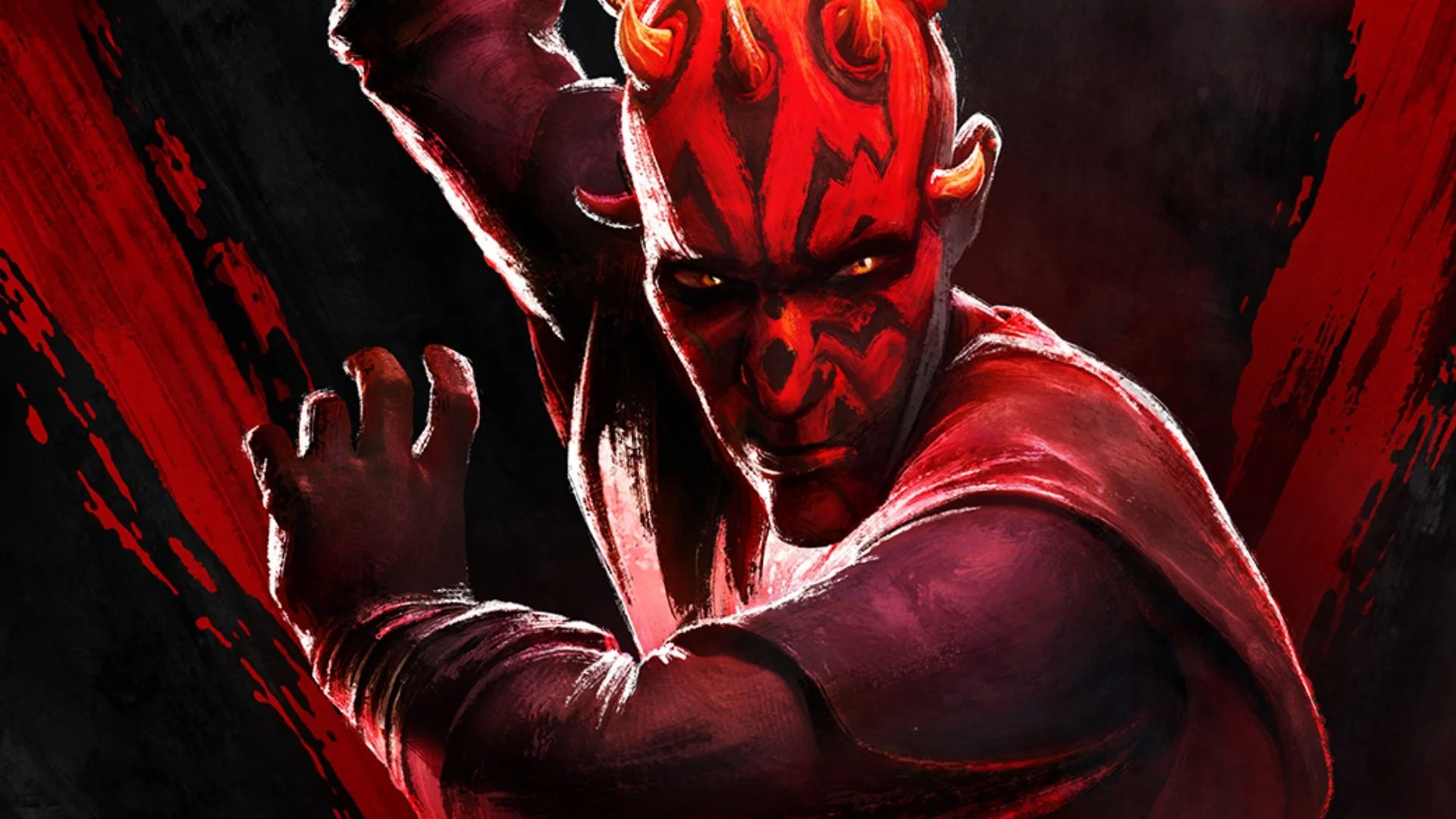
There was a time when Darth Maul was more myth than character. He showed up in Star Wars: Episode I – The Phantom Menace looking like something out of a nightmare, said very little, fought like a demon, and left an unforgettable impression.
But once the dust settled, there wasn’t much to hold onto beyond the visual. He was cool, no question, but he wasn’t fully formed.
That changed in a big way when animation took over. What makes Maul’s evolution so fascinating is that it wasn’t just about bringing him back to life. It was about asking who he actually is once you strip away the mystery. And according to Sam Witwer, that question sits right at the heart of where the character is now.
“If there were ever a time to visit this character’s life, it is exactly when the Empire comes to power, because Maul is a classically trained Force user who came from a time of knights, and honor, and magic, and color,” Witwer explained to io9. “But now the knights are dead, and the magic and the color is being sucked out of the galaxy by the evil galactic empire.”
That perspective reframes everything about Maul. He’s not just a leftover villain from an earlier story. He’s a relic of a completely different era, trying to exist in a galaxy that no longer reflects the world he was shaped in.
That disconnect is what animation tapped into so effectively. In Star Wars: The Clone Wars and later Star Wars Rebels, Maul is forced to confront the reality of what he was trained to be. A weapon. A tool. Something built for someone else’s purpose.
That realization hits hardest when you look at his relationship with the Emperor.
“Who is the Emperor to Maul? That’s the man who raised him,” Witwer said. “So [in Shadow Lord], Maul is looking around going, ‘Okay, I knew that we were trying to build an empire. I didn’t think it was going to be like this. This is grotesque. This is ugly.’”
That right there is the turning point. Maul starts to see the thing he was raised to believe in, and he doesn’t recognize it. Not because it failed, but because it succeeded in a way he never expected. The Empire is not noble. It is not structured around purpose. It is power for the sake of power.
Suddenly, Maul is left trying to figure out where he fits in all of that. “There’s a black hole of energy everywhere, and it’s all everywhere he looks: the Emperor’s hand,” Witwer continued. “So Maul is trying to figure out who he is, and what is he going to do about this?”
That question is the key to why the character works now in a way he never did before. Back in 1999, Maul didn’t need to think. He didn’t need to question anything. He existed to carry out orders. But animation gave him space to pause, to reflect, and to struggle with the idea that everything he believed might have been a lie.
It also gave him something even more important. Agency. “He’s been out there, yes, he had his brother, Savage, but he was doing what the Emperor had trained him to do back then,” Witwer explained. “Now he’s not. Now he’s coming up with his own ideas.”
That shift from servant to self-directed force is what transforms Maul from a cool villain into a genuinely compelling character. He is no longer reacting. He is choosing.
And those choices are not clean. Maul does not suddenly become good. He does not learn how to connect with people in a healthy way. In fact, that is one of the most interesting parts of his evolution. He feels the need for connection, but he has no idea what to do with it.
“[Maul] is a character who has social needs like you and me but has none of the social training, not even a concept of what it is to be kind to someone,” Witwer said. “He’s a character who has a lot of internal drama inside him, a lot of conflict, and a lot of tension.”
That tension is what drives him. It is why his relationships are unstable. It is why his alliances never last. It is why every step forward feels like it could collapse at any moment. He is constantly trying to build something out of a life that was never his to begin with.
Even as he grows, that underlying instability never goes away. “He does not live in a world where you can have friendships or trust,” Witwer continued. “He’s constantly in a state of fight or flight; he’s constantly in a high-cortisol-intense chase through the galaxy.”
That idea alone explains why Maul remains dangerous no matter how much depth you give him. Understanding him does not make him safer. It makes him more unpredictable.
Animation understood that balance. It allowed Maul to evolve without softening him. It gave him layers without stripping away what made him threatening in the first place. He is still capable of terrible things. He is still driven by anger and obsession. But now those traits come from somewhere real.
That is what makes him one of the most compelling figures in Star Wars today. He is not just a villain. He is a character shaped by manipulation, betrayal, survival, and a constant search for identity. Someone who was built to serve and now has to decide what to do with the freedom he never expected to have.
That kind of journey takes time. It takes space. It takes a medium willing to slow down and explore the gray areas. Animation gave Maul that space, and because of it, he is no longer just the guy with the double-bladed lightsaber. He is something much more interesting. A fractured, driven, deeply conflicted force moving through a galaxy that no longer makes sense to him.
That is a far more powerful legacy than anyone could have predicted back in 1999, and it continues in Lucasfilm’s upcoming series Star Wars: Maul - Shadow Lord.