How SPEED RACER Went From Box Office Bomb to Cult Masterpiece
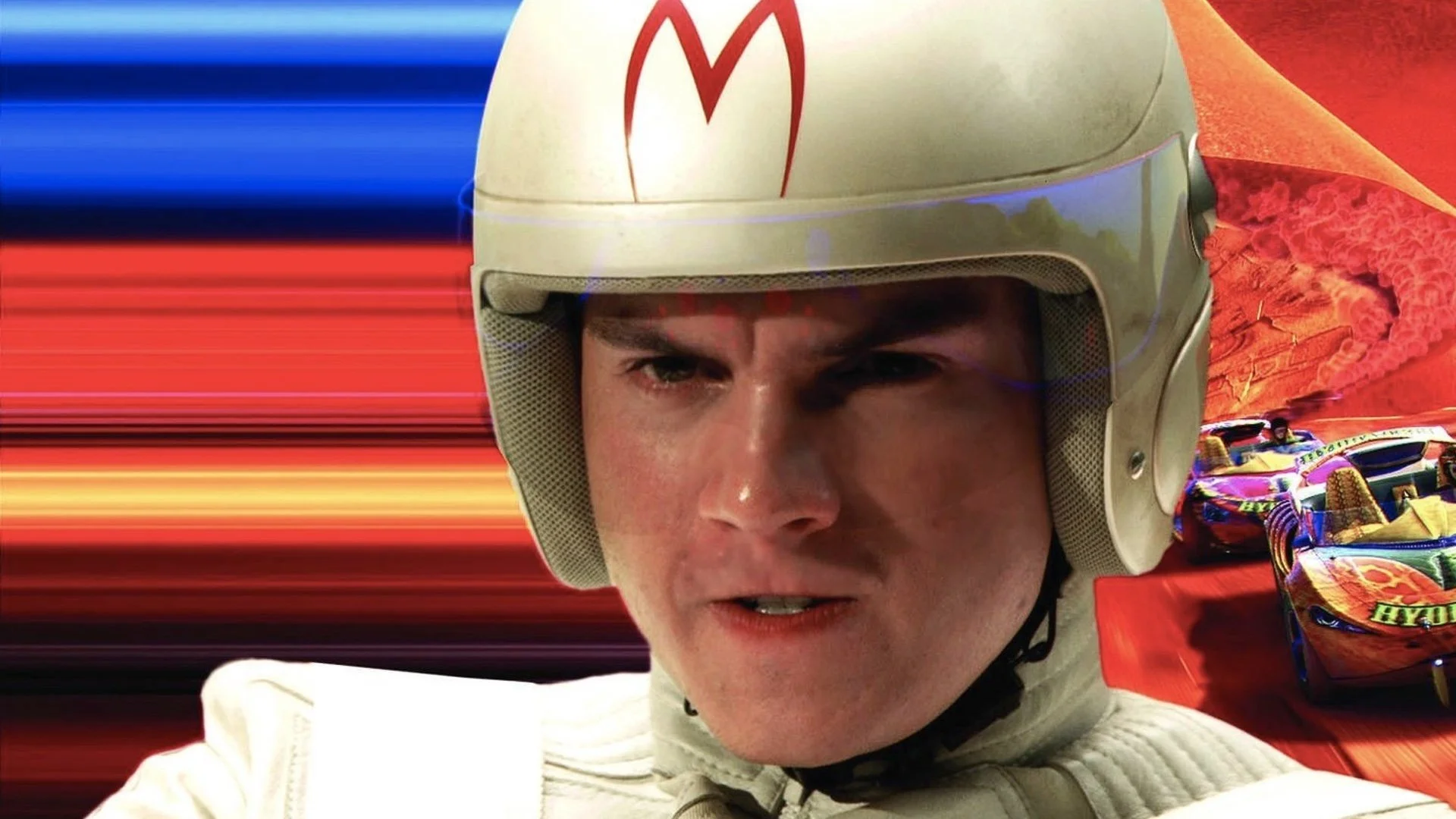
Back in 2008, the Wachowskis released Speed Racer into theaters and audiences genuinely didn’t know what to do with it. I freakin’ loved the hell out ot it! But, critics hammered it, moviegoers mostly ignored it, and the film earned the reputation of being one of Hollywood’s biggest misfires of the year.
It also had the unfortunate timing of arriving right as Marvel launched Iron Man, which completely shifted the blockbuster conversation.
Fast forward nearly two decades later, and the conversation surrounding Speed Racer couldn’t look more different. The movie was just way ahead of its time!
What was once labeled a disaster has become a favorite cinematic redemption story for movie fans, who now celebrate the movie as a visually insane masterpiece, a wildly sincere family story, and arguably the greatest live-action anime adaptation ever made.
The recent 4K rerelease only added more fuel to that reevaluation, bringing in audiences who either skipped it back in 2008 or were too young to appreciate what the Wachowskis were trying to do at the time.
Now, Emile Hirsch, the star of the film, is looking back on the film’s strange journey from critical punching bag to cult classic, and even he seems surprised by how dramatically things have changed.
Speaking with io9, Hirsch reflected on just how massive the project felt from the very beginning. As a fan of the original cartoon growing up, he immediately understood why the Wachowskis adapting Speed Racer was such a huge deal after finishing The Matrix trilogy.
“The initial pull for me was I’d watched the cartoon as a kid. They did replays on Cartoon Network, so I was always watching a cartoon. I loved the cartoon, and I loved The Matrix and what the Wachowskis did with that.
“So when I heard the Wachowskis were making Speed Racer, my imagination went wild. This was the first film that they were making after they finished The Matrix trilogy, and I was like, ‘Oh my gosh, you’ve got to audition now.’
“I went through the whole audition process, which was pretty crazy because I remember everyone and their mother was auditioning for Speed. It was like if you lived in Idaho and were an able-bodied male, put yourself on tape. That’s what it felt like. It felt like this worldwide casting call.”
At the time, many people expected the filmmakers to simply apply the same dark sci-fi aesthetic from The Matrix to a racing movie. Instead, the Wachowskis swung in the complete opposite direction.
They leaned hard into candy-colored anime visuals, exaggerated transitions, impossible racing physics, and an intentionally heightened reality that felt ripped directly from a cartoon, which is what made it so damn fun!
Hirsch explained that once he saw the artwork and early concepts, he realized they were making something much stranger and far more experimental.
“When I finally got the part, I was beyond excited. And then the Wachowskis showed me some of the artwork and what they were doing, and it kinda blew my mind because it made me realize they weren’t going to do The Matrix aesthetic with Speed Racer which is what most people first thought.
“They were gonna reinvent their aesthetic in this more colorful, hyperpop anime visual element. That was cool because, in that moment, now I know we were making something really different than The Matrix.
“We’re not just adding on to that; we’re making our own thing. There’s a certain excitement about making something so wild and experimental.”
That experimental approach may actually be the biggest reason Speed Racer struggled in 2008. Audiences at the time weren’t fully on board with stylized CGI-heavy filmmaking that looked this artificial on purpose.
Now, after years of gritty comic book movies, animated multiverse storytelling, and anime-inspired visuals becoming mainstream, the movie suddenly feels way ahead of its time.
A younger generation especially seems to have embraced it. Online film communities have spent years championing the movie as misunderstood, praising everything from its emotional sincerity to its kinetic editing and genuinely heartfelt family dynamic. What once looked overwhelming now feels inventive.
Hirsch admitted that watching this reevaluation happen in real time has been surreal. “Honestly, it’s taken me aback a little bit. We loved the movie in ’08, but the world didn’t accept the movie to a certain extent.
“The public and the critics sorta rejected the movie. That’s what it felt like. There were plans to make sequels if it did well and all that stuff, and they were like, ‘Aw, it didn’t do well,’ so everyone was heartbroken.”
“(Laughs) To see it slowly change [after] having had the world go, ‘This was a disaster,’ to suddenly coming around and being like, ‘Just kidding, it was a masterpiece,’ it’s kinda crazy.
“It’s almost hard to believe, in a way, because it doesn’t seem like that happens very often with films to have this big a difference in reception to the point where, 18 years later, the chatter and fans push Warner Bros. to release this 4K and push for a theatrical release. And then the chatter from that pushes for IMAX. It’s cool because it’s all very organic.”
Then Hirsch summed up why this whole Speed Racer reevaluation feels different from so many manufactured nostalgia campaigns Hollywood tries to create today:
“Speed Racer‘s rise was not corporately engineered. It was just people liking the movie. That’s really what it was.”
That’s why the movie continues connecting with people. Speed Racer wears its heart completely on its sleeve. It’s emotional, goofy, colorful, melodramatic, and completely sincere in a way that modern blockbusters rarely allow themselves to be anymore.
The wild thing is that many of the exact elements critics mocked in 2008 are now the same reasons audiences love it. The hyperactive visuals. The cartoon logic. The emotional speeches about family and integrity.
The Wachowskis didn’t try to “ground” anime for mainstream audiences. They fully committed to it, and over time people finally caught up with what they were doing.
The movie’s reevaluation also says something interesting about how quickly audience tastes evolve. Sometimes films really are released at the wrong moment. Sometimes people need years to meet a movie on its own wavelength.
For Speed Racer, it happened over the course of 18 years.