Inside Disney’s CEO Power Struggle and How Josh D’Amaro Emerged as Bob Iger’s Heir
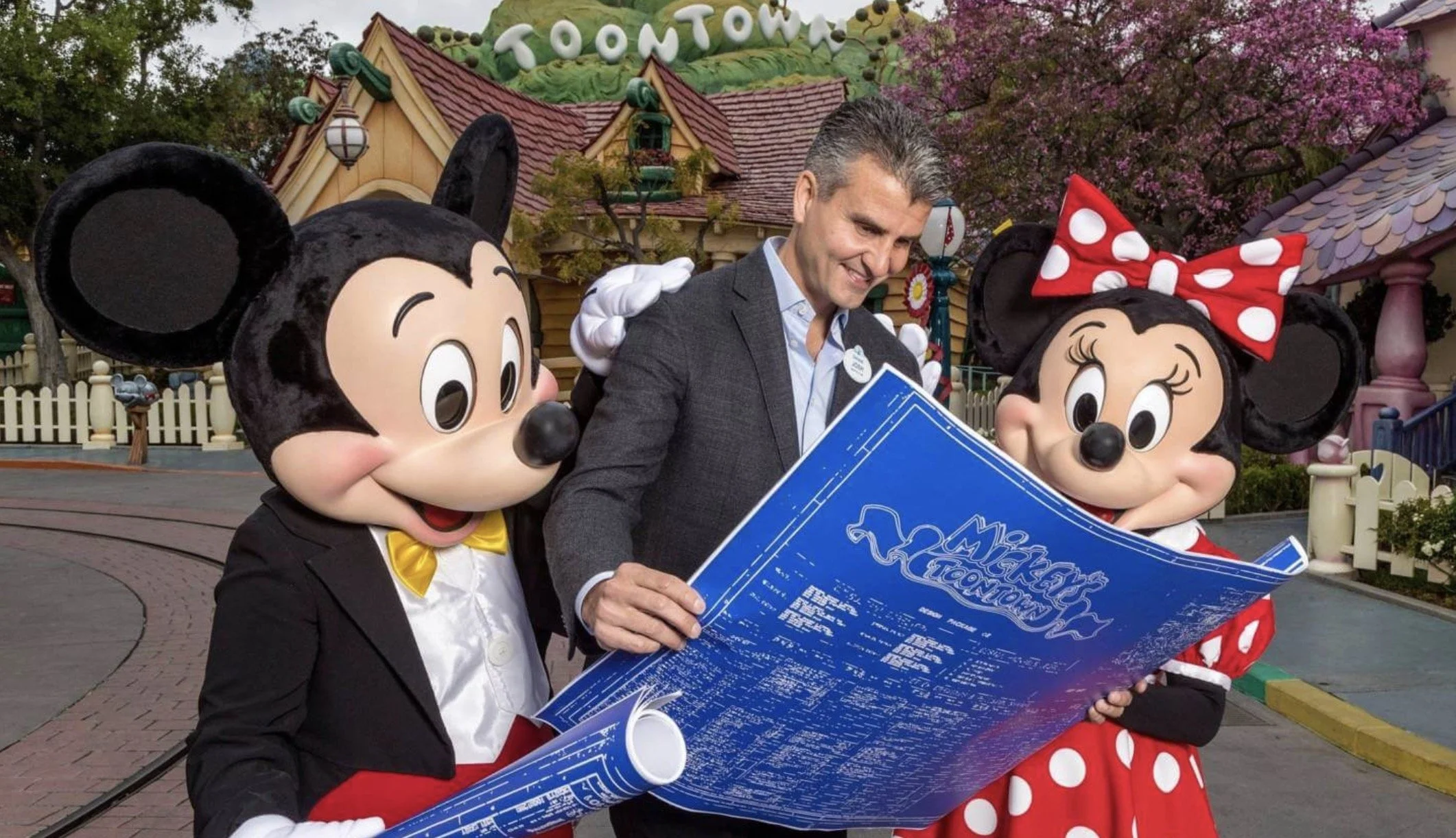
For more than two years, one question has hovered over the Magic Kingdom like a storm cloud that wouldn’t move. How do you replace Bob Iger as Disney CEO?
The answer matters not just to shareholders, but to Hollywood, Wall Street, and pretty much anyone who’s ever watched a Disney movie or walked through one of its parks. With Iger’s second stint as CEO set to end in 2026, the pressure was on.
This week, Disney’s board finally played its hand. By unanimous vote, Josh D'Amaro has been chosen as the company’s next CEO, officially taking over on March 18. At the same time, Dana Walden was elevated to president and chief creative officer, expanding her authority to include oversight of the film division.
She’ll report directly to D’Amaro, cementing a power structure that puts an end to one of the most drawn-out succession battles in modern media history.
D’Amaro steps into the top job with nearly three decades at Disney under his belt. His background is rooted in the parks, consumer products, and experiences side of the business, which has quietly become one of Disney’s strongest growth engines.
That resume helped sell the board on a CEO who understands, at a gut level, how families actually engage with the brand. Disney hasn’t yet named his replacement, and a short list of internal contenders includes leaders from Imagineering, consumer products, and both Disneyland and Walt Disney World.
Walden’s new role is just as significant, even if she didn’t land the CEO title. This isn’t a co-CEO setup. The buck stops with D’Amaro when it comes to investors and the board. Still, the company created a position that effectively makes Walden one of the most powerful creative executives in the industry, giving her broad authority over TV, streaming, and now film.
The idea is a clear split of responsibilities, with D’Amaro focused on the full corporate machine and Walden acting as Disney’s primary bridge to the creative community.
That clarity didn’t exist during the succession process. For months, insiders describe an atmosphere where big decisions felt risky because every greenlight or rejection could tilt the race. ESPN boss Jimmy Pitaro and Disney Entertainment co-chair Alan Bergman were also in the mix, and the uncertainty slowed things down.
“There was a sense of limbo,” says one producer who works at Disney.
From Wall Street’s perspective, D’Amaro always had an edge. Parks and experiences are expanding, while linear TV continues to shrink. Walden’s deep ties across Hollywood made her a formidable contender, but some observers felt her close relationship with Kamala Harris could invite political friction.
Her handling of Jimmy Kimmel’s brief suspension last summer also drew internal criticism, even though Kimmel later spoke publicly about her support.
Replacing Iger was always going to be brutal. Running Disney means juggling hospitality, technology, engineering, R&D, film, television, sports, games, and consumer products, all while absorbing nonstop public scrutiny.
Iger set a high bar as a hands-on leader who could talk theme park logistics one minute and global storytelling strategy the next. He also pushed Disney into new territory through partnerships with Epic Games and OpenAI, expanding how fans interact with Disney characters beyond traditional screens.
D’Amaro is still something of an unknown quantity in Hollywood circles. Producers and top talent haven’t dealt with him much, and the expectation is that Walden will continue to be the primary voice on content.
That’s a shift from Iger’s style, as he was known for dropping into editing rooms and giving blunt notes. Even so, colleagues describe D’Amaro as charismatic in his own way.
“He’s like the Midwestern version of Bob,” says one executive who’s worked with D’Amaro. “He exudes Americana.”
Another former colleague credits him with seeing the bigger picture when it came to immersive experiences.
“Josh realized that Disney has all these characters that people love, but beyond shows and movies, they didn’t have a way for people to interact with them in an immersive way that they could monetize,” the colleague says.
Disney clearly wants to keep Walden locked in. Her new contract runs through March 2030 and includes a $3.75 million base salary, a bonus targeted at 200 percent of that, and a long-term stock award worth $15.75 million annually. With one-time bonuses factored in, her yearly package lands around $24 million. D’Amaro’s compensation is expected to come in closer to $38 million.
Both executives will work closely with Pitaro as ESPN continues to evolve. Earlier this year, Disney finalized a major deal with the National Football League, giving the league a 10 percent stake in ESPN in exchange for control of NFL Network and RedZone.
Analysts have largely praised the transition plan. Iger will move into an advisory role once D’Amaro officially takes over and will fully retire at the end of 2026. Evercore ISI analyst Kutgun Maral wrote that D’Amaro’s background shows his ability to “drive durable growth while balancing investment, returns and brand stewardship.”
Disney board chairman James Gorman, the former head of Morgan Stanley, echoed that confidence, applauding D’Amaro’s curiosity and passion for the brand while calling Walden “a fabulous executive.”
The board was determined not to repeat history. The last handoff, when Bob Chapek took over in early 2020, ended in chaos, worsened by the pandemic and a fractured leadership dynamic. That experiment ended with Iger returning to the throne in 2022.
This time, Disney is betting on balance. Iger himself called D’Amaro “an exceptional leader” with the focus needed to deliver ambitious projects, while noting that Walden “commands tremendous respect from the creative community.” He added, “Given that creativity is at the heart of everything Disney does, she is a wonderful choice to serve in this new leadership role.”
It’s seems like a smart pairing. D’Amaro handles the massive, global operation. Walden keeps creatives aligned and heard. Whether it all clicks will depend on clear authority and trust.
“You need a hierarchy,” says the former Disney executive. “Dana can debate and argue her point of view, but when Josh delivers his verdict, she needs to salute and be a good corporate citizen.”
For Disney, the waiting game is finally over. Now the real test begins.
Source: Variety