Matt Damon Says Christopher Nolan’s THE ODYSSEY May Be the Last Epic of Its Kind
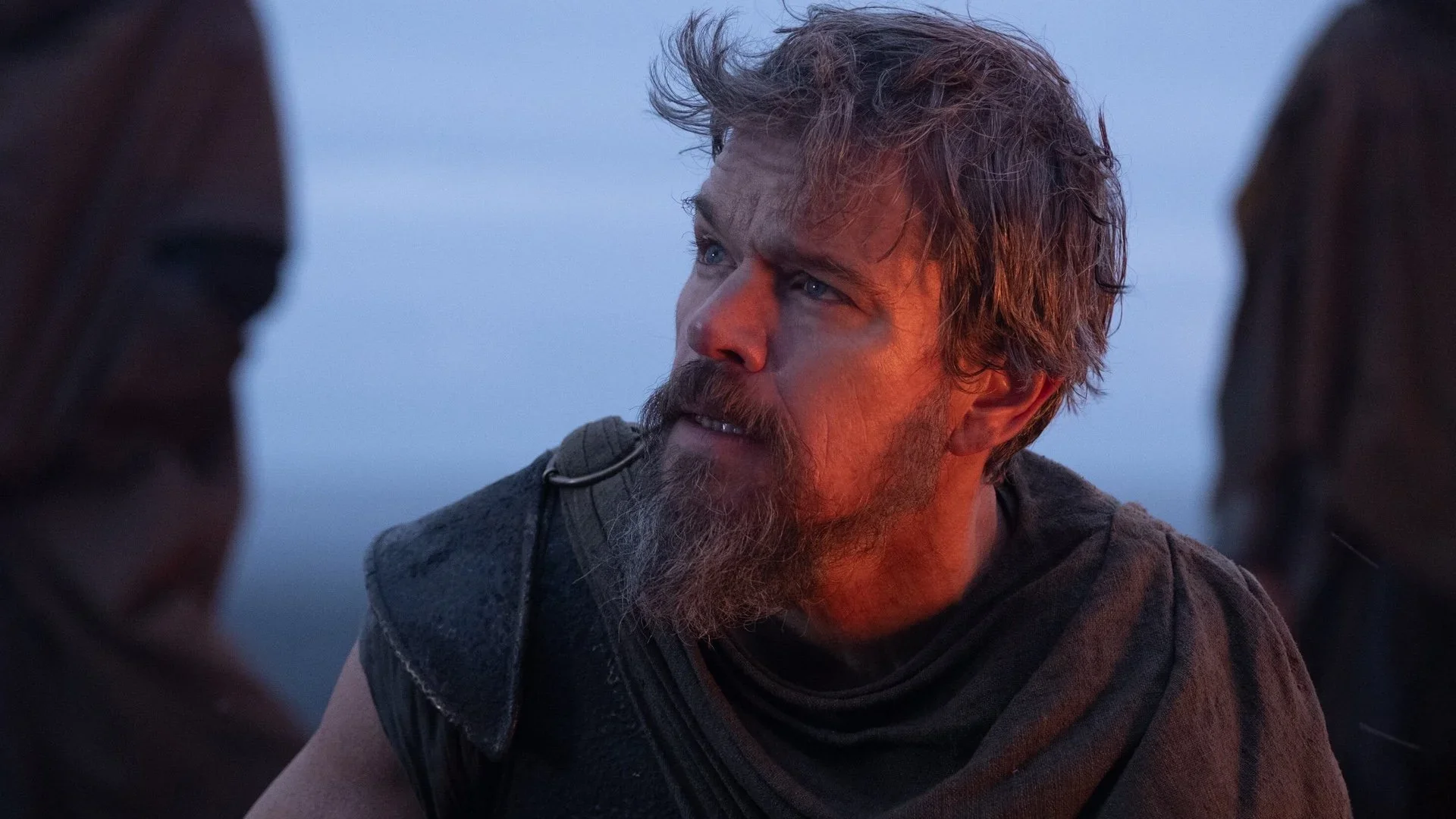
Next month, Christopher Nolan’s highly anticipated epic The Odyssey finally arrives in theaters, and if star Matt Damon is right, audiences may be witnessing the end of a certain style of blockbuster filmmaking.
The actor recently opened up about his experience making the massive adaptation of Homer’s classic tale, and his comments paint a picture of a production that feels increasingly rare in modern Hollywood.
Damon, who takes on the role of Odysseus, explained that working on the film reminded him of an era of moviemaking that may soon disappear. He told GQ:
“It was a really weird movie for me personally in the sense that I had almost a nostalgic feeling the entire time I was making it, because it felt like the movies when I started working. And I know that that’s going away. I knew that this was the last chance I was going to have to do something like this.”
That feeling wasn’t just about the scale of the story. It was about the way Nolan chose to make the movie. At a time when productions increasingly lean on digital tools, controlled environments, and virtual stages, The Odyssey went all-in on practical filmmaking and real-world locations.
Damon believes productions like this may become harder and harder to justify moving forward. “I don’t think people are going to be given the resources to shoot movies that way for much longer,” he said.
And it’s easy to understand why he feels that way. The production wrapped in August 2025 after a demanding 91-day shoot that stretched across six countries, including Morocco, Greece, and the United States.
Nolan reportedly shot more than two million feet of IMAX film for the project, making it one of the most ambitious productions of his career.
The locations themselves left a lasting impression on Damon. “I showed up on these locations and was like, Who f*cking thought you could shoot a movie here?,” said Damon.
The film’s scale apparently pushed everyone involved to their limits. Even Robert Pattinson, who previously worked with Nolan on Tenet, was stunned by what he encountered.
“I’ve never seen people look so exhausted,” Pattinson said. “I mean, at the end of every day people were broken.”
Tom Holland, who plays Odysseus’s son Telemachus, recalled arriving on set and being completely immersed in the world Nolan had created.
“I remember walking down this beach for half an hour, and I’m just seeing Greek soldier, Greek soldier, Greek boat, Greek soldier, the Trojan wars, and I’m saying to the PA: 'Where is the crew? I haven’t seen any evidence of a film set. This is more reminiscent of a reenactment than it is a film set.'”
Those stories help explain why so many movie fans are fascinated by what Nolan is attempting. With a reported budget north of $250 million and the distinction of being the first feature film shot entirely with IMAX cameras, The Odyssey represents a level of commitment that very few filmmakers are given today.
For Nolan, though, taking those risks is exactly what filmmaking should be about. “If you love movies, if you love Hollywood, the history of Hollywood, the history of movies, the thing that you understand in your bones is that what the audience wants is something new,” Nolan explained.
“They want something they don’t know they want. So the only sure thing is something that’s not a sure thing. So that’s the paradox. And it’s scary, and it’s scary for the people I work for, but that’s how you have to make movies. You have to risk it all on every project.”
Whether The Odyssey becomes a box office phenomenon or simply stands as one of the most ambitious films ever made, Damon’s comments raise an interesting question about the future of blockbuster filmmaking.
As studios become more cautious with spending and technology continues to reshape production methods, projects built on globe-spanning shoots, practical locations, and enormous logistical challenges could become increasingly uncommon.
If that’s true, then Nolan’s adaptation of The Odyssey may end up being more than just another epic adventure. It could be one of the final examples of a style of filmmaking that Hollywood is slowly leaving behind.
The Odyssey sails into theaters on July 17, 2026.