The Meaning of the People of the Sea in THE ODYSSEY Changes Everything
One of the coolest things about The Odyssey is that beneath all of the spectacle is a story that keeps asking an uncomfortable question: Who are the real monsters of the story?
Christopher Nolan's adaptation takes that idea and gives it an unexpectedly powerful twist with one of the film's most intriguing mysteries, the People of the Sea.
It's a concept that's mentioned throughout the movie, leaving both Odysseus and the audience wondering exactly who these mysterious raiders are.
At first, they sound like another terrifying force lurking somewhere beyond the horizon in a world already filled with cyclopes, witches, angry gods, and man-eating giants.
But by the time the truth is revealed, Nolan completely reframes the story in a way that adds surprising emotional weight to Odysseus' journey.
Like Homer's ancient epic, The Odyssey throws danger at its hero from every direction. Gods meddle in the lives of mortals whenever they feel like it, and making the wrong deity angry can completely derail your life.
That's exactly what happens after Matt Damon's Odysseus earns the wrath of Poseidon, whose revenge sends him and his crew into years of hardship across the sea.
Along the way, Odysseus faces a terrifying cyclops, encounters the armored cannibal giants known as the Laestrygonians, and crosses paths with Samantha Morton's Circe, the mysterious sorceress whose island isn't exactly a welcoming vacation destination.
Then there are the People of the Sea.
The phrase hangs over much of the story like another looming threat. Characters speak about them with fear, making them sound like ruthless invaders who appear out of nowhere to destroy everything in their path.
Even fans familiar with the original poem may find themselves wondering where Nolan is taking this mystery because he gives the idea much greater significance than many would expect.
The payoff comes when Odysseus, disguised as a beggar after finally returning home to Ithaca, speaks with Anne Hathaway's Penelope. That's when the truth clicks into place.
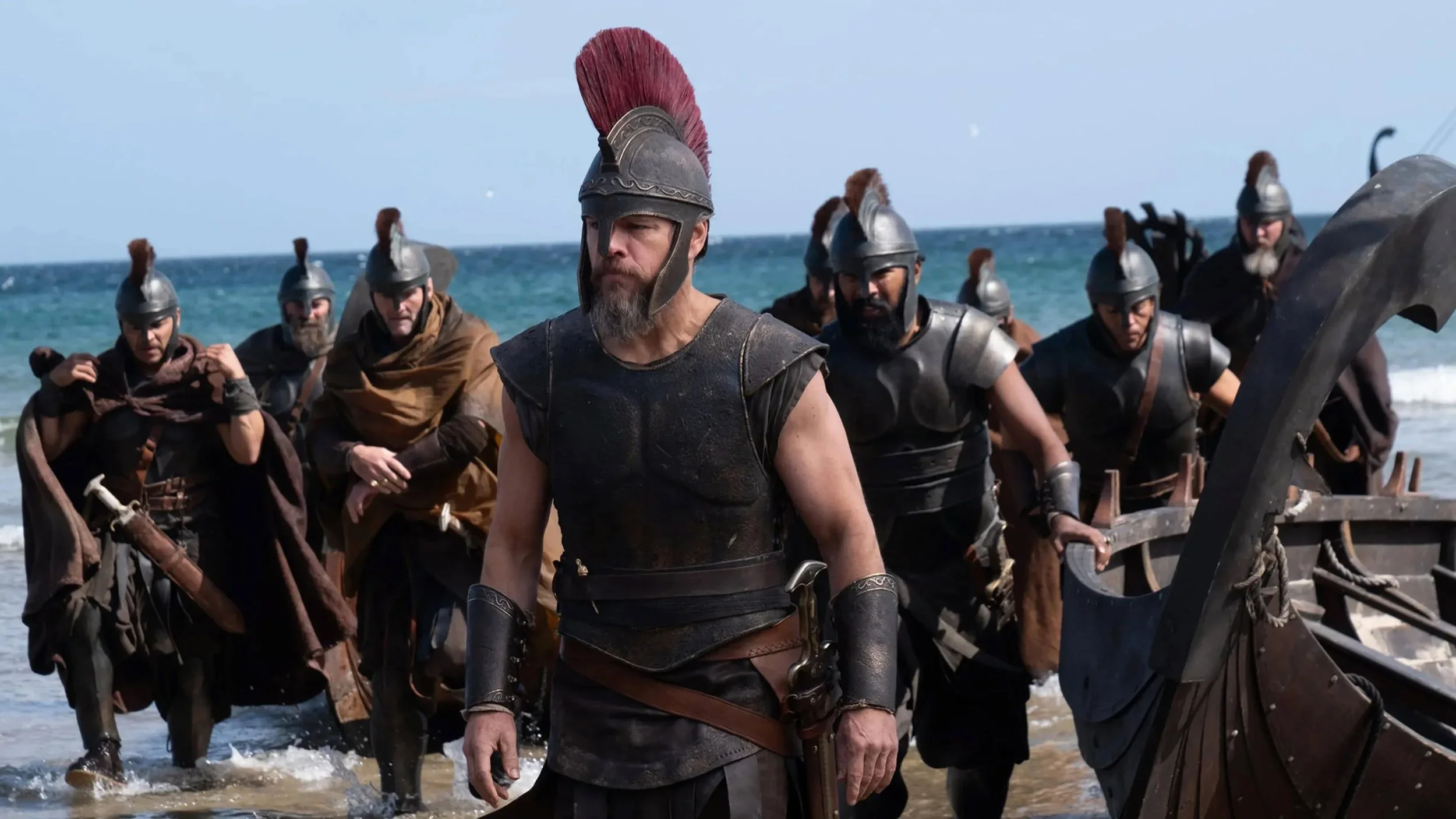
The People of the Sea aren't some unknown civilization waiting to invade. They're him. More specifically, they're the Greek warriors who arrived by sea to destroy Troy.
Most people know at least one part of the Trojan War story, even if they've never read Homer. The legendary Trojan Horse remains one of history's most famous tales of deception.
The Greeks presented what appeared to be a gift, the Trojans pulled it inside their city walls, and hidden soldiers emerged under the cover of darkness to bring the city crashing down from within.
In Homer's poem, that victory is mostly treated as history that happened before The Odyssey begins. Nolan, however, spends much more time exploring it, and that's what makes this revelation land so effectively.
When Odysseus realizes who the People of the Sea really are, he also realizes what he became during the war. He and his men sailed across the sea, arrived as strangers, violated Zeus' sacred law of showing hospitality to outsiders, and left an entire civilization in ruins.
It's an incredibly smart piece of storytelling because the the answer to the mystery forces Odysseus to confront himself.
Rather than portraying him as a flawless legendary hero, Nolan reminds us that every victory has another side. To the Greeks, Odysseus was a brilliant strategist who helped end a war. To the people of Troy, he was the nightmare that came ashore.
That perspective completely changes the emotional foundation of the film. Odysseus spends the story trying to get home to his wife and son, believing he's fighting monsters along the way.
By the end, he has to wrestle with the realization that, in someone else's story, he was the monster who arrived without warning and destroyed everything they loved.
It's a fascinating layer to add because it gives much more meaning to his homecoming. His family doesn't simply fear the dangers chasing him across the sea. They're also afraid of the man the war may have turned him into.
I absolutely love this creative choice because it feels completely at home within the themes of The Odyssey while giving modern audiences something fresh to think about.
Nolan doesn't rewrite Homer's story just for the sake of changing it. He finds an idea buried beneath the mythology and builds on it in a way that strengthens Odysseus' emotional journey.
That's what makes the People of the Sea such a great concept to explore. The mystery begins like another piece of ancient mythology but ultimately becomes a reflection of war, guilt, perspective, and the cost of victory.